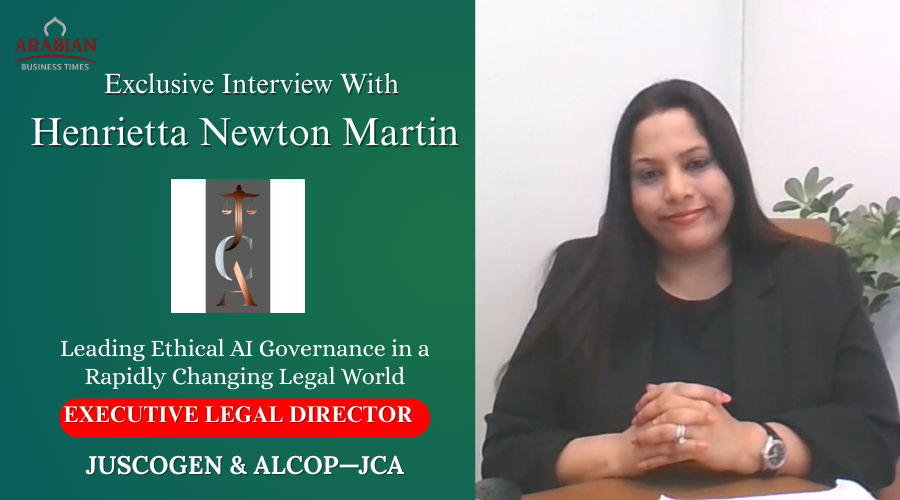
In a world where technology is advancing faster than regulation, legal leadership has taken on a far more strategic role. Today’s legal professionals are not just advisors; they are partners in shaping how businesses grow, adapt, and stay accountable.
In this conversation, corporate and commercial lawyer Henrietta Newton Martin shares her journey, her approach to legal strategy, and her thoughts on navigating the future of ethical governance in a rapidly changing global landscape.
Q1. Could you tell us about your journey and what led you into corporate law and cross-border legal strategy?
Henrietta Newton Martin:
My journey began with a strong interest in constitutional law, human rights, and the foundations of legal systems. Over time, I became more involved in commercial law as I worked closely with businesses. That shift exposed me to the practical side of law—how it shapes decisions, growth, and risk.
As companies expanded across borders, I found myself working on multi-jurisdictional matters. It was a natural progression. The more I worked in that space, the more I saw the need for structured, consistent legal strategies that could operate across different legal systems.
Q2. What drew your focus toward AI governance and emerging technologies?
Henrietta Newton Martin:
The shift toward AI was not sudden. It developed gradually as technology began influencing how decisions are made in business and governance. I noticed a growing gap between innovation and accountability.
That gap raised important questions. Who is responsible when automated systems make decisions? How do we ensure fairness? These concerns led me to focus more on AI governance. For me, it is about ensuring that innovation continues, but within a framework that protects people and maintains trust.
Q3. How do you help organizations handle complex legal and regulatory challenges?
Henrietta Newton Martin:
I work closely with leadership teams to reposition legal thinking within the business. Instead of reacting to issues after they arise, the focus is on planning ahead.
This involves aligning legal frameworks with business goals. When done well, it reduces uncertainty. It also helps companies avoid disputes, manage risks more effectively, and operate with greater confidence. The goal is always to make the law practical and useful, not restrictive.
Q4. You often speak about law as a strategic function. What does that mean in practice?
Henrietta Newton Martin:
It means that law should not sit on the sidelines. It should be part of decision-making from the beginning. When legal strategy is integrated early, businesses can move faster and more securely.
For example, when entering a new market or forming a partnership, legal insight helps structure the process in a way that avoids complications later. It brings clarity and supports long-term stability.
Q5. What are the biggest legal challenges companies face when operating across multiple countries?
Henrietta Newton Martin:
One of the biggest challenges is inconsistency. Laws differ from one jurisdiction to another, especially in areas like data protection and compliance. This creates complexity for companies trying to operate globally.
There are also issues around enforceability of contracts, regulatory overlap, and evolving standards related to ESG and technology. Managing these differences requires careful planning and a clear, unified approach.
Q6. How important is ethical governance in today’s business environment?
Henrietta Newton Martin:
It is no longer optional. Ethical governance plays a central role in how organizations are perceived. It affects trust, reputation, and even market access.
Companies that take ethics seriously tend to perform better over time. They are more resilient and better prepared to handle change. Governance is not just about compliance; it is about setting a standard for how decisions are made.
Q7. What role will AI law play in shaping the future of global business?
Henrietta Newton Martin:
AI law will become a key part of business operations. As systems become more automated, the need for clear rules will increase.
We will see more emphasis on transparency and accountability. Organizations will need to show how decisions are made and ensure that there is proper oversight. Those who build these systems early will have a stronger position in the market.
Q8. How do you approach risk management in complex legal environments?
Henrietta Newton Martin:
The approach is simple in principle but requires discipline. It starts with understanding the business model and identifying where risks may arise.
From there, we design frameworks that address those risks before they become problems. This could involve contract structuring, compliance systems, or internal policies. The aim is to reduce exposure while keeping operations efficient.
Q9. You work across multiple industries. Does your approach change depending on the sector?
Henrietta Newton Martin:
The fundamentals remain the same, but the details vary. Each industry has its own regulatory environment and operational challenges.
For example, the aviation sector has strict compliance requirements, while technology companies face fast-changing regulations. The key is to adapt the legal strategy to fit the specific context without losing consistency in approach.
Q10. How does your work as an academic and author influence your professional practice?
Henrietta Newton Martin:
It allows me to step back and reflect. In practice, the focus is often on solving immediate problems. Writing and teaching create space to think more deeply about broader issues.
They also help in simplifying complex ideas. When you explain concepts to students or readers, you learn to communicate clearly. That clarity is very useful when advising clients.
Q11. What advice would you give to young legal professionals looking to build meaningful careers?
Henrietta Newton Martin:
Focus on building strong fundamentals. Understand the law well, but also learn how businesses operate. The combination is important.
It is also essential to remain curious. The legal field is constantly evolving, especially with technology playing a larger role. Staying adaptable will make a big difference over time.
Q12. What qualities define a strong legal leader today?
Henrietta Newton Martin:
A strong legal leader combines knowledge with judgment. Technical skills are important, but so is the ability to make balanced decisions.
Integrity is also critical. There will be situations where pressure is high, and choices are not easy. In those moments, staying grounded in principles matters the most. Leadership in law is not about control; it is about responsibility.
Conclusion
As businesses continue to expand across borders and technology reshapes industries, the role of legal leadership is becoming more central than ever.
Henrietta Newton Martin’s perspective highlights the importance of combining legal knowledge with practical insight and ethical clarity. Her approach reflects a broader shift in the profession, one where law is not just about rules but about guiding decisions that are sustainable, responsible, and aligned with long-term goals.