Let’s be honest, the UAE has always attracted dreamers. But in 2026, it’s attracting serious builders.
The figures speak volumes, and you can know everything through the figures. According to the Central Bank of the UAE, the real GDP growth of the UAE is estimated to be 5.7% in 2026. The total foreign trade was more than AED 6 trillion in the year 2025 alone, which is 15 percent higher than the previous year.
The trade in non-oil merchandise took off by 27%. And for the first time in history the UAE made it into the list of the ten best merchandise exporters in the world, and ranked ninth in the world.
There is no winning streak. That is a nation which has spent years developing the infrastructure, the regulations, and the international agreements to make business really easier here than it would be in most other countries on the planet.
And in case you are sitting on the fence in deciding whether 2026 is the right time to set up shop in the UAE this is your answer. But knowing when is half the battle. It is equally important to know where to direct your energy.
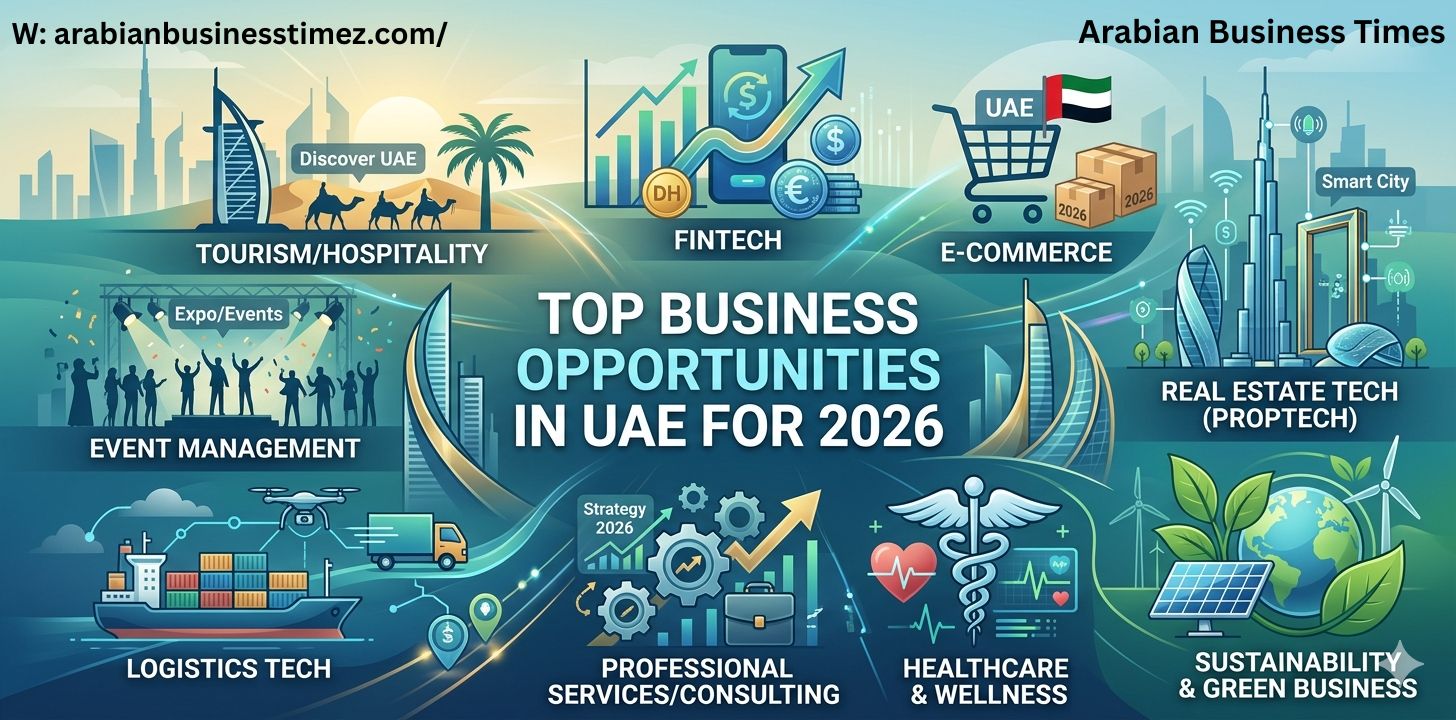
The following are the business opportunities that are actually viable in the UAE as of now.
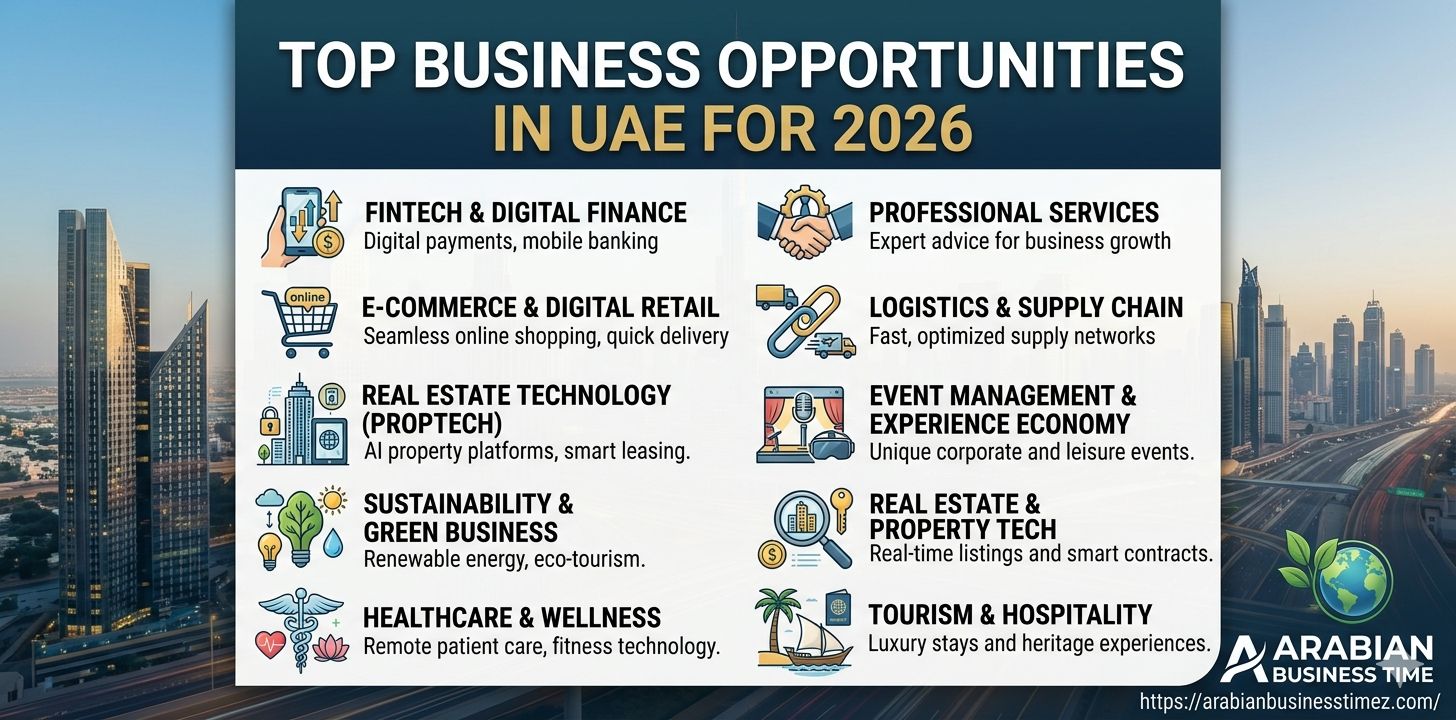
1. Fintech and Digital Finance
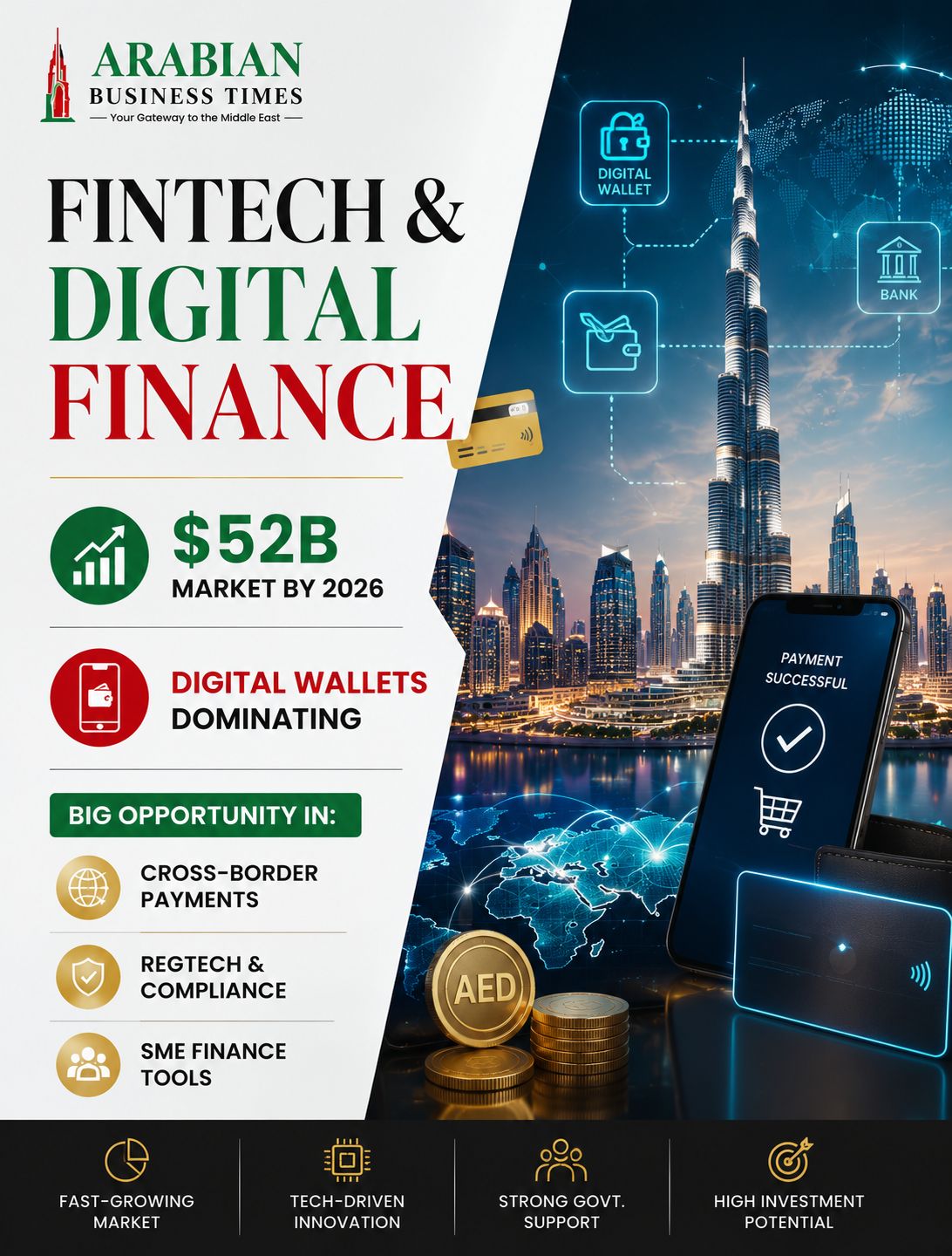
The UAE fintech market is ceasing to be a niche player. It is projected to reach USD 52 billion in 2026, and is expected to increase to USD 90 billion by 2031. More than fifty percent of all digital transactions in the country are already accounted for by digital wallets.
That is a group of consumers who are already beyond cash – and there is more to be constructed.
What is of particular interest is not only the consumer side. It’s the B2B angle. SMEs: Cross-border payment solutions, embedded finance solutions (such as helping businesses automate their anti-money laundering and KYC compliance). RegTech services (specifically, business automation of their anti-money laundering and KYC compliance).
The UAE government has designed an organised open finance system which is actively promoting new entrants. You can make real money here without having to go after the big guys, if you have a background in finance, banking technology or compliance.
Who it works for: Finance professionals, software developers, compliance experts, and former banking executives who understand the regulatory side.
2. E-Commerce and Digital Retail
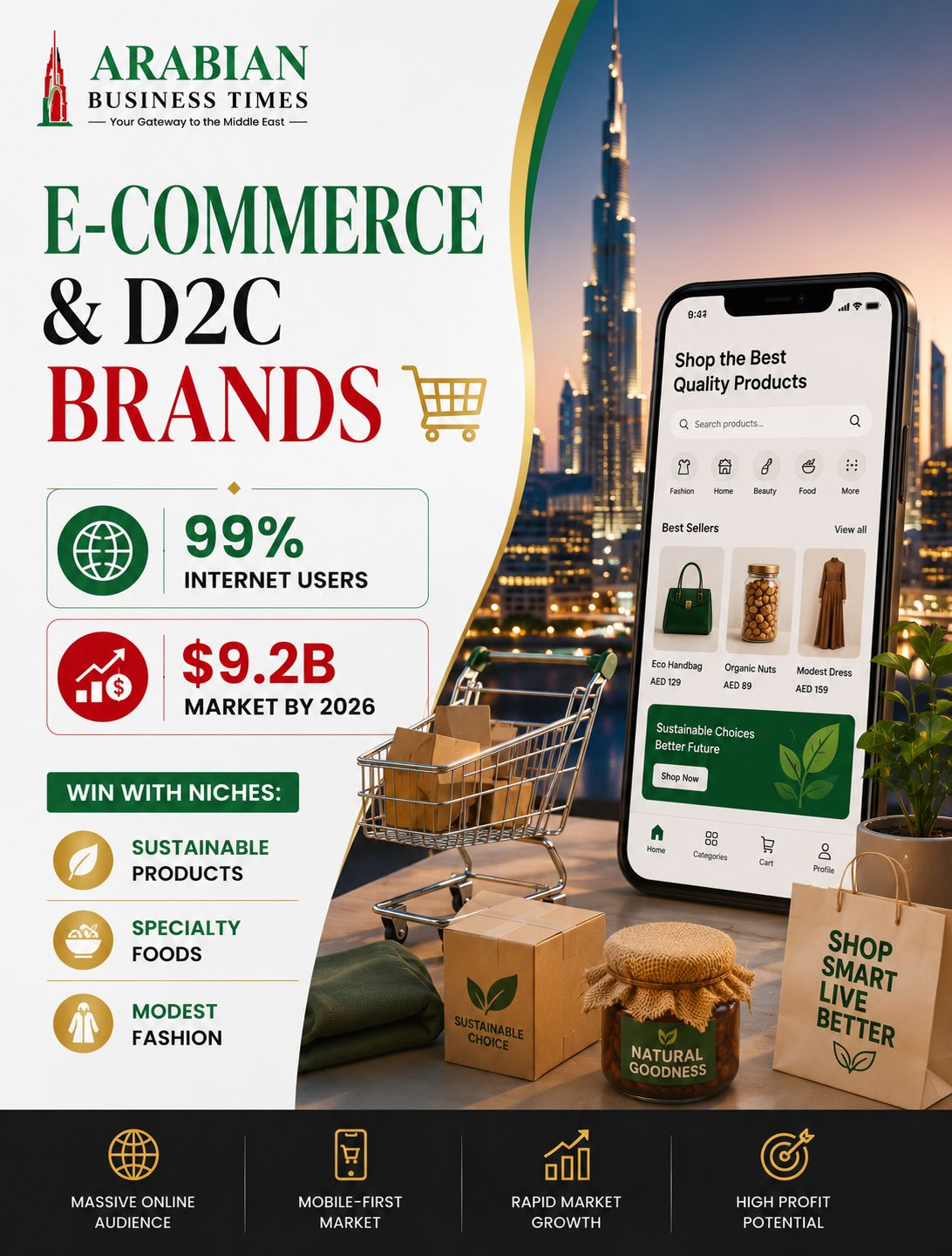
The UAE has one of the highest rates of smartphone usage in the MENA region, 99% of the population is internet penetrated, and the rate of online retail usage is high in the country.
The Dubai Chamber of Digital Economy estimates that the hyperlocal e-commerce industry will reach USD 25 billion in 2029, with an estimate of USD 9.2 billion by 2026.
What is interesting even more than the headline numbers is the difference in niche products. General retail is dominated by big players such as Noon and Amazon.ae. But less mainstream direct-to-consumer brands such as sustainable products, specialty foods, modest fashion, local artisanal goods have plenty of room to maneuver profitably without having to go head-to-head with the giants.
The government has even constructed special infrastructure towards this. A free zone with a specialized structure designed specifically to serve digital commerce businesses, Dubai CommerCity, offers e-commerce entrepreneurs a structured set-up with full foreign ownership, zero corporation tax in the free zone and custom benefits in warehousing.
Who it works for: Product entrepreneurs, brand builders, import-export traders, and anyone with a supply chain who can move quickly.
3. Real Estate Technology (PropTech)
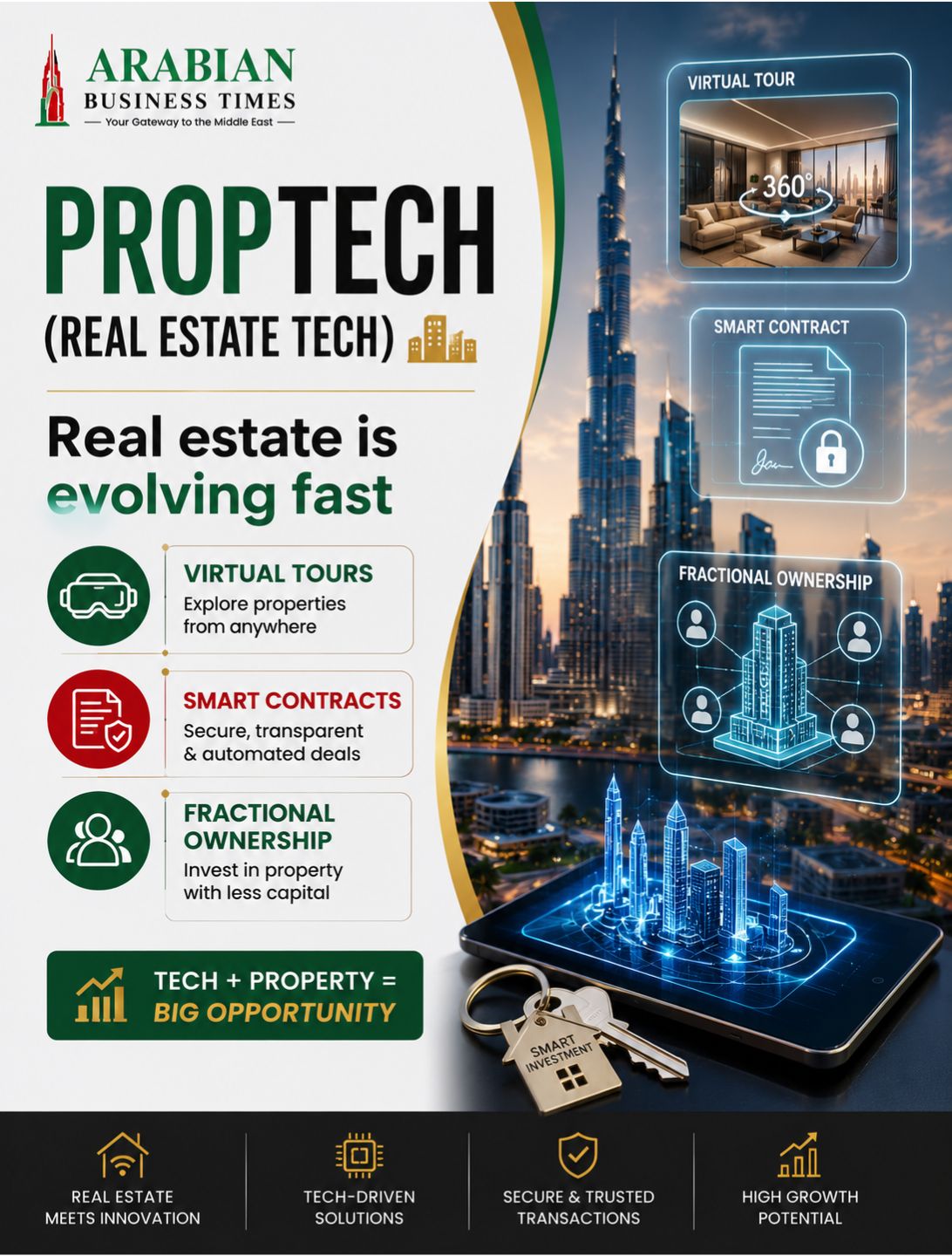
The UAE real estate market isn’t slowing down. Due to projects such as Dubai Creek Harbour being developed and the ever-increasing number of expatriates, property demand is rapidly increasing. What is evolving is the way property is purchased and sold, as well as how property is managed.
Virtual property tours, transactions based on smart contracts, blockchain-based land title management, and mobile investment platforms are no longer expected to happen in the future, but they have already become a reality. Fractional ownership platforms that enable commercial and residential property to be owned by investors with lower capital than before are increasing rapidly, making real estate accessible to investors unable to meet the entry barrier in the past.
If you are a developer or a tech entrepreneur or somewhere in between the two worlds, then one of the more sustainable plays in the UAE currently is building tools in the real estate sector. The market size is huge, the customers are digitally at ease and the regulatory environment surrounding the digital transactions in the real estate has been actively updated.
Who it works for: Tech entrepreneurs, real estate agency ready to pivot, software companies, and property investors who understand the pain points firsthand.
The UAE’s business ecosystem is also being shaped by inspiring women leaders in UAE business ecosystem, who are driving innovation across finance, consulting, and sustainability sectors.
4. Sustainability and Green Business
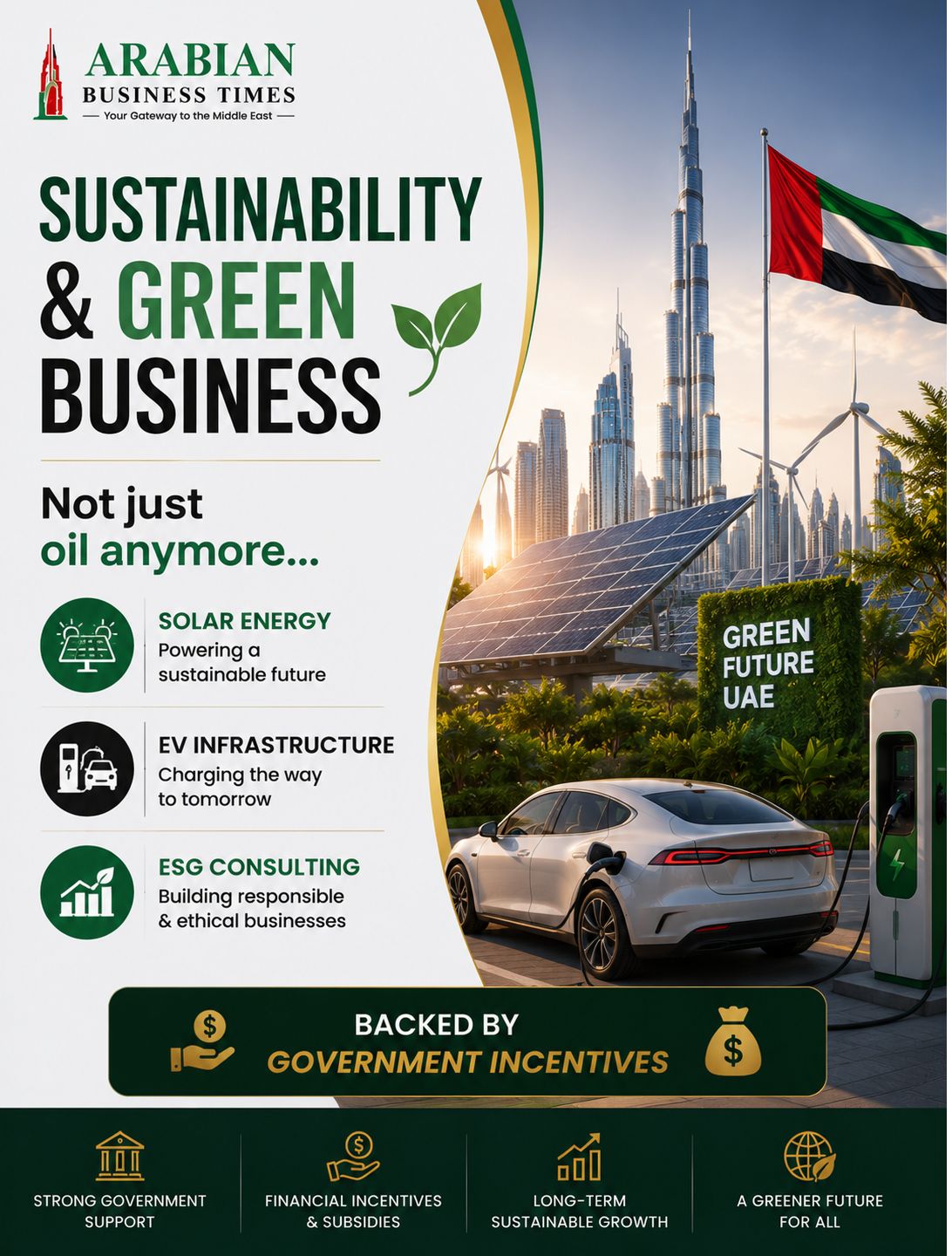
This one comes as a surprise to people who still consider the UAE to be mostly an oil economy. However, the numbers provided by the government say otherwise. Other new priority areas that are likely to gain priority in the future include renewable energy, waste management, EV infrastructure, and ESG consulting. Sustainability commitments by the UAE are not just political on their part, but are supported by procurement budgets and regulatory timelines.
In practical terms, it implies that businesses that assist organizations in meeting their environmental reporting obligations are in demand. Solar consultation and installation companies, companies that offer energy audits of commercial buildings, and startups that are developing EV charging infrastructure all have a clear route to revenue.
Due to government incentives, initial investment in some of these areas is reduced. And the general appetite, both in business and individuals, to sustainability-certified products and services has become quite evident in the past two years.
Who it works for: Engineers, environmental consultants, entrepreneurs with supply chain access to renewable technology, and professionals from the ESG space.
5. Healthcare and Wellness
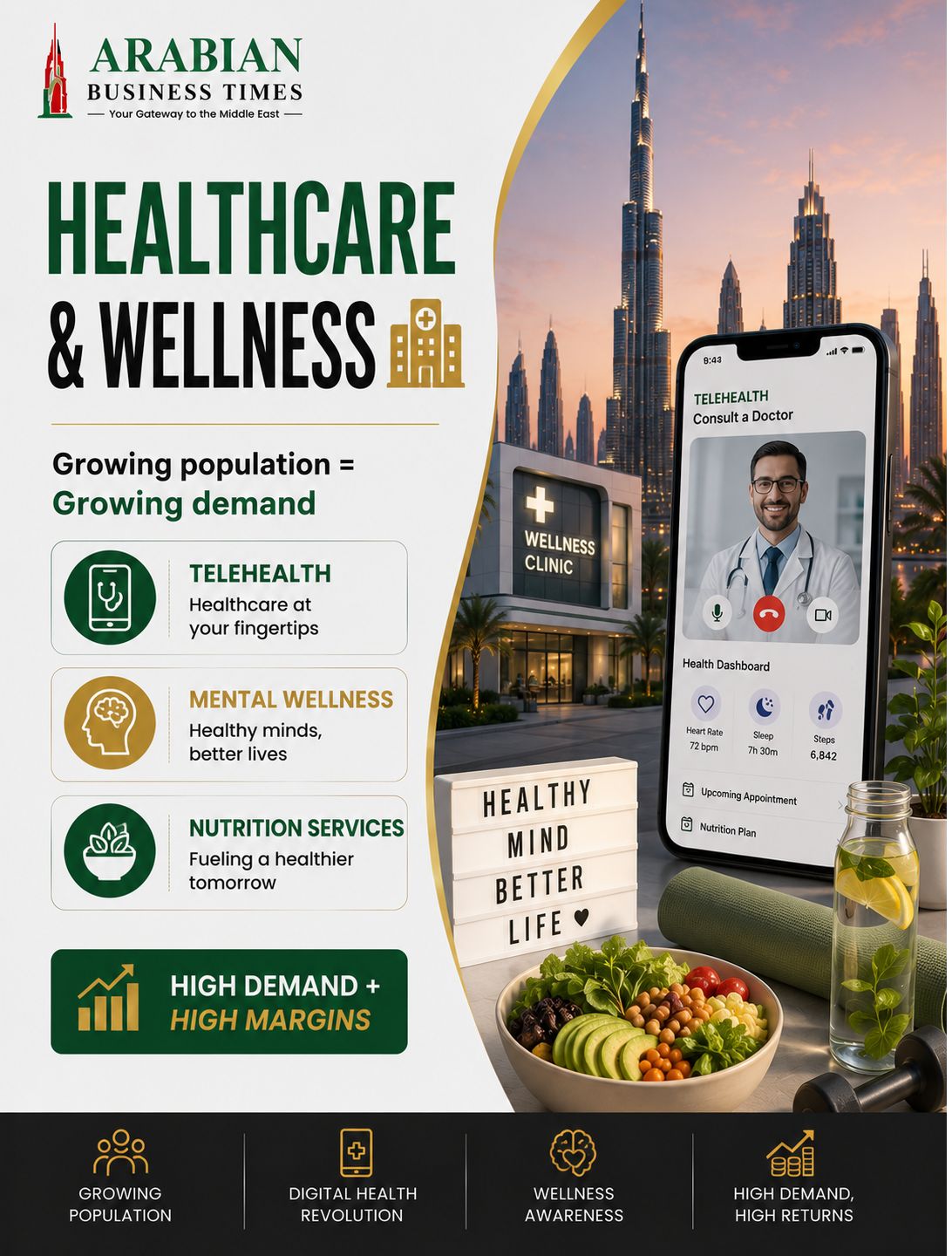
UAE healthcare is a structurally large market. The population of the country has increased by almost 2.5 million between 2015 and 2024. The presence of a high-income expatriate base, a government that is determined to upgrade health infrastructure, and a population that is increasingly concerned with preventive care – all these create a steady, recurring demand.
Specialty wellness services (nutrition, mental health, physiotherapy) are also expanding, as are telehealth services, health tech platforms, medical tourism facilitation, and specialty wellness services (nutrition, mental health, physiotherapy).
Specialty clinics targeting specific populations – especially the South Asian and Arab expatriate population who desire culturally familiar services – are very successful when placed in the right spot.
The regulatory navigation to be carried through in the licensing process of the healthcare business in the UAE is more cumbersome than other industries. It also increases the barrier to entry of competitors, which is ultimately a moat.
Who it works for: Medical professionals, health tech entrepreneurs, hospital administrators, and wellness professionals who can navigate licensing requirements.
6. Professional Services and Business Consulting
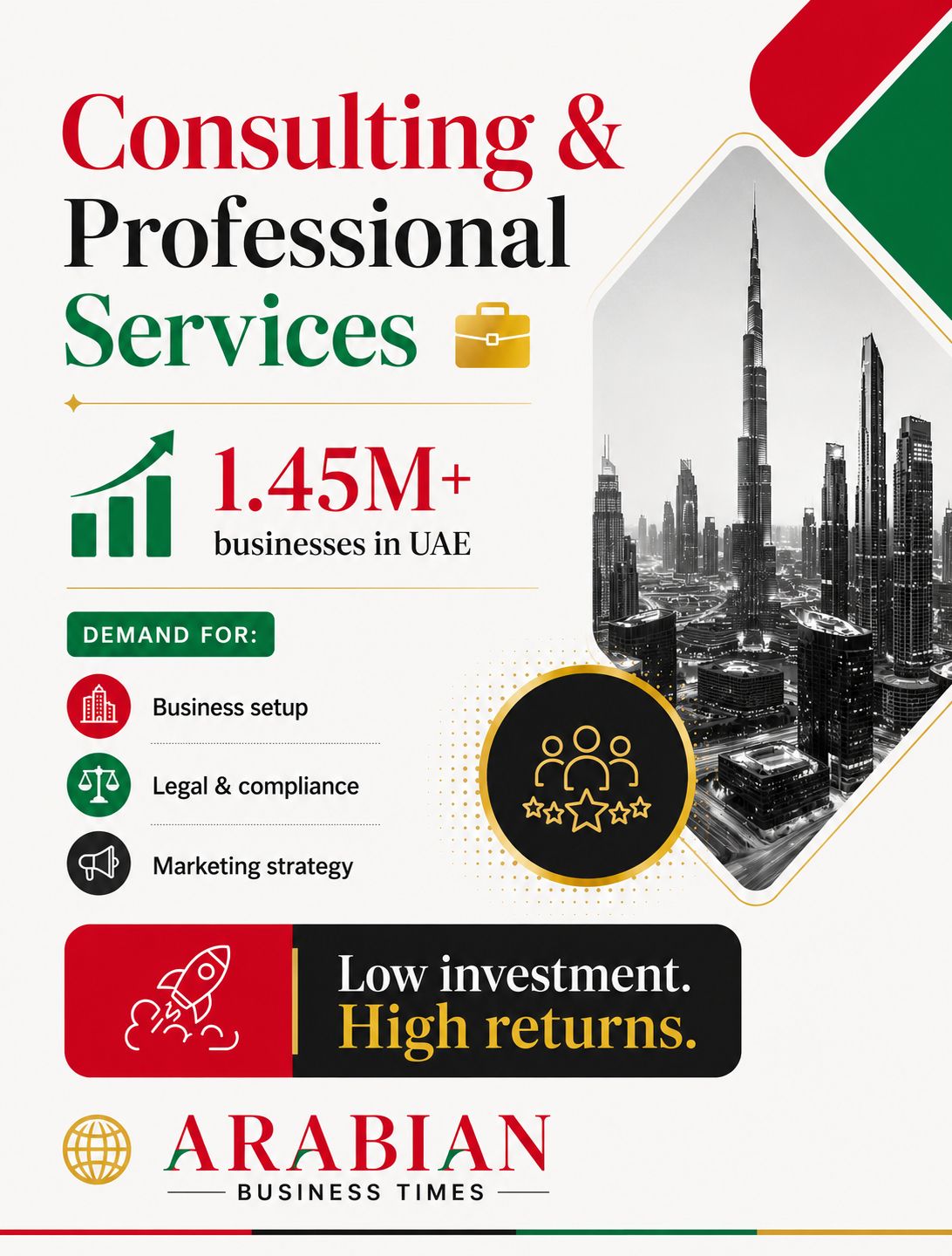
This one doesn’t get as much glamour as fintech or PropTech, but it’s arguably the most consistently profitable sector for someone with specialist knowledge.
As the number of international businesses registering in the UAE continues to rise significantly and the statistics are considerable, with the total number of registered companies crossing 1.45 million by early 2026 and the Chamber of Commerce in Dubai adding over 2,700 new businesses in March alone so does the demand in the HR consulting, legal advisory, market entry strategy, financial compliance, and training service offerings.
The majority of these businesses may be launched with a free zone license, minimal overhead, remote-friendly operations, as well as a strong personal network. The B2B advisory margins are strong and clients are generally long-lasting.
Who it works for: Former corporate professionals, lawyers, accountants, HR specialists, marketing strategists, and anyone with ten or more years of experience in a specialized field.
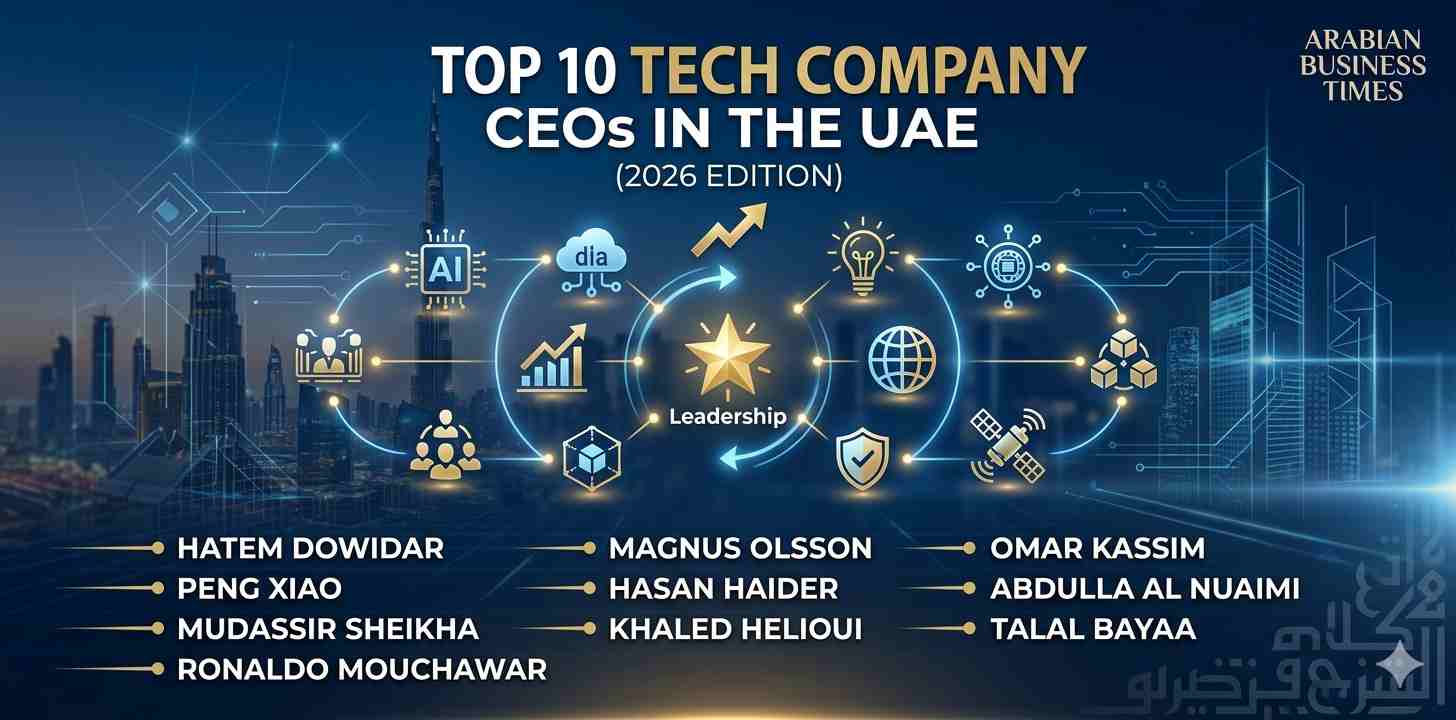
The rise of fintech and PropTech is strongly supported by top tech CEOs in UAE driving digital transformation, who are accelerating innovation across the region.
7. Logistics and Supply Chain Technology
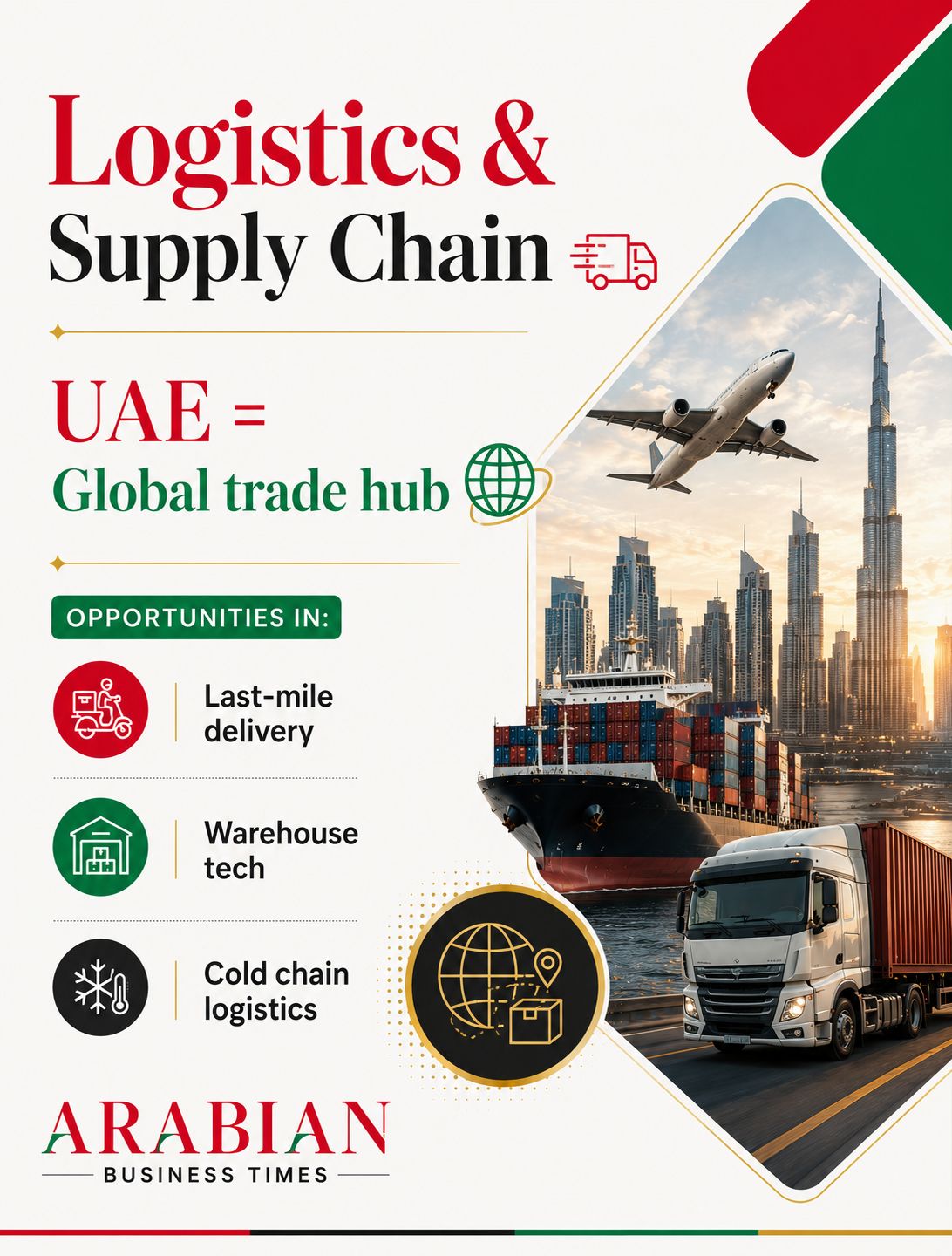
It is not just a geography lesson that the UAE is perfectly situated between Europe, Asia and Africa but it is a commercial advantage that every major shipping company already knows. The market is currently in need of smarter solutions to operate logistics more efficiently.
Active demand is seen in fleet management systems, route optimization systems, warehouse automation, cold chain logistics of perishables, and the last mile delivery technology. The industry is directly benefiting through the UAE CEPA (Comprehensive Economic Partnership Agreements) programme, which is in the process of expanding trade relationships with countries such as Philippines, Nigeria and Gabon creating new trade corridors, which require new infrastructure.
Who it works for: Logistics professionals, software engineers, entrepreneurs with trading experience, and companies already operating in manufacturing or retail who want vertical integration.
8. Event Management and Experience Economy
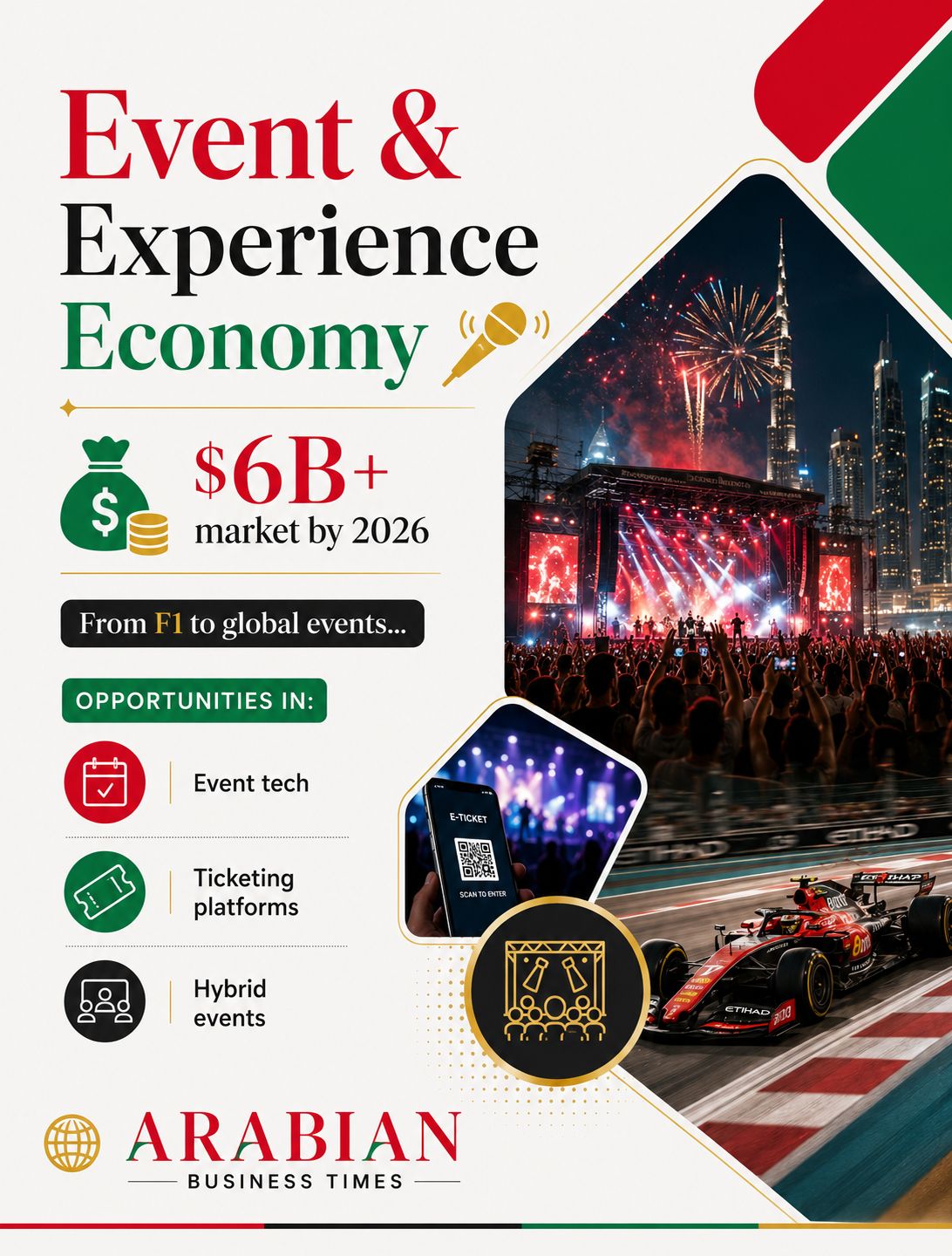
Each year, hundreds of big events are held throughout Dubai and Abu Dhabi. It is estimated that by 2026, the events market in the UAE will be more than USD 6 billion. Formula 1, global conferences, fashion weeks, cultural festivals: the pipeline of events does not even indicate any thinning out.
The tech-enabled event management services platform that enables ticketing, vendor management, delegate engagement, or hybrid event production have space to increase along with the traditional planning services. The barriers to entry are not very high as compared to other sectors, the cost of licensing is not very high, and Dubai’s reputation as a global event destination continues to keep the client pipeline active.
Who it works for: Creative entrepreneurs, operations-minded professionals, hospitality veterans, and tech founders who see events as a platform, not just a party.
9. Real Estate and Property Technology
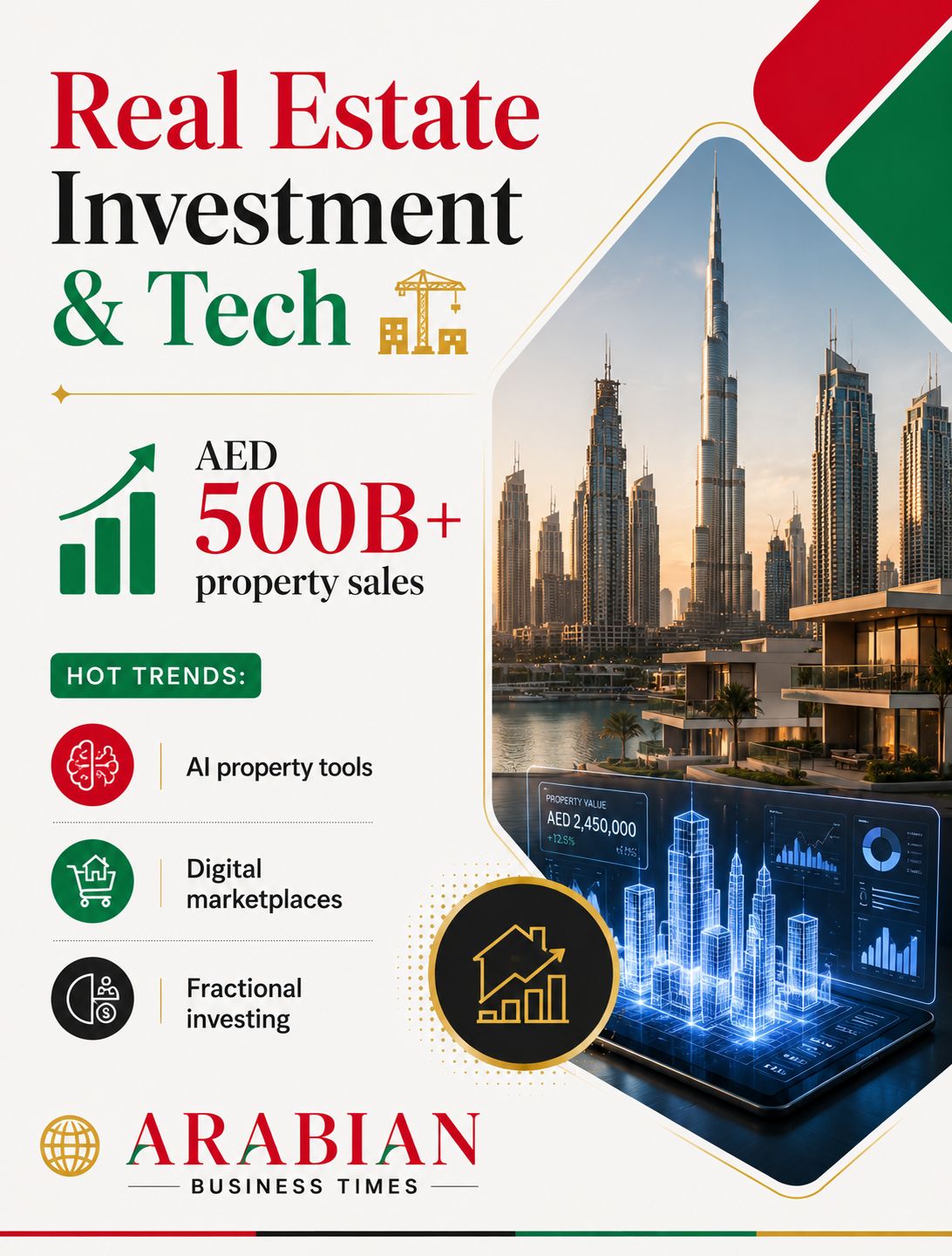
Dubai’s real estate market registered over 120,000 transactions in a single recent year, exceeding AED 500 billion in property sales. In 2026, that momentum has not slowed. Mega-developments like Dubai Creek Harbour continue to attract international buyers, and the rising expat population ensures consistent residential demand.
Beyond traditional real estate investment, property technology is a growing space. Fractional ownership platforms, AI-powered property valuation tools, digital property marketplaces, and mobile-first property management applications are all gaining traction. The market is shifting toward digital-first experiences, and entrepreneurs who can bridge the gap between real estate and technology are well-positioned.
Who should explore this: Investors, real estate agents building digital services, or tech founders with solutions for property management and investment platforms.
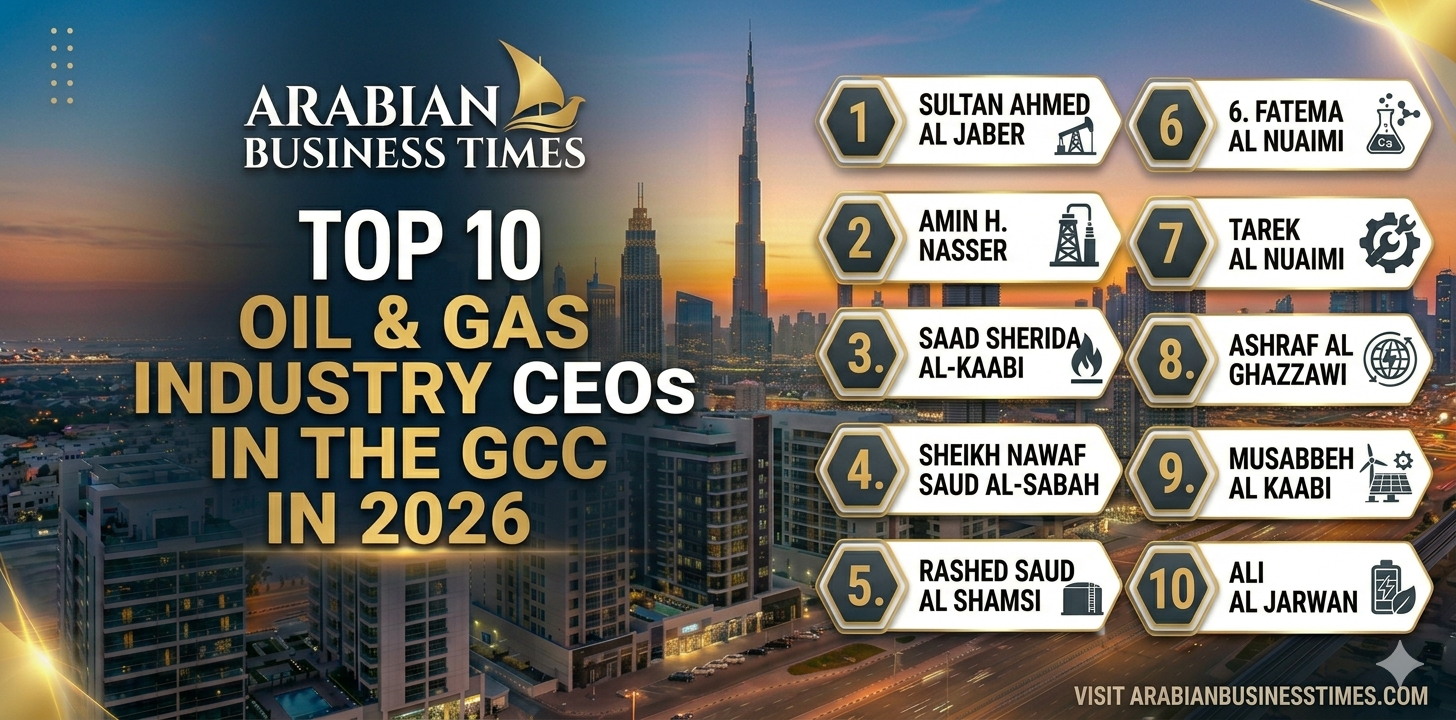
Even as the UAE moves toward sustainability, top oil & gas CEOs in GCC shaping energy transition continue to play a critical role in balancing legacy energy and renewables.
10. Tourism and Hospitality
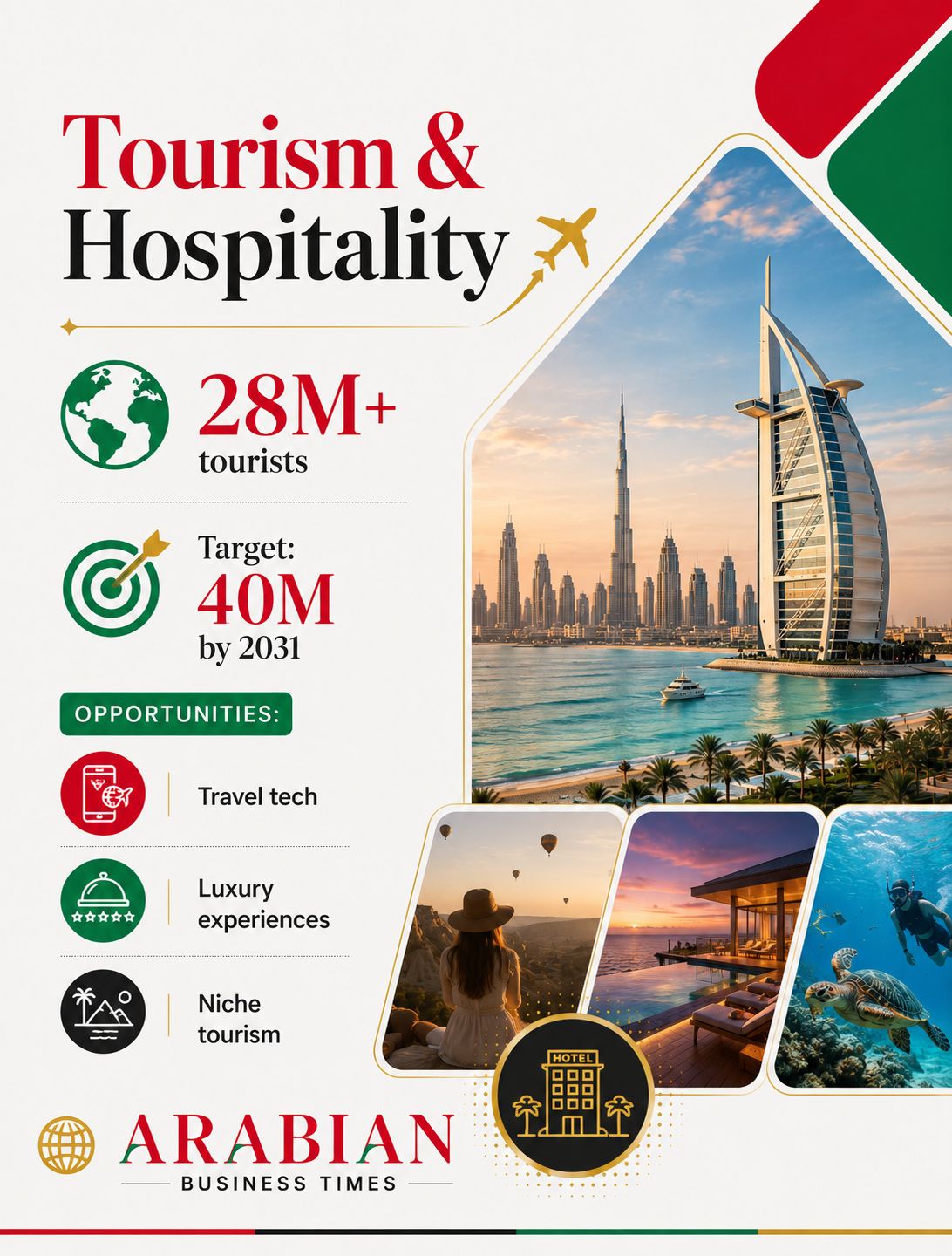
The UAE attracted more than 28 million international tourists in a recent year, and government projections aim for 40 million visitors by 2031. Dubai is a permanent fixture on the global travel circuit, and events, mega-projects, and cultural initiatives continue to add new reasons for visitors to return.
The opportunity here extends well beyond hotels. Travel planning apps, niche concierge services, adventure tourism operators, luxury yacht experiences, desert safari companies, and cultural tour providers all serve a market hungry for curated, memorable experiences. Technology-first travel platforms that allow seamless booking, personalization, and customer service are particularly well-suited to this environment.
Who should explore this: Hospitality professionals, travel entrepreneurs, or tech founders building booking and experience platforms for the GCC region.
What Makes the UAE Different in 2026
The world environment has emerging markets which have cheap set up costs. What the UAE sells is not the same, a combination of credibility, connectivity, and clarity that is truly unheard of.
The inflation is at a manageable 1.8% projection in the year 2026. The forecasted non-oil GDP growth rate stands at 4.8%/year. The D33 agenda of the UAE is actively striving to ensure that Dubai doubles its economy up to 2033; and with actual policy support.
In the case of the majority of sectors, now 100 percent foreign ownership is allowed a regulatory adjustment that refigured the calculation of thousands of international entrepreneurs. The establishment of free zones can be done within days, with the cost of simple licenses starting at AED 5,750 in some jurisdictions.
Before You Start
The single biggest mistake people make when entering the UAE market is treating it as a gold rush. The businesses that last here aren’t the ones that moved fastest — they’re the ones that understood the regulatory landscape, chose the right jurisdiction (mainland vs. free zone), and built genuine relationships with their first ten clients before worrying about scale.
Choose the field that will correspond to what you really know. Your current knowledge is a greater edge in this situation than any fad. The UAE does not reward generalists who may be in any industry that sounds exciting when attending a networking event.
The possibility is a reality. The market is organised. The timing, depending on the position that the economy is in at the present moment, is as good as it has been in a long time.
The important thing is at this point how serious you are about the preparation.
If you’re serious about entering the market, this step-by-step UAE company formation guide explains how to start even without local connections.
Frequently Asked Questions (FAQ)
Q1. What is the best business to start in the UAE in 2026?
There’s no single answer that fits everyone, and anyone who tells you otherwise is selling something. The best business for you depends on your background, budget, and network. That said, fintech, e-commerce, healthcare, and professional consulting are all showing strong structural demand in 2026, not just short-term hype. If you have expertise in any of these areas, that’s where your energy should go first.
Q2. Can a foreigner own 100% of a business in the UAE?
Yes and this is one of the most significant changes in UAE business law over the last few years. For most business activities, 100% foreign ownership is now permitted on the mainland without needing a local Emirati partner. Free zones have always allowed full foreign ownership, but the mainland reform opened up a far larger market. Certain regulated sectors like banking, oil, and some utilities still have restrictions, so it’s worth checking your specific activity with a business setup consultant.
Q3. How much does it cost to set up a business in the UAE?
It varies significantly by sector, license type, and whether you’re setting up in a free zone or on the mainland. Free zone licenses can start from as low as AED 5,750 in more cost-efficient jurisdictions. A standard business setup in Dubai including license, visa, and basic administrative costs typically runs between AED 15,000 and AED 50,000 for a lean operation. Healthcare, financial services, and other regulated sectors will cost more due to additional approvals. Always budget for the first six months of operations separately from your setup costs.
Q4. Is it better to set up in a free zone or on the mainland?
Both have genuine advantages, and the right choice depends on who your customers are. Free zones offer 100% ownership, zero corporate tax within the zone, fast registration, and are ideal if your business is digital, export-focused, or B2B with international clients. The mainland gives you access to the full UAE domestic market government contracts, local retail, and services that require a physical presence across emirates. Many businesses eventually operate through both structures.
Q5. What sectors are growing fastest in the UAE right now?
Based on early 2026 data, the fastest-moving sectors are fintech, e-commerce, green energy, healthcare technology, and logistics tech. These aren’t just growing in revenue, they’re growing in the number of businesses entering and the volume of government and corporate contracts being issued. Professional services are also expanding steadily, driven by the sheer volume of new companies entering the UAE market every month.
Q6. Do I need to be physically present in the UAE to run a business there?
For free zone businesses, many jurisdictions allow remote management. You don’t necessarily need to live in the UAE to be the owner of a registered company. However, if you want a UAE residence visa (which most business owners do), you’ll need to meet minimum stay requirements. For mainland businesses providing services that require a physical presence or face-to-face client interaction, being on the ground is important. It’s less about the legal requirement and more about the practical reality of building a business in a relationship-driven market.
Q7. Is the UAE a good place for small businesses and solo entrepreneurs?
Absolutely and 2026 might be the most accessible year yet for individual entrepreneurs. The freelance visa, e-trader license, and several free zone packages are specifically designed for one-person operations. Digital marketing, consulting, content creation, tutoring, and e-commerce are all businesses that can be started and run solo with a basic license. The infrastructure banking, logistics, telecommunications is reliable enough that you don’t need a large team to operate professionally from day one.
Q8. How long does it take to register a business in the UAE?
Free zone company registration can take as little as 24 to 72 hours for straightforward business activities. Mainland registration through the Department of Economic Development (DED) typically takes between five to ten working days once all documents are in order. Regulated sectors like healthcare, financial services, or food and beverage will take longer due to additional approvals from sector-specific authorities. Working with a reputable business setup consultant speeds up the process considerably and reduces the risk of errors.
Q9. What taxes apply to businesses in the UAE?
The UAE introduced a 9% corporate tax in June 2023 for businesses with annual net profits exceeding AED 375,000. Businesses earning below that threshold pay zero corporate tax. There is no personal income tax in the UAE. Free zone businesses that meet qualifying criteria and conduct qualifying activities can continue to benefit from zero corporate tax rates within the zone. VAT applies at 5% for most goods and services. Compared to almost any other major economy, the UAE’s tax environment remains highly competitive.
Q10. What’s the biggest mistake entrepreneurs make when entering the UAE market?
Underestimating how relationship-driven the market is. The UAE business environment rewards trust, face time, and reputation. Companies that come in expecting to close deals quickly through cold outreach alone tend to struggle. The ones that succeed invest time in the right networks, industry events, chambers of commerce, free zone communities, and build their local credibility before scaling their sales effort. Coming in with patience and a genuine long-term commitment to the market makes a measurable difference.
This blog is based on publicly available economic data from the Central Bank of the UAE, S&P Global, World Trade Organization, Dubai Chamber of Digital Economy, and industry reports published in early 2026.