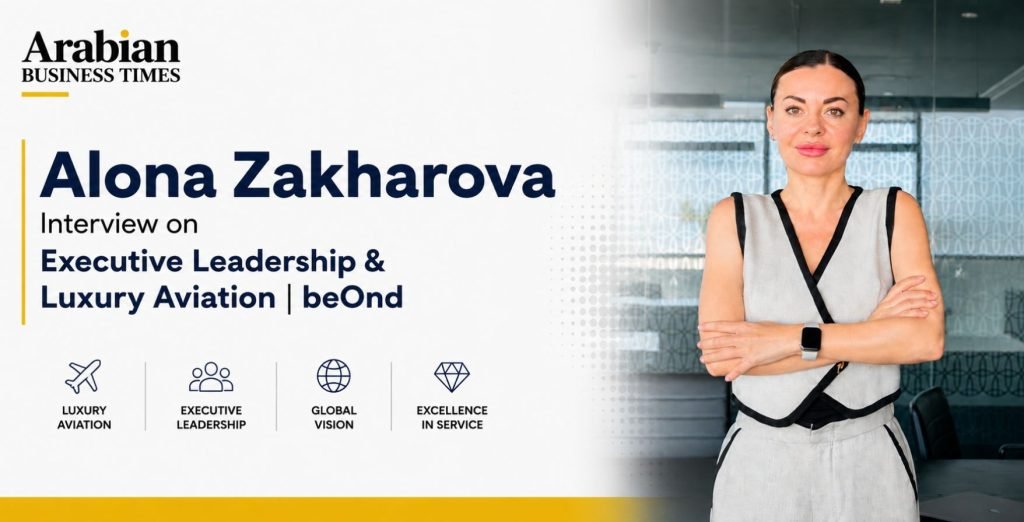
Alona Zakharova is Executive Assistant to the CEO of beOnd, a luxury airline, where she operates at the intersection of strategy, operations, and international growth. Her career has taken her from administration and product coordination into a role that now touches investor relations, Air Operator Certificate (AOC) development, financial planning, and complex global coordination. Known for precision, discretion, and the ability to anticipate what’s needed before it’s asked, Zakharova has built a career on the belief that the Executive Assistant role, done well, is far more strategic than most people assume. In this interview, she talks about what it actually takes to support C-suite decision-making in a fast-moving industry, where she sees luxury aviation heading over the next decade, and the advice she’d give to other women building leadership-track careers.
You have built an impressive career supporting senior executives across international organizations and now hold the role of Executive Assistant to the CEO of a luxury airline. Can you share your professional journey and the experiences that shaped your career?
If there’s one thing I’ve learned, it’s that the most rewarding careers are built on agility rather than rigid plans. My journey through administration, product coordination, and now executive assistant to the CEO at beOnd has given me a 360-degree view of the airline. Working in Product, for instance, allowed me to work on projects that directly shaped the passenger experience, such as coordinating the design and rollout of our signature cabin crew uniforms. It taught me that luxury isn’t an accident; it is the result of relentless attention to detail and cross-functional alignment.
I never imagined that aviation would become such an important part of my life. What started as an administrative role gradually turned into a passion for understanding how an airline operates and how executive decisions shape the passenger experience.

Many people underestimate the strategic importance of the Executive Assistant role. How would you describe the impact an effective Executive Assistant can have on organizational success and executive decision-making?
People often associate the Executive Assistant role with calendars and logistics, but at the executive level it’s much more strategic than that. An effective EA helps protect the CEO’s most valuable resource—time and attention. It’s a responsibility I genuinely enjoy because every day is different, and every decision can have a real impact on the business.
Every day involves making judgment calls: what needs immediate attention, what can wait, and what information is critical for decision-making. The role is about creating clarity, removing distractions, and helping leaders stay focused on what matters most. I’ve always believed that an Executive Assistant doesn’t make the company’s strategy, but plays an important role in creating the conditions for great decisions to happen. When that role is done well, it’s largely invisible—the CEO simply has the right information at the right time, without ever having to think about how it got there.
Working closely with a CEO in the aviation industry requires managing multiple priorities simultaneously. What are some of the biggest challenges you face, and how do you maintain efficiency under pressure?
One of the reasons I enjoy aviation so much is that no two days are ever the same. Just when you think you’ve planned everything, priorities can change within minutes. I remember one morning when I was coordinating last-minute travel changes for our CEO, preparing materials for an investor meeting, and at the same time working with several departments to resolve an urgent customer issue that required immediate executive attention. Everything was time-sensitive, but not everything carried the same business impact. I quickly reassessed priorities, delegated tasks that didn’t require my direct involvement, kept stakeholders updated, and ensured the CEO had everything needed for the investor meeting without interruption while the operational issue was resolved in parallel.
What keeps me efficient isn’t multitasking—it is strategic triaging. It’s about understanding the macro-impact of every micro-crisis and knowing precisely where my direct intervention yields the highest return. Most people default to treating every urgent request as equally important; the skill is in resisting that instinct and asking what actually moves the business forward.
You are involved in areas such as investor relations, AOC development, financial planning, and international coordination. How has this exposure expanded your understanding of business strategy and leadership?
One of the biggest privileges of my role has been seeing how experienced leaders make decisions. Being involved in investor relations and AOC development has completely changed the way I understand business. You start to see that decisions which look purely operational on the surface—a route, a partnership, a hire—are almost always tied back to a financial or regulatory thread underneath.
That exposure has made me far more comfortable holding complexity: understanding that leadership isn’t about having one lever to pull, but about weighing several at once and knowing which one matters most in a given moment. It’s changed how I read almost every request that crosses my desk now, because I’m always asking what’s actually underneath it.

The aviation industry is constantly evolving and highly competitive. From your perspective, what are the key trends shaping the future of aviation and luxury air travel?
What I find most interesting isn’t just the technology headlines—sustainable aviation fuel, next-generation aircraft, or digital innovation—it’s the shift in what luxury actually means to travelers today. It’s moving away from opulence for its own sake toward personalization, privacy, and time as the real currency. At beOnd, I’ve seen how guests increasingly value a seamless, stress-free journey from the moment they book until they arrive at their destination. They expect thoughtful service, exclusivity, and consistency rather than simply premium amenities. It’s no longer just about a lie-flat seat or gourmet dining; it’s about creating an experience where every interaction feels effortless and personalized. That’s one of the reasons I enjoy working in premium aviation—every detail has the power to shape someone’s entire journey.
That is the definitive trend of the next decade: airlines that treat luxury as an ecosystem of frictionless ease, rather than mere material excess, will dominate the ultra-premium market. The ones that keep competing purely on amenities will find themselves in a race that eventually flattens into sameness.
Executive excellence often depends on strong communication, discretion, and anticipation. What skills do you believe are essential for professionals who aspire to excel in executive support and strategic operations roles?
People often ask what makes an exceptional Executive Assistant. For me, it’s not only discretion—it’s anticipation. The ability to think ahead, identify potential challenges, and prepare solutions before they become problems creates real value for any executive.
Beyond that, emotional intelligence, sound judgment, and adaptability are critical. Priorities can change quickly, especially in a fast-moving industry like aviation, so being able to stay calm, communicate effectively, and make thoughtful decisions under pressure is just as important as being organized. None of that shows up on a resume the way “proficient in scheduling software” does, but it’s what actually determines whether someone thrives in this kind of role.
Having worked across different countries and multicultural environments, how has international exposure influenced your professional approach and leadership style?
Working across different cultures has taught me that effective communication isn’t about saying more—it’s about understanding how people work and what they value. Collaborating with colleagues, partners, and government stakeholders across Europe and the Middle East has shown me that building trust often starts with listening.
It’s made me more adaptable and open-minded. Rather than assuming there’s one right way to solve a problem, I’ve learned to adjust my approach to different people and situations. I believe that curiosity and respect are just as important as efficiency in an international business environment, especially when you’re coordinating with government stakeholders who operate under entirely different expectations than a corporate partner would.

Technology and AI are transforming how executives and organizations operate. How do you see digital tools and artificial intelligence enhancing productivity, decision-making, and executive support functions in the future?
AI will never replace trust. Executives don’t rely on Executive Assistants because they can schedule meetings. They rely on them because they trust their judgment. The EAs who thrive next will be the ones who use these tools to buy back time for the parts of the job that genuinely need a human—anticipating needs, managing relationships, exercising judgment calls that no tool can make for you. The future belongs to professionals who know how to combine technology with critical thinking and emotional intelligence, rather than those who see automation as a threat to be resisted or a shortcut around the harder parts of the job.
As a successful woman building a career in high-level executive operations, what challenges have you overcome, and what advice would you offer to other women pursuing leadership-oriented careers?
Early in my career, I sometimes wondered whether I was ready for the opportunities in front of me. Looking back, I realized that confidence doesn’t come first—it grows every time you take on something you thought was beyond your experience. Throughout my career, I’ve taken every opportunity to learn, take on new responsibilities, and contribute beyond my job description. That mindset has opened doors I never expected, often into projects and conversations that weren’t technically part of my role at all.
My advice to other women is simple: don’t wait until you feel completely ready. Be curious, keep learning, and don’t be afraid to step outside your comfort zone. Growth often begins the moment you take on a challenge you don’t yet feel fully prepared for.
Looking ahead, what are your personal and professional aspirations, and how do you envision your role evolving as businesses become increasingly global and technology-driven?
If there’s one thing my career has taught me, it’s that the best opportunities are often the ones you never planned for.
In the future, I’d like to continue expanding beyond traditional executive support into areas such as strategy, branding, and business development. Looking ahead, my trajectory is focused on bridging the gap between executive operations, corporate strategy, and brand growth. I believe the modern Executive Assistant role is evolving beyond traditional executive support into a broader strategic and cross-functional business role. That is the direction I am actively pursuing in my career. Ultimately, my goal is to be recognized not just for supporting world-class leadership, but for actively helping build world-class businesses.
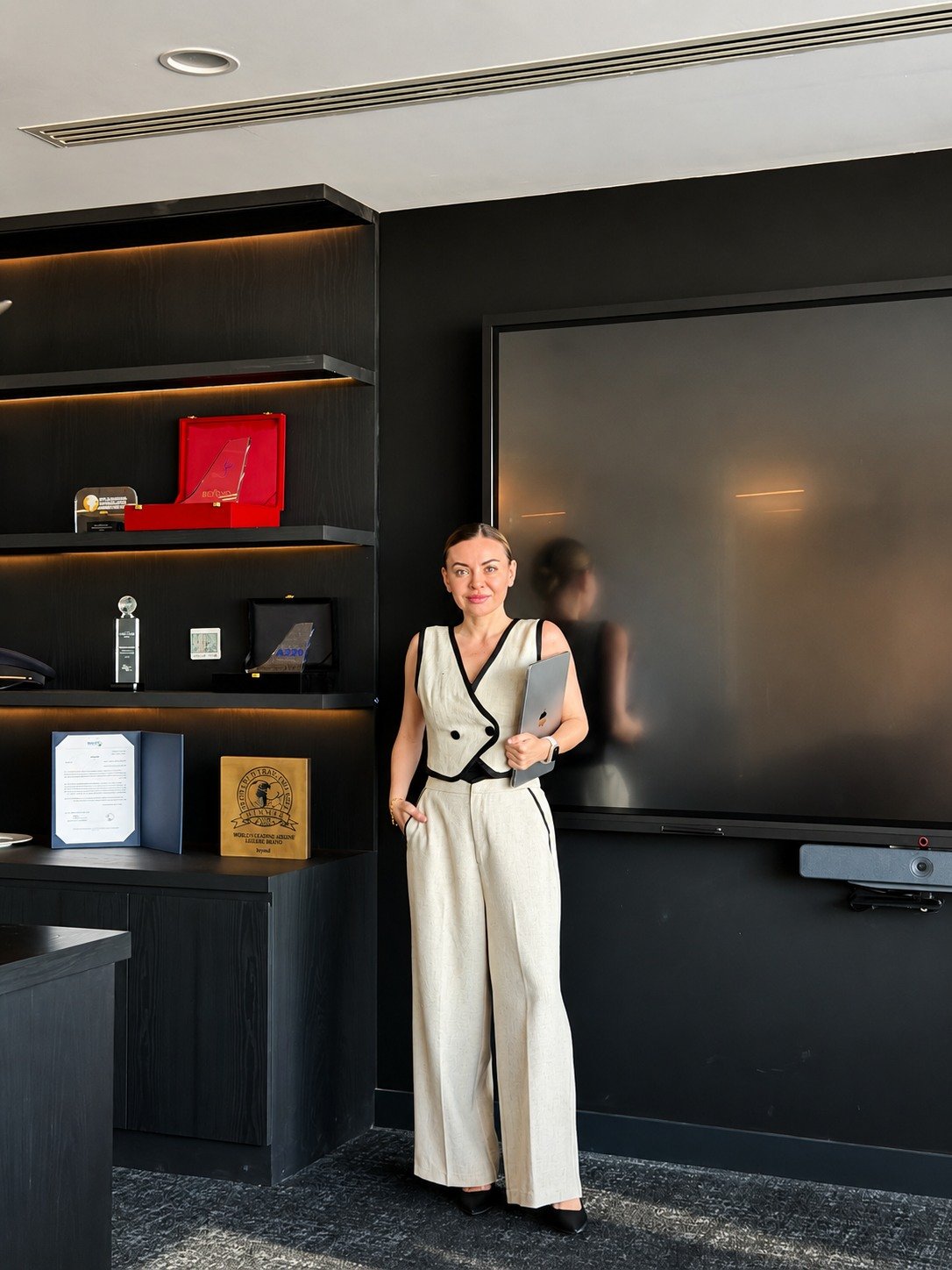
Please connect her:
E-Mail: alona.zakharova@flybeond.com
Web: www.flybeond.com
Linkedin – https://www.linkedin.com/in/alona-zakharova-412007236/
Conclusion
Across every answer, Zakharova returns to the same underlying idea: that judgment, trust, and anticipation are what separate a strategic Executive Assistant from an administrative one, and that no amount of automation changes that equation. Her path from administration to product coordination to the CEO’s office at beOnd reflects a broader shift she sees happening across the profession, one where the role is expanding into strategy, branding, and business development rather than staying confined to calendars and logistics. As luxury aviation moves toward personalization and frictionless service as the new competitive currency, Zakharova’s own career trajectory points to where she believes the industry, and her role within it, is headed next.