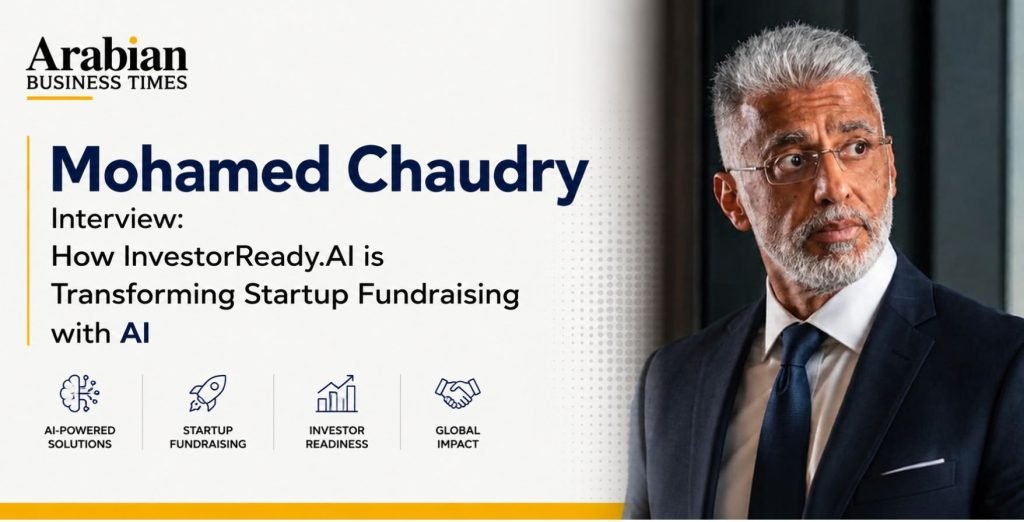
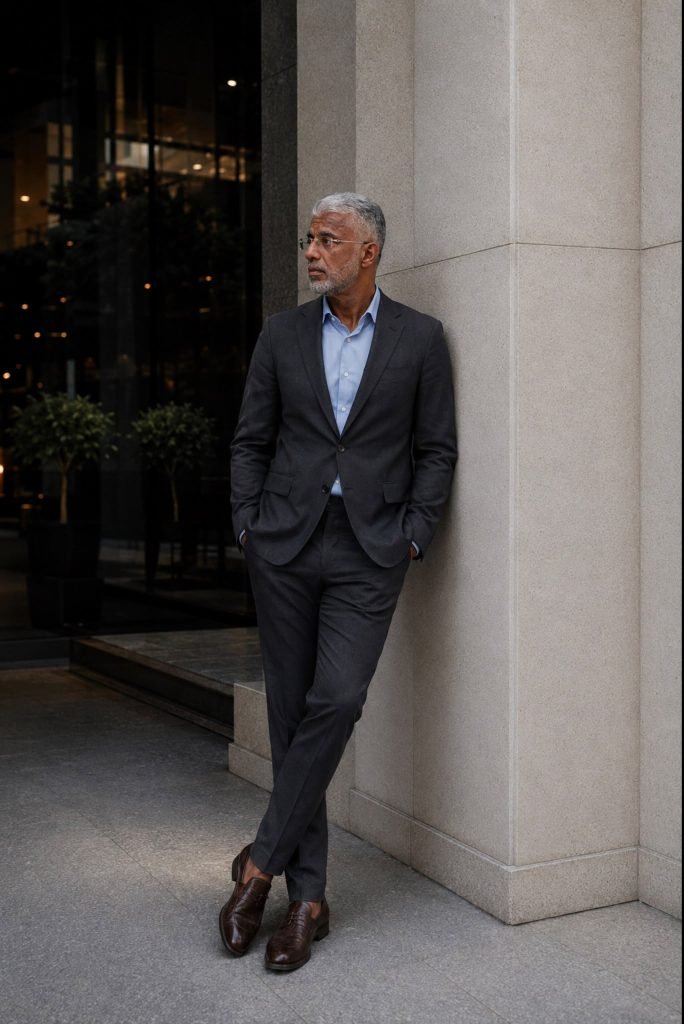
In today’s rapidly evolving startup ecosystem, securing investment requires far more than a compelling pitch—it demands financial discipline, strategic preparation, and investor confidence. Few professionals understand this better than Mohamed Chaudry FCCA, a serial entrepreneur, board director, and founder of InvestorReady.AI, who has spent over 25 years helping businesses raise capital, scale internationally, and navigate complex financial challenges. Having reviewed more than 250 startup pitch decks and contributed to over $300 million in fundraising, Chaudry brings a unique perspective that combines the mindset of a founder with the expertise of an experienced CFO. In this exclusive interview with Arabian Business Times, he shares valuable insights on AI-driven fundraising, financial leadership, investor expectations, and the future of entrepreneurship.
Mohamed Chaudry FCCA – Founder, InvestorReady.AI | Serial Entrepreneur, CFO & Board Director | #1 Bestselling Author, ‘The Art of Scaling’
Q1. What inspired your journey, and what pivotal experiences shaped your approach to business and financial leadership?
Mohamed Chaudry: I was a founder before I was ever a financier. In 1999, while studying for my Masters, I launched my first startup, Studentatuni.co.uk, a dot-com for the UK’s student market. No accelerators, no LinkedIn, no playbook. Just an idea, a university cafeteria, and the audacity to cold-call investors on landlines. I raised £900k for it as a student in my twenties.
But building it taught me something that redirected my entire career: I had the vision, but I didn’t fully understand the machine underneath a business: the finance, the deal structure, the capital. So I went and learned it properly. I qualified as a chartered certified accountant, moved into corporate finance and M&A, and spent the next two decades on the other side of the table, as Group CFO and Operating CFO across the UK, Africa and the Middle East.
“I don’t just understand founders. I am one. I’ve simply spent 25 years learning the finance most founders never do.”
That’s the thread through everything: I’ve lived the founder’s fear of running out of road, and I’ve learned the discipline that prevents it. Brilliant businesses don’t fail for lack of passion. They fail because cash runs out before opportunity does.
Q2. What inspired InvestorReady.AI, and what problems are you solving for founders and investors?
Mohamed Chaudry: Across those roles, and reviewing over 250 pitch decks, I kept seeing the same pattern. Within minutes of opening a founder’s deck, I could see exactly where an investor would lose confidence. But that judgement was locked inside expensive advisors most founders can’t afford. Having been the broke founder cold-calling investors, that gap felt personal.
So I encoded 25 years of it. InvestorReady.AI gives founders what investors actually probe, every question drawn from real investor conversations, not a prompt library, built from over $300M raised and 250+ decks reviewed. Investor-ready documents in 24 hours: deck, model, business plan, and the exact Q&A they’ll face. There are plenty of tools that make founders a nice-looking deck. But investors don’t fund design, they fund whether the numbers survive scrutiny. I built InvestorReady to deliver the substance, not just the slides.
But the documents are only half of it. The parts founders have never had access to are the ones that change outcomes: a view of how an investment committee will actually see their application once they leave the room; a red-flag report that stress-tests their numbers the way an investor will, before an investor does; and matching to the right investors, not a spray-and-pray list, but the specific handful, filtered by sector and stage, most likely to say yes. Those three things used to require an expensive advisor and a warm network. That’s what I set out to democratise.
“Most founders don’t have a fundraising problem. They have a preparation problem.”
Q3. The most common mistakes entrepreneurs make with investors, and how to improve their success?
Mohamed Chaudry: Three, repeatedly. They prepare answers but not follow-ups, when an investor asks your CAC, they’re testing whether you understand your business, and the follow-up is the trap. They treat numbers as decoration, burn with no runway, a top-down TAM, CAC with no payback. And they raise on hope, which an investor hears as ‘I don’t have a plan.’
“Investors rarely reject businesses for being too small. They reject founders who don’t know their own numbers.”
The fix is unglamorous: get someone who’s said no for a living to tear your pitch apart before an investor does. Every weakness you find yourself is a rejection you’ve prevented. There’s a red-flag report every investor runs in their head, is the growth believable, do the costs scale with it, where does the story not hold together. I’ve simply put that report on paper, so founders can see it before the investor does. My banking and corporate-finance endorsers, including relationship directors at HSBC and RBS, will tell you the same thing: it was never the flair that won the deal. It was the preparation and the quality of the documentation.
Q4. How will AI reshape startup fundraising, VC, financial planning, and due diligence over the next five years?
Mohamed Chaudry: AI will compress work that used to take a team a month into an afternoon. But here’s what people miss: AI raises the floor, not the ceiling. When everyone can produce a polished deck, polish stops differentiating, and judgement becomes everything.
There’s a hidden danger in this too. Founders now build their entire raise with a general AI tool, and it quietly costs them the one thing they can’t recover: credibility. A general model has no memory across documents, so the business plan says one thing, the pitch deck another, the financial model a third. It hallucinates numbers. It all looks polished, so the founder never notices. But an investor’s whole job is spotting the contradiction, and the moment they find one, they stop trusting every other number on the page. AI made the documents easy. It also made losing credibility easy.
“AI can write your pitch. It can’t stop it contradicting your own financials — and an investor only needs to find one contradiction to stop trusting all of them.”
“AI shouldn’t replace judgement. It should give every founder the financial scrutiny that used to require an experienced CFO in the room.”
That’s exactly what I built InvestorReady.AI to do. The winners won’t be those who use AI to look ready. They’ll be those who use it to actually be ready.
Q5. As both entrepreneur and CFO, how do you balance innovation with financial discipline when scaling?
Mohamed Chaudry: They’re not opposites — discipline is what lets you innovate without dying. At Seajet Systems, which I co-founded in Dubai, we were commercialising genuinely disruptive deeptech: the world’s first fully electric subsea excavation tool. The innovation was the whole point, but it only reached market, and attracted acquisition by OEG Offshore, because we built the financial architecture underneath it: robust financial modelling, disciplined IP strategy and a clear roadmap to Series A.
“Growth without governance is just expensive chaos.”
The balance is simple: know exactly what each dollar of capital is buying, and what milestone it reaches. Innovation is the bet. Discipline is knowing how many bets you can afford before the next inflection point. That’s the core argument of my book, The Art of Scaling: you don’t scale by adding more weight to carry, you scale by learning to carry it more efficiently.
Q6. What leadership principles have helped you navigate high-pressure environments?
Mohamed Chaudry: Vendease, a Y-Combinator-backed fintech in Nigeria tested this more than anywhere. I stepped in as CFO, then expanded to Co-COO, during rapid scale colliding with real macroeconomic pressure: currency devaluation, rising input costs, a tightening funding market, all at once. The instinct is to panic or freeze. My job was to do neither: align growth with capital discipline, lead a difficult restructuring, align the cost base with revenue reality, and keep the team steady through it.
“Pressure doesn’t build character. It reveals preparation.”
And the principle I lead by: the CFO’s role isn’t to say no. It’s to help founders make better yes decisions. Under pressure, be the most prepared and least reactive person in the room. Calm is contagious, so is panic.
Q7. What do investors value most now that capital has become more selective?
Mohamed Chaudry: When money was cheap, investors funded stories. Now they fund evidence: a clear line from their cash to your next inflection point, unit economics that are real and defensible, and a founder who knows their numbers cold. The market shifted from ‘how big could this be’ to ‘can this survive if the plan goes wrong.’ I lived that shift firsthand at Vendease. Founders who prove resilience, not just upside, are the ones getting funded.
There’s also a targeting mistake that selectivity punishes hard. Founders spray their deck at hundreds of investors, most of whom were never going to fund their sector or stage. In a tighter market that just multiplies the no’s and in a small ecosystem, every no travels. The skill now isn’t pitching more investors. It’s pitching the right ones, the specific handful out of thousands whose thesis actually fits. That precision matters more than volume ever did.
Q8. Why should financial planning be a core strategic priority from the earliest stages?
Mohamed Chaudry: Because the decisions you make early (your structure, your cap table, your terms) quietly shape everything later, including your exit. I’ve watched founders give away terms in a first raise that capped their own payout years down the line. Financial strategy isn’t something you bolt on before a raise. It’s the operating system of the company.
“A spreadsheet has never built a great company. But misunderstanding one has destroyed thousands.”
Founders obsess over product because it’s visible. But the company that scales is the one where someone thought about the numbers from day one. You don’t need a full-time CFO at the start. You need CFO-level thinking.
Q9. What trends will redefine entrepreneurship, VC, and financial leadership over the next decade?
Mohamed Chaudry: Three shifts. The fractionalisation of senior expertise: founders accessing CFO and strategic judgement on demand, at a price they can afford. The collapse of the gap between ‘small company’ and ‘well-run company,’ as AI lets a five-person startup operate with the rigour that used to need a department. And judgement becoming the scarce asset: when execution is cheap and automated, the premium moves to knowing what to do, not how.
That’s the thesis behind everything I’m building. Most fundraising tools give founders slides but investors don’t fund slides, they fund whether the numbers hold up. So I’m building the opposite: tools that deliver real financial substance. InvestorReady gets you funded, DealReady gets you exit-ready, BoardReady gets you boardroom-ready, a connected suite that follows a company’s whole financial arc, made affordable.
Q10. Advice for entrepreneurs and aspiring CFOs who want to build investment-ready businesses?
Mohamed Chaudry: Build as if the smartest sceptic in the world will examine your business tomorrow, because eventually one will. Readiness isn’t a phase before a fundraise; it’s a way of running the company. And for aspiring CFOs: learn to see the business, not just the spreadsheet. The best financial leaders understand what the numbers mean for the humans making the decisions. Master that translation and you’ll never be short of a seat at the table.
Closing. The philosophy that’s stayed constant, and your message to the next generation.
One principle has never changed: preparation is the truest form of confidence. From a student raising £900k on a landline, to CFO roles across three continents, to the book, to InvestorReady.AI — it all comes back to being ready before the moment demands it. I’ve been the founder in the arena and the financier at the table. I’m still building.
“My mission was never simply to help companies raise capital. It’s to help founders build businesses worthy of capital. Those are two very different things.”
To the next generation: the world will always reward the prepared over the merely talented. Do the unglamorous work. Know your numbers. Answer the hard question before it’s asked. That’s how you build a business worthy of capital and capable of scaling sustainably. I’ve been there, done it, and I’m still doing it alongside you. That’s not just how you raise money. It’s how you build something that lasts.
ABOUT MOHAMED CHAUDRY
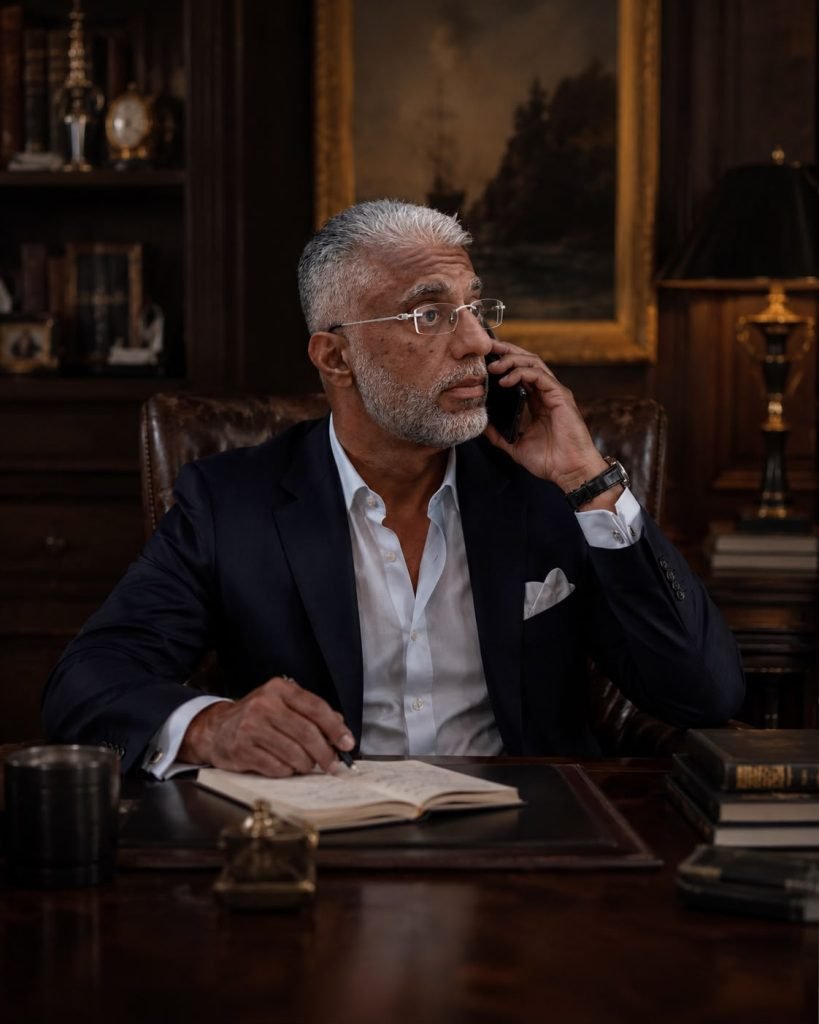
- FCCA. 25 years. $300M+ raised (career total). 5 exits, 2 as founder. 250+ pitch decks reviewed.
- Group CFO / Operating CFO across the UK, Africa and the Middle East. Key roles: Foodhub (Group CFO, hyper-growth SaaS across 8 countries), Seajet Systems (Co-Founder & CFO, deeptech, acquired by OEG Offshore), Vendease YC W21 (CFO & Co-COO).
- Serial founder from the start: first venture Studentatuni.co.uk (1999), £900k raised, press-featured in Business A.M.
- #1 Bestselling author of ‘The Art of Scaling’ (No.1 across multiple categories; UK Talk Radio’s Best Book Reads 2025).
- Founder of InvestorReady.AI, building a connected suite of AI tools for founders: InvestorReady.AI (fundraising), DealReady.AI (exit-readiness) and BoardReady.AI (boardroom-readiness).
- Endorsed by named senior banking and corporate-finance figures, including relationship directors at HSBC and RBS.
- Already featured in CFO Dive, TechRound, Authority Magazine and Management Today.
Links: mohamedchaudry.com · investorready.ai · deal-ready.ai · board-ready.ai · LinkedIn https://ae.linkedin.com/in/mohamedchaudry @the_scale_up_cfo
Free Founder Newsletter → https://mohamedchaudry.com/newsletter
Conclusion
Mohamed Chaudry’s journey demonstrates that sustainable business growth is built on preparation, financial clarity, and disciplined execution rather than ambition alone. As artificial intelligence continues to reshape fundraising, financial planning, and venture capital, his message remains clear: technology can enhance decision-making, but it can never replace sound business judgment. Through InvestorReady.AI and his broader mission to democratize access to world-class financial expertise, Chaudry is helping founders become genuinely investment-ready—not just presentation-ready. His insights offer a practical roadmap for entrepreneurs, investors, and business leaders seeking long-term success in an increasingly competitive global economy.