Profile Information
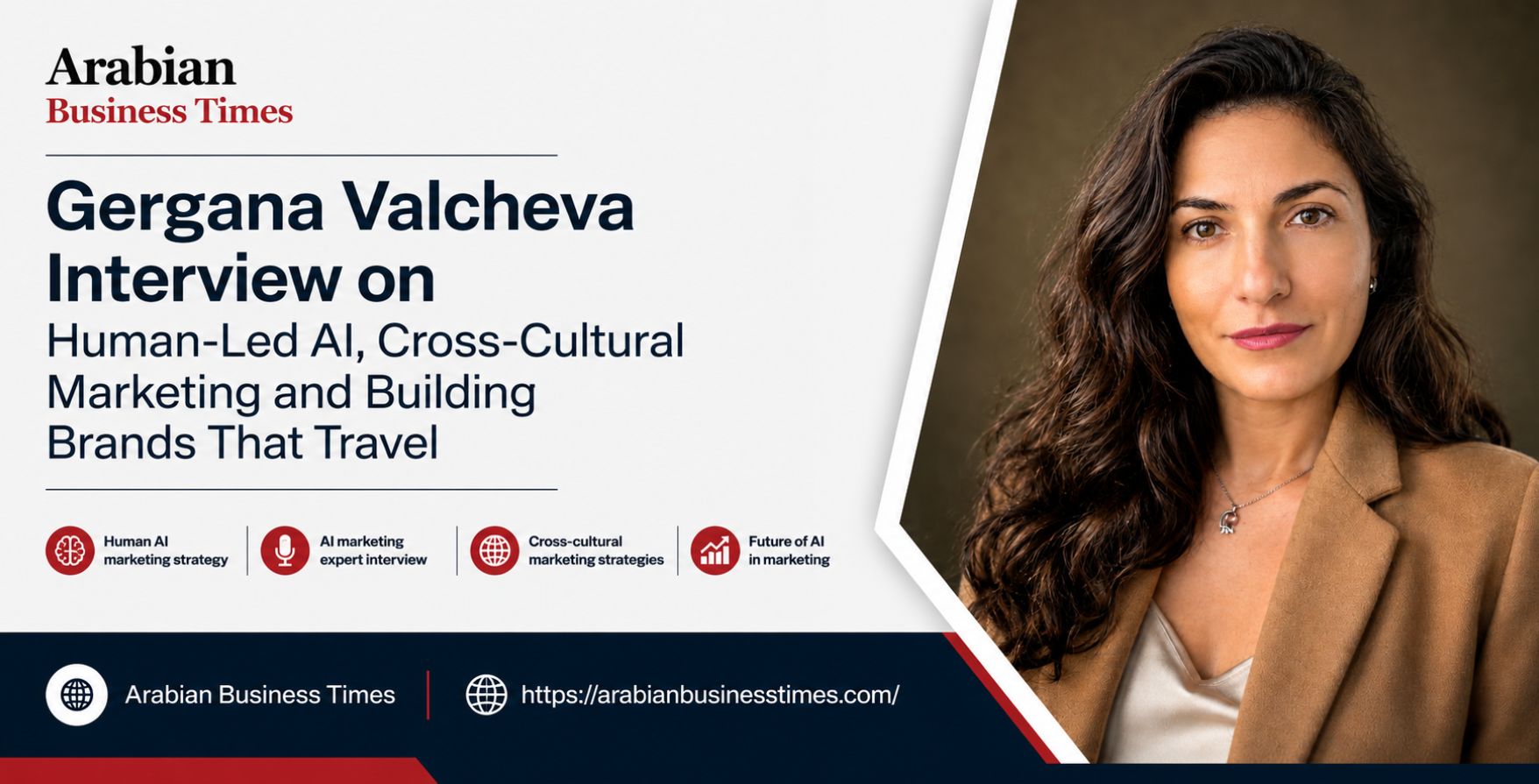
Name: Gergana Valcheva, also known as Xiya Wan 万夕雅
Designation: Global Marketing Strategist and Founder of True Story Method | Human + AI Marketing and Paid Social Specialist
Company name: True Story Method
Professional certification: Certified Consultant (Chinese Philosophy)
Official website: https://xiyawan.com
LinkedIn: https://www.linkedin.com/in/gerganavalcheva/
Instagram: https://instagram.com/socialxiyawan
X: https://x.com/socialxiyawan
1. You have spent over 15 years helping global brands connect with diverse audiences across Europe and beyond. What inspired your journey into marketing, and what have been the defining moments of your career?
Gergana Valcheva: My journey into marketing began before I fully understood that it would become my career. I was always fascinated by people: why we notice certain messages, why we trust some brands and not others, and why the same idea can create completely different reactions across cultures.
I grew up in Bulgaria and moved to the Netherlands immediately after high school, at eighteen, to study International Business and Management with a major in marketing. Moving abroad so young required me to build a new life from the ground up. It made me observant, adaptable and deeply aware of how culture influences communication and behaviour.
I later spent a year in Canada, further specialising in marketing and consumer behaviour. That international education gave me the foundation for a career that has consistently crossed borders, markets and disciplines.
I began professionally in technology and consumer electronics, working across both B2C and B2B marketing. Over the years, my work expanded into e-commerce, engineering, professional services, local service businesses and personal brands. I have worked across brand positioning, product marketing, content, social media, paid advertising, influencer collaborations, localization and integrated campaigns.
Several experiences became defining moments. I built European brand communities from zero, including growing a Facebook audience beyond 60,000 followers and establishing Instagram and LinkedIn channels from the ground up. I also managed international trade-show and event activity, including IFA Berlin, where our press programme welcomed around 300 journalists in one day. I organised exclusive lounge events that brought brands, media, partners and audiences together in a more personal environment.
Those experiences taught me that marketing is never only about campaigns. It is about understanding people, creating the right conditions for trust and turning a business objective into a meaningful experience.
More recently, this journey led me to create True Story Method, which brings together international marketing strategy, consumer behaviour, brand positioning, AI-enabled execution and deeper human understanding.
2. Marketing is undergoing one of the biggest transformations in history due to Artificial Intelligence. How do you see AI changing the way brands approach content creation, customer engagement and campaign execution?

Gergana Valcheva: AI is changing marketing at three connected levels: speed, scale and intelligence.
In content creation, AI can compress hours of research, ideation and repurposing into a much shorter workflow. A strong core idea can be adapted into articles, social posts, emails, campaign concepts and market-specific variations more efficiently than before.
In customer engagement, AI enables brands to respond faster, identify recurring needs and create more relevant communication. It can help analyse questions, reviews, search behaviour and audience patterns, allowing businesses to understand what customers are actually trying to solve.
In campaign execution, AI can support audience research, creative variation, reporting, optimization and pattern recognition. Marketing teams can test more intelligently and respond to performance signals faster.
However, speed is not the same as strategy.
AI can generate a hundred pieces of content, but it cannot independently decide which message a brand should own, what promise it can credibly make or which idea will build trust over several years.
The brands using AI most effectively will not simply automate more. They will create systems in which human strategy directs AI-enabled execution.
My own approach is therefore human-led and AI-supported. The human defines the objective, audience, positioning, standards and meaning. AI extends the ability to research, explore and execute. The human then validates the result through judgment, experience and context.
AI should make marketing teams more capable, not less thoughtful.
3. You often speak about the balance between “Human Insight and AI-Enabled Execution.” How can organizations leverage AI effectively without losing authenticity and genuine human connection?
Gergana Valcheva: Organizations should begin with a clear principle:
AI should work inside a brand system, not in place of one.
Before introducing tools, a company needs clarity about its identity, audience, value proposition, tone of voice and ethical boundaries. Without that foundation, AI often produces content that is efficient but generic.
I use a simple three-stage approach.
First, humans set the direction. They define the business problem, strategic objective, audience context and standard of quality.
Second, AI supports the work. It can accelerate research, organise information, generate alternatives, identify patterns and assist with execution.
Third, humans evaluate the output. They ask whether it is accurate, useful, distinctive, emotionally appropriate and consistent with the brand’s real experience.
Authenticity does not mean refusing technology. It means maintaining responsibility for what the technology produces.
Brands should also preserve genuine points of human contact. Sensitive customer situations, strategic conversations, leadership communication and community relationships should not be delegated entirely to automation.
As synthetic content becomes more common, people will increasingly value evidence of real experience: specific observations, informed opinions, honest stories and communication that feels connected to a real person.
AI can imitate language. It cannot replace lived experience, judgment or earned trust.
The future will belong to organizations that use technology confidently while remaining recognisably human.
4. Throughout your career, you have managed multi-market campaigns and localized global messaging for different regions. What are the biggest challenges brands face when adapting their message across cultures, and how can they overcome them?
Gergana Valcheva: The most common mistake is treating localization as translation.
Translation changes the language. Localization preserves the intended meaning, relevance and emotional effect in a different market.
A message that performs well in one country may feel too aggressive, too informal, too technical or simply unimportant somewhere else. Even within Europe, audiences differ in how they respond to humour, urgency, authority, product benefits and calls to action.
The central brand should remain consistent, but its expression may need to change.
Brands also make mistakes when decisions are made entirely from headquarters. A campaign may be linguistically correct but culturally disconnected because no one close to the local audience was involved early enough.
My approach is to separate the non-negotiable brand core from the adaptable market layer.
The core includes the brand’s purpose, positioning, promise and visual identity. The adaptable layer includes language, examples, benefit hierarchy, imagery, platform choice, tone and campaign timing.
Local insight should enter the process before the final translation stage. Teams should examine local customer questions, search behaviour, platform habits, competitors, cultural sensitivities and regulatory requirements.
I have also worked on the localization and editing of consumer-electronics documentation, including manuals and compliance-related materials. That experience reinforced how important precision is. A small wording difference can affect not only perception, but also clarity, usability and trust.
The strongest international brands do not speak identically everywhere. They remain recognisable everywhere while communicating in a way that feels locally understood.

5. As a Paid Social Advertising Specialist, what common mistakes do businesses make when running digital advertising campaigns, and what strategies consistently deliver the best ROI?
Gergana Valcheva: One of the biggest mistakes is asking advertising to solve a problem that exists elsewhere in the business.
Paid social cannot permanently rescue an unclear offer, weak positioning, an unconvincing landing page or a slow follow-up process. Ads amplify what is already there, both the strengths and the weaknesses.
Another common mistake is optimizing for the wrong outcome. Businesses celebrate impressions, clicks or cheap leads without examining lead quality, conversion rate, customer value or profitability.
I also see companies spread small budgets across too many audiences, campaigns and creative variations. This prevents the platform from gathering enough information to learn effectively.
At the opposite extreme, some businesses change campaigns too quickly. They react to one weak day rather than looking for meaningful patterns.
The strategies that consistently improve ROI are usually disciplined rather than dramatic:
- begin with one clear commercial objective;
- connect the advertisement, offer and landing experience;
- develop creative variations around genuine audience needs;
- test one meaningful variable at a time;
- track quality and revenue, not only platform metrics;
- give campaigns enough time and budget to generate usable data;
- improve the follow-up process, especially for lead-generation campaigns;
- evaluate the entire customer journey.
Creative quality is also increasingly important. Targeting systems have become more automated, so the message, opening hook, visual and offer often create the strongest competitive advantage.
The best-performing campaign is not always the one with the most complex setup. It is the one where strategy, creative, offer, data and follow-up work as one system.
6. Data has become central to modern marketing decisions. How can organizations use data and analytics to improve performance while still maintaining creativity and brand storytelling?
Gergana Valcheva: Data and creativity should not compete. They answer different questions.
Data can show us what happened, where people disengaged, which message attracted attention and which audience converted. Creativity helps us understand why the message matters and how to make people feel something.
The danger appears when organizations use data only to repeat what already performed. If every creative decision is based solely on previous clicks, marketing becomes increasingly predictable and eventually loses distinctiveness.
I believe data should sharpen creativity, not flatten it.
Organizations need a hierarchy of measurement. At the top should be the business outcome: revenue, qualified leads, customer value, retention or another meaningful commercial result.
Below that sit the behavioural indicators: conversion rate, engagement quality, watch time, click-through rate, landing-page behaviour and customer feedback.
Teams should then use these signals diagnostically. Instead of saying, “This advertisement failed,” they should ask:
Was the audience wrong?
Was the message unclear?
Did the creative attract attention but fail to build intent?
Was the offer weak?
Did the landing page create friction?
Was the follow-up too slow?
That level of analysis gives creative teams useful direction without turning them into servants of a dashboard.
The strongest brand storytelling combines imagination with feedback. It starts with a clear human insight, expresses it creatively and then uses data to understand whether the intended meaning reached the audience.
7. Your expertise extends beyond marketing into Chinese Philosophy and Yi Jing consulting. How has this ancient framework influenced your approach to leadership, decision-making and strategic planning?

Gergana Valcheva: My studies in Chinese philosophy and Yi Jing-based wisdom have added another dimension to how I understand people, timing and change.
I hold a Professional Certification as a Certified Consultant in Chinese Philosophy, and I continue developing this work through Shuyi Culture and the Asia Yi Jing Cultural Exchange Association.
Yi Jing is often translated as the Book of Changes. One of its central ideas is that change is constant, but our response to change can become more conscious.
In practical terms, it has strengthened my attention to three things.
The first is character. People have different natural strengths, patterns and decision-making styles. Good leadership begins with understanding yourself rather than copying someone else’s model.
The second is timing. Strategy is not only choosing what to do. It is also recognising when to initiate, develop, adjust or consolidate. Timing is not an excuse to wait passively; it is a way to act with greater awareness.
The third is alignment. A decision may look attractive externally but still conflict with a person’s values, capabilities or longer-term direction.
This perspective complements my marketing experience. Marketing provides research, structure, data and execution. Yi Jing-based wisdom adds pattern recognition, self-awareness and sensitivity to timing.
I do not use ancient wisdom to replace evidence or professional judgment. I use it to ask better questions and to understand the human being making the decision.
8. Looking ahead, what emerging trends do you believe will have the greatest impact on the future of marketing, social media and brand communication over the next five years?
Gergana Valcheva: Several developments will reshape marketing simultaneously.
The first is the rise of AI agents and connected workflows. AI will move beyond assisting with individual tasks and begin coordinating research, content, reporting, customer support and campaign processes.
The second is the fragmentation of search. People are already finding answers through Google, AI assistants, social platforms, podcasts, videos and community recommendations. SEO will remain important, but AEO, answer engine optimization, will become equally relevant. Brands must be easy for both people and machines to understand.
The third is a growing trust gap. As synthetic content becomes easier to produce, audiences will become more cautious about generic expertise and manufactured authority. Original thinking, transparent evidence and recognisable human voices will become more valuable.
The fourth is localization at scale. AI will make market adaptation faster, but cultural judgment will remain essential. A technically correct local version is not necessarily a culturally effective one.
The fifth is the growing importance of owned assets and first-party relationships. Social platforms are powerful but unstable. Websites, email lists, intellectual property, communities and direct customer knowledge will give brands greater resilience.
I also expect founder-led and expert-led brands to grow. People increasingly want to understand who is behind a company, how that person thinks and whether their behaviour matches the brand message.
The future will not reward the brands that automate the most. It will reward those that combine technology, trust and distinctive human perspective most intelligently.
9. As marketing becomes increasingly automated, what skills should future marketers develop to remain relevant and create meaningful value for organizations?
Gergana Valcheva: Future marketers will need a broader combination of skills than previous generations.
AI literacy is essential, but tool knowledge alone will not be enough. Tools change quickly. The ability to think clearly compounds over time.
Marketers should develop:
Strategic thinking: understanding the business objective behind the activity.
Consumer psychology: recognising what people need, fear, value and trust.
Data interpretation: moving beyond reporting numbers to explaining what they mean.
Editorial judgment: knowing which idea is worth developing and what should be removed.
Cross-cultural communication: understanding that audiences do not interpret every message in the same way.
Commercial awareness: connecting marketing work with revenue, customer value and business sustainability.
Experimentation: designing useful tests rather than chasing random tactics.
Ethical judgment: understanding the consequences of personalization, automation and synthetic media.
Relationship-building: because trust, collaboration and empathy remain deeply human advantages.
I would also encourage marketers to gain practical experience across disciplines. Some of my strongest professional lessons came from connecting social media with product launches, events, customer service, PR, localization, paid media and sales.
Automation will reduce the value of routine execution. It will increase the value of judgment, integration and responsibility.
The future marketer should not only know how to operate tools. They should know what problem deserves to be solved and how marketing contributes to the wider business.
10. Finally, what advice would you give to entrepreneurs, business leaders and marketing professionals who want to build strong brands in an AI-driven world?
Gergana Valcheva: Begin with clarity before increasing visibility.
Know who you serve, what problem you solve, what you genuinely understand and what you want to become known for.
Then build a coherent system around that clarity:
- a meaningful position;
- a credible offer;
- a recognisable message;
- evidence of your expertise;
- useful content;
- owned digital assets;
- consistent customer experience.
Use AI to extend your capabilities, not to invent an identity for you.
Let it support research, organization, ideation, personalization and execution. But maintain responsibility for strategy, accuracy, values and human relationships.
Build proof as carefully as you build promotion. Case studies, practical insights, transparent processes, customer outcomes and original thinking create stronger authority than constant self-description.
Leaders should also remember that a brand is not only what marketing communicates. It is what the organization repeatedly delivers.
Through True Story Method, I help founders, personal brands and purpose-driven businesses connect their real strengths, experience and values with clear positioning and practical marketing. The principle behind that work is simple: sustainable visibility begins when the external message is aligned with the internal truth.
AI will continue changing how brands communicate. Clarity, credibility and trust will remain the reasons people choose them.

Optional Closing Question: If you could share one key lesson about marketing, leadership or personal growth that has guided your success, what would it be?
Gergana Valcheva:
Learn to adapt without abandoning yourself.
Moving from Bulgaria to the Netherlands at eighteen, studying in Canada, building a career across cultures and later creating my own methodology all required adaptation.
But adaptation should not mean becoming whatever the environment expects. It means learning, expanding and changing while remaining connected to your values and direction.
In marketing, this means evolving with technology without losing your brand.
In leadership, it means responding to circumstances without surrendering judgment.
In personal growth, it means allowing life to change you without letting it erase you.
That balance has guided every important stage of my journey.
About Gergana Valcheva / Xiya Wan
Gergana Valcheva, also known as Xiya Wan 万夕雅, is a global marketing strategist and the founder of True Story Method. With more than fifteen years of international experience, her work spans brand positioning, social media strategy, paid social advertising, content, cross-cultural marketing, consumer behaviour and Human + AI marketing.
Originally from Bulgaria and based in the Netherlands, she studied International Business and Management with a marketing major and later specialised further in marketing and consumer behaviour in Canada.
She holds a Professional Certification as a Certified Consultant in Chinese Philosophy and continues her Yi Jing and Shuyi Culture work through the Asia Yi Jing Cultural Exchange Association.
Connect with her:
Website: https://xiyawan.com
LinkedIn: https://www.linkedin.com/in/
Instagram: https://instagram.com/
X: https://x.com/socialxiyawan