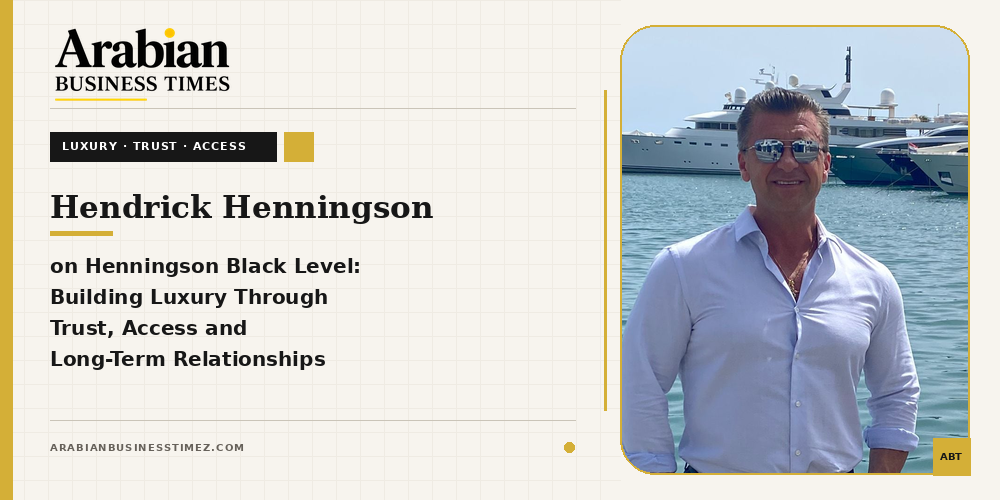
Luxury is changing. For today’s high-net-worth clients, exclusivity is no longer defined simply by the price of a product. Trust, privacy, access, personal relationships and exceptional service are becoming equally important.
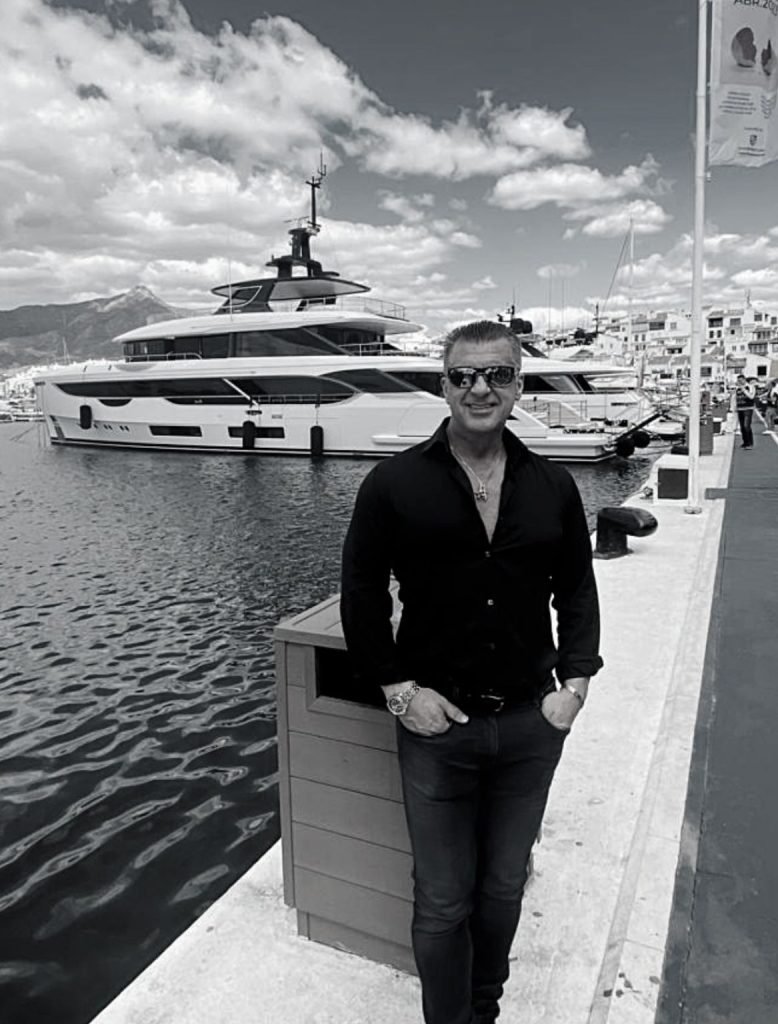
At the centre of this shift is Hendrick Henningson, founder of Henningson Black Level (HBL), a growing network spanning luxury products and services, consulting, wealth management, investments and premium experiences.
In this exclusive interview, Hendrick Henningson discusses the vision behind HBL, the evolution of the luxury industry, the role of trust in client relationships, the future of wealth creation, AI and luxury services, leadership, and his advice for entrepreneurs entering the luxury sector.
Trust Over Transaction: Inside Henningson Black Level’s Approach to Luxury
Henningson Black Level was not built as a single business but as a network, one that now spans luxury products and services, consulting, wealth management and investments, and premium experiences under what its founder calls The HBL Family. In this conversation, the founder talks about the philosophy behind that structure, how the definition of luxury itself is shifting, and why he believes the biggest risk to a luxury brand is treating a client like a transaction.
What inspired the founding of HBL, and what vision continues to drive its growth?
The company grew out of the founder’s years as a business consultant, where he saw an opportunity to bring value to the luxury and excellence markets through more than business knowledge alone. “I saw that I could bring real value to the luxury and excellence markets, not only through business knowledge, but also through connections, strategy and understanding people.”
Over time, that experience evolved into what he calls a Global–Local Strategy, a way of operating internationally while staying attentive to the fact that every market, culture and client is different. That principle became the foundation of HBL and of what the company refers to internally as The HBL Family. “Our vision is to remain a trusted global platform, connecting clients with the right people, services, investments and opportunities, always with discretion, transparency and long-term value.”
How do HBL’s different business pillars complement one another?
The company’s various divisions were not planned as a fixed structure from day one. They emerged, the founder explains, because client needs tend to overlap. Someone searching for a luxury asset may also need business advice, investment guidance or lifestyle support in another country, and HBL was designed so that a single trusted relationship could cover all of it rather than requiring clients to work with several disconnected companies.
Growth, however, stays deliberate. “We only open a new concept when we have the right professional or specialist to lead it,” he says. “For us, it is not about doing everything. It is about doing the right things properly, with the right people.” That restraint is part of what distinguishes HBL’s model from a conglomerate that expands for the sake of scale: each pillar exists because a client need already justified it, not the other way around.
How has luxury evolved, and how is HBL adapting?
Luxury, in the founder’s view, has moved decisively away from being defined by the product alone. “It is about trust, privacy, access and service. It is not only about buying an expensive product.” At the same time, he points to real growth at the premium end of the market, with more people entering the world of luxury through fashion, watches, beauty, travel or lifestyle experiences.
HBL positions itself to serve both ends of that spectrum, working with clients seeking highly exclusive solutions while also giving genuine attention to someone buying a first luxury item. “You never know where a relationship can go,” he says. “Someone buying their first luxury watch today may become a private jet client in the future.” The operating principle, as he puts it, is simply to treat every client with respect and provide the right level of service, regardless of where they sit on that spectrum.
What principles guide your approach to wealth management and investments?
Before any conversation about investments or wealth structures begins, the founder says HBL starts by understanding the person: their priorities, family situation, lifestyle, risk appetite and long-term goals. Wealth, in his framing, is not only about generating returns. It is equally about protecting assets, planning for family, building flexibility and giving clients peace of mind.
Because so many clients today live and do business across borders, tax planning, residency, asset protection and legal structuring often become part of that same conversation. HBL does not handle this in isolation, working instead with licensed and regulated partners so that clients get expertise suited to their specific situation.
Which sectors do you believe will shape wealth creation in the future?
Looking ahead, the founder points to scarcity, resilience and wellbeing as themes he expects to define the next decade of wealth creation, with natural resources and strategic raw materials continuing to grow in importance as capital searches for security, growth and diversification. He also sees opportunity opening up in regions once considered uncertain or underdeveloped.
The Gulf, in particular, stands out to him as an example of what happens when vision, capital and execution align, and he expects the region to keep generating opportunities across technology, hospitality, real estate, health, lifestyle and premium services. Preventive health and wellness sit high on that list too. “People are increasingly understanding that wellbeing is part of long-term success.”
How can AI improve luxury services while keeping them personal?
The founder is candid about where he thinks AI belongs in a luxury business, and where it does not. Used well, he says, it can make operations faster, more efficient and more personalised, supporting research, communication and customer understanding. What it should never do, in his view, is replace the human side of the relationship. “In luxury, AI should never replace the human side. It should support human judgement, discretion and relationships.”
He is particularly interested in where AI intersects with virtual environments, an idea behind HBL’s own Virtual HBL concept, which imagines clients experiencing brands, products and services in more immersive ways from anywhere in the world. The real challenge, he notes, will be building genuinely new strategies for these spaces rather than simply repeating existing business models in digital form. For a company built on personal relationships, that distinction matters: technology earns its place only when it deepens a connection rather than substituting for one.
What leadership values have been most important to HBL’s success?
Asked about leadership, the founder returns to the idea of The HBL Family, which he describes as central to making people feel part of something meaningful rather than simply employed by a company. “When people feel part of the vision, they do not only represent a company. They represent themselves, their own standards and their own reputation.”
He is explicit that he does not want to build the business around himself. “I do not believe in building a business around ‘me’. I believe in building it around ‘us’.” Trust, fairness, transparency and respect, he says, are the values that matter most to him personally, and he sees a direct link between people feeling valued and understanding their purpose, and how much responsibility they take on in return.
What advice would you give to entrepreneurs entering the luxury sector?
His advice to newer entrepreneurs is blunt: do not chase the commission, chase the client relationship. Luxury clients, he argues, understand value well enough to know when a fee is fair and when someone is trying to extract too much from a deal, and that awareness makes transparency essential. “If clients feel that a transaction is overpriced because of excessive commissions, trust can disappear very quickly.”
He frames loyalty as the more valuable long-term asset, arguing that a client who returns regularly is often worth more than a single large transaction. “Build relationships, be fair, protect your reputation and think long term,” he says. “Luxury is not only about appearances. It is about consistency, service and trust.”