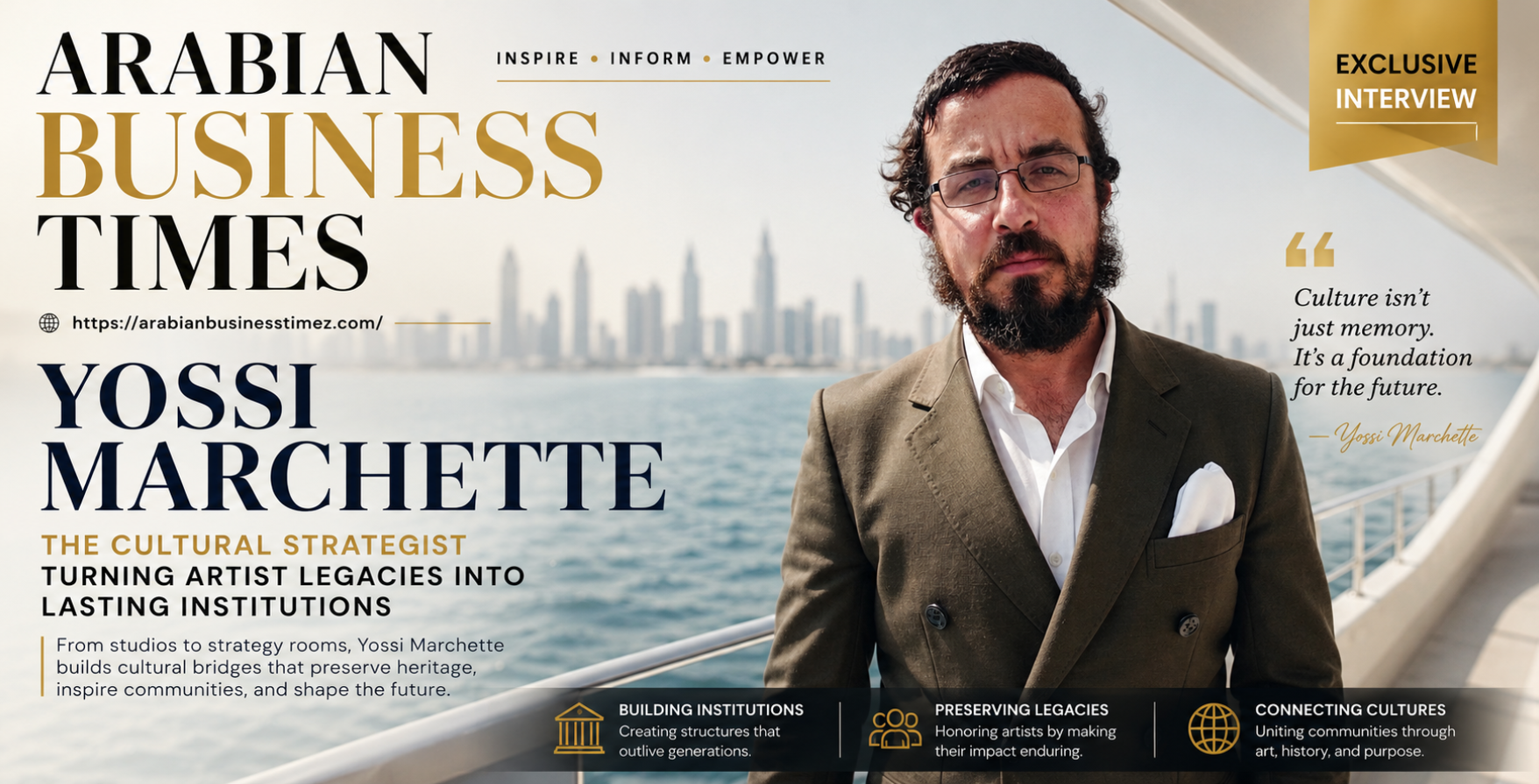
The founder of Virtue Flow Consulting has spent years watching important creative work vanish within a generation. Now he builds the systems that stop it from happening.
There is a particular silence that follows the death of an artist whose work was never properly documented, never placed with the right institutions, never given the narrative infrastructure that would carry it forward. Yossi Marchette has encountered that silence more than once. And he finds it avoidable.
Marchette is the founder of Virtue Flow Consulting and the director of the DovBer Marchette Project, a long-term cultural initiative built around his own father’s artistic legacy. He works between the United States and Italy, advising artist estates, cultural organizations, and creative businesses on something the sector tends to handle badly: the deliberate, strategic construction of lasting recognition.
His entry point into this work was not the art world. It was more than a decade running high-volume floral retail, learning, through daily operational pressure, that vision without systems is just intention. That lesson, absorbed through logistics and process design and resource management rather than through galleries or curatorial programs, became the lens he now applies to one of culture’s most persistent problems.
“Talent is never enough on its own. Legacy is built deliberately, or it is not built at all.”
That is not a cynical statement. Coming from Marchette, it is a practical one. And it shapes every engagement he takes on.
The Retail Decade Nobody Expected
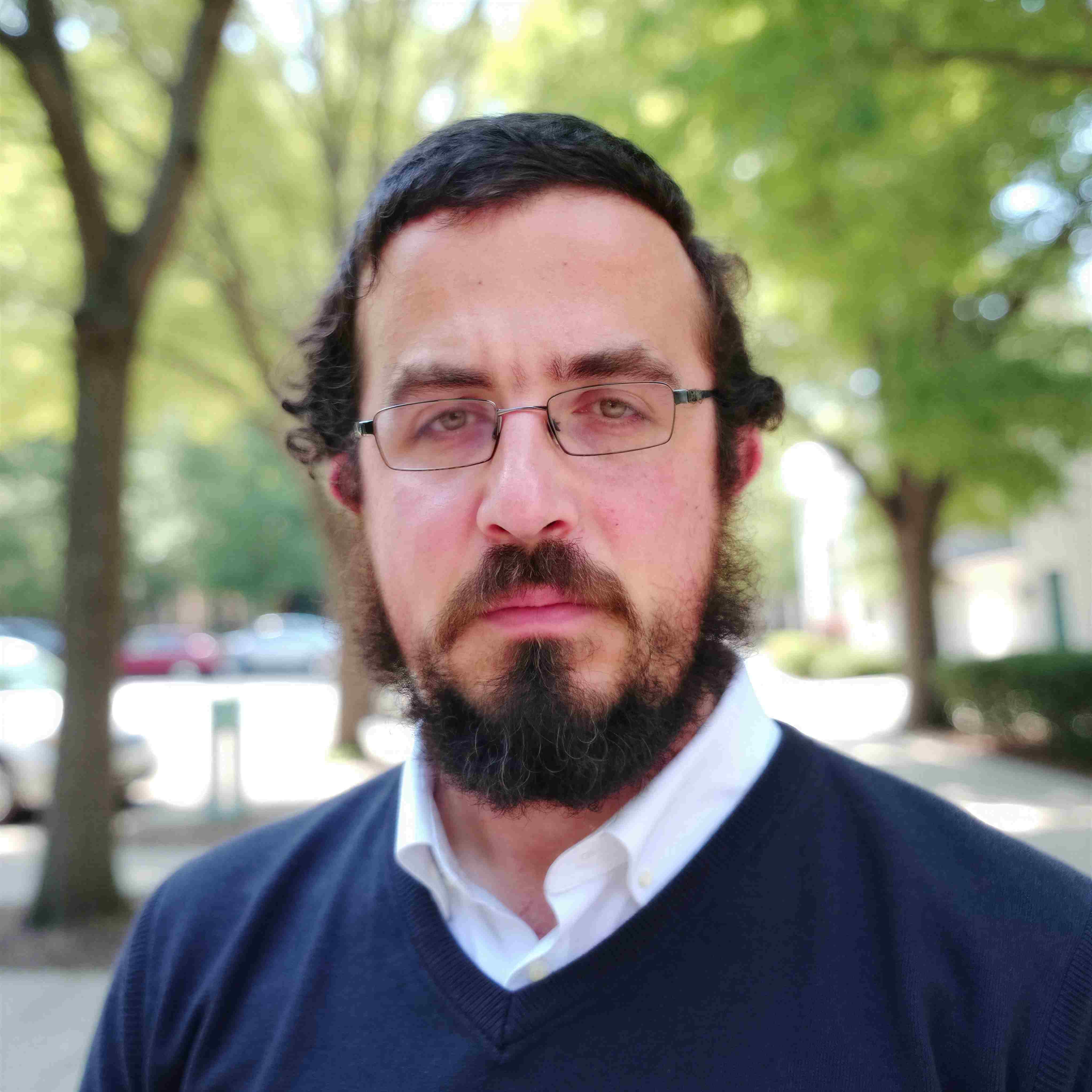
When Marchette talks about his background in high-volume floral retail, he does not frame it as a detour. He frames it as the foundation. And once you understand how he thinks about cultural strategy, that framing makes complete sense.
In high-volume retail, the margin for error is small and the feedback is immediate. Processes either work or they do not. Communication is either clear or it produces costly mistakes. Incentives either align with outcomes or quietly work against them. You learn, faster than any classroom can teach, that the distance between a good idea and a good result is entirely determined by the quality of the system connecting them.
Marchette carried that understanding out of retail and into cultural strategy, where it turned out to be rare. The creative sector, he found, is full of vision and short on operational discipline. Similar insights on building scalable businesses can be found in our interview with Vishwa Mohan, where he discusses leadership, innovation, and sustainable business growth. Artist estates are often managed reactively, with documentation scattered and institutional relationships undeveloped. Cultural organizations articulate ambitious missions and then struggle to build the repeatable structures that would actually deliver on them.
“Goals without supporting systems are just intentions. That is as true for an artist estate as it is for a flower shop.”
Business systems and operational excellence are also central themes in our exclusive interview with Bassel Babbili, who shares his entrepreneurial journey and business philosophy.
At Virtue Flow Consulting, the operational philosophy he developed over those years is formalized into three principles he applies to every engagement: clarity, so that everyone involved knows exactly what they are responsible for; simplification, removing complexity that does not add genuine value; and alignment, ensuring that systems, incentives, and leadership behaviors are all pointing in the same direction. When those three things are in place, he says, organizations become more adaptable, more scalable, and more resilient. When one is missing, everything else gradually compensates for it in ways that cost more than fixing the root problem would have.
The Question That Started the DovBer Project
The DovBer Marchette Project began personally. Marchette wanted to preserve and promote his father’s artistic legacy, and as he worked through what that actually required, he realized he was confronting a problem that applied far beyond his own family.
The problem was structural. Most artists, even serious and accomplished ones, spend their careers focused almost entirely on the act of creation. Documentation is an afterthought. Institutional relationships are informal or nonexistent. There is no public narrative that situates the work within a larger cultural conversation. And then, when the artist’s active career ends, there is no ecosystem in place to carry the work forward.
What follows is predictable. Important work fades. Archives deteriorate or disperse. The scholars who might have written about it never encountered it. The institutions that might have acquired or exhibited it were never approached. Within a generation, the silence arrives.
“Many artists spend decades creating important work yet devote little attention to how that work will be preserved, contextualized, or stewarded after their careers.”
Marchette’s answer to this is not a single program or a single intervention. It is a framework, one that involves developing institutional relationships, creating educational initiatives, establishing documentation systems, engaging scholars, and building the kind of clear public narrative that tells audiences, collectors, and institutions why the work matters and what it contributes to the broader cultural story.
He is precise about the two mistakes he sees most often. The first is the belief that quality creates its own recognition. History consistently refutes this. Many extraordinary creators remained obscure during their lifetimes while others of comparable or lesser talent achieved lasting influence because strong ecosystems developed around their work. The second mistake is the nearly universal tendency to prioritize short-term sales over long-term positioning, pursuing transactions while neglecting the documentation and relationships that give a body of work its staying power over time.
Why the US and Italy, and What That Combination Actually Produces

There is nothing accidental about the geographic scope of Marchette’s practice. Working between the United States and Italy is a deliberate strategic choice, and the combination produces something that neither market could generate on its own.
Italian cultural institutions bring historical depth, curatorial expertise, and a kind of cultural continuity that reflects centuries of serious engagement with art, preservation, and heritage. American organizations, by contrast, tend to bring entrepreneurial thinking, a tolerance for experimentation, and the capacity to scale. These are genuinely different qualities, and when they are combined intentionally, the resulting initiatives tend to attract broader audiences, more diverse stakeholders, and stronger institutional backing than either approach alone would generate.
But Marchette points to something beyond the complementary strengths. Cross-border collaboration, in his experience, also generates productive friction. It challenges assumptions that feel self-evident within a single cultural context. It opens professional networks that would otherwise remain closed. It creates opportunities for genuine cultural exchange rather than simply the export of one market’s aesthetic preferences into another.
“Organizations that embrace international collaboration often find themselves better positioned to attract sponsors, institutions, and global audiences — not because geography confers credibility, but because the encounter with different cultural frameworks demands a higher level of clarity and intention.”
Read how global entrepreneur Ambe Fidelis Ndang approaches international business expansion and leadership across markets.
From his position coordinating US strategy while working with Italian curatorial partners on the ground, he has built a working model for cross-border cultural programs that are artistically meaningful and, crucially, sponsorship-ready. That last quality matters more than it might seem. A cultural program that cannot attract institutional or commercial support is, regardless of its artistic merit, a program with a limited future.
On Narrative: Why Storytelling Is a Strategy, Not a Preference
Across everything Marchette works on, one element surfaces consistently as the difference between cultural work that achieves lasting recognition and cultural work that does not. It is not the quality of the art. It is the quality of the narrative surrounding it.
He is careful about how he makes this argument, because it is easily misread as a claim that marketing can substitute for substance. That is not what he means. What he means is something more fundamental: people do not engage with information. They engage with meaning. A body of work that has not been connected to larger cultural, historical, or social themes, through writing, exhibitions, educational programs, scholarship, or public conversation, is a body of work that most people will never understand why they should care about.
Institutions, sponsors, collectors, and the public all rely on narrative to interpret value, even when they are not conscious of doing so. And for artist estates in particular, the absence of a clear public narrative is often the single greatest structural threat to long-term recognition. It is the gap that no amount of posthumous effort can fully close once enough time has passed.
“The strongest narratives emerge from genuine purpose, lived experience, and meaningful contributions. When aligned with reality, storytelling becomes one of the most powerful tools for building trust, recognition, and long-term relevance.”
For another perspective on purpose-driven leadership, explore our interview with Professor Ona C. Miller, who discusses education, leadership, and creating lasting impact.
This conviction was sharpened by Marchette’s own experience as an author. His two published books explore faith, doubt, and practice in everyday life, and writing them forced sustained engagement with questions of meaning, uncertainty, and how ideas hold together under pressure. He draws a direct line from that experience to how he thinks about cultural narrative. Faith and doubt, he came to understand, are not opposites. Doubt pushes inquiry forward. Faith provides the direction. Effective cultural storytelling works the same way: it holds uncertainty honestly while maintaining commitment to a larger purpose.
What the Next Decade Looks Like for Cultural Capital
Marchette’s view of where the cultural sector is heading is not a comfortable one for organizations that have been operating on traditional models.
Digital accessibility has expanded the potential reach of cultural institutions far beyond the geographic limits of physical exhibition. That is genuinely significant. But it has also raised audience expectations in ways that many institutions are still catching up to. Passive consumption is less acceptable than it was. Audiences increasingly expect participation, educational depth, and genuine community engagement, not simply the opportunity to view work in a controlled environment.
Technology and data are giving institutions new tools to understand who their audiences actually are and what their programs are producing in terms of real impact. That shift is overdue and, in Marchette’s view, will separate the organizations that survive from those that do not.
“The future belongs to organizations that function as platforms for education, dialogue, research, and community building. Exhibitions are no longer sufficient on their own.”
On a broader level, he sees cultural capital joining financial, human, and intellectual capital as a recognized category of organizational investment. The organizations that understand this now, and build accordingly, will hold a structural advantage over those that arrive at the conclusion later.
His own goal for the next decade is direct: to contribute to frameworks that help artists, estates, institutions, and organizations preserve meaningful work while expanding public access and engagement. Not to preserve for preservation’s sake, but to ensure that important contributions are understood, placed in context, and passed to future generations in a form that actually serves them.
What This Work Actually Comes Down To

Stripped of its strategic language, Marchette’s work rests on a small number of ideas that he returns to across every context he operates in.
- Legacy does not happen by default. The most enduring artist estates and cultural projects are built on deliberate strategies involving institutional relationships, documentation systems, scholarly engagement, and sustained public narrative. Waiting for recognition to arrive on its own is not a plan.
- Quality and recognition are separate problems. History is full of important work that disappeared and less important work that endured because the right ecosystem was built around it. The two questions must be addressed separately.
- Operational discipline is what makes strategy real. Processes, communication structures, and aligned incentives are what convert creative vision into scalable, repeatable outcomes. Without them, even the best strategic thinking stays theoretical.
- Cross-border collaboration compounds advantages. Combining the historical depth of one cultural ecosystem with the entrepreneurial energy of another produces something neither can generate independently, and the friction between different cultural frameworks tends to sharpen the work.
- Narrative is infrastructure, not decoration. Authentic storytelling that connects creative work to larger cultural meaning is one of the most powerful tools for building long-term recognition and institutional trust. Its absence is a structural vulnerability, not an aesthetic one.
- Cultural institutions must become platforms. Exhibition alone is no longer sufficient. The organizations that endure will be those functioning as genuine centers for education, dialogue, research, and community, and demonstrating that value to the stakeholders who sustain them.
- Significance and visibility are not the same thing. Relationships, documentation, institutional partnerships, and value that extends beyond transactions are the actual foundations of a legacy that survives its creator.
A Final Observation
Marchette has a line he comes back to when describing what he is ultimately trying to do. “Think beyond transactions and focus on significance. Markets fluctuate, trends change, and technologies evolve. What endures is meaningful contribution.”
It sounds simple. The work of making it actually happen is not. It requires building relationships with institutions that have their own priorities and timelines. It requires creating documentation systems for people who did not document while they were working. It requires writing narratives for bodies of work that were never explained to the public. It requires doing all of this across two countries, in two cultural languages, often for estates and organizations that are operating on limited resources.
What makes Marchette unusual is not that he identified the problem. Others have seen it too. What makes him unusual is that he came to it from outside the traditional art world, equipped with the operational instincts of someone who spent a decade learning that the gap between vision and reality is always, in the end, a systems problem.
For the artists, estates, and cultural organizations that find him, that combination turns out to be exactly what was missing.
Questions People Ask About This Work
Who is Yossi Marchette?
Yossi Marchette is the founder of Virtue Flow Consulting and the director of the DovBer Marchette Project. He specializes in cultural capital strategy, artist legacy development, institutional partnerships, and business operations consulting, working between the United States and Italy. He is also a published author of two books on faith, doubt, and everyday practice.
What is the DovBer Marchette Project?
The DovBer Marchette Project is a long-term cultural initiative founded by Marchette, dedicated to institutional positioning, narrative clarity, and long-term market strategy for artist estates. It began as a personal effort to preserve and promote his father’s artistic legacy, and evolved into a broader framework for understanding how cultural capital is built and sustained across generations. It operates across the US and Italy, coordinating curatorial partnerships and building sponsorship-ready cultural programs.
What does Virtue Flow Consulting actually do?
Virtue Flow Consulting helps businesses and cultural organizations improve efficiency, streamline operations, and turn complex challenges into repeatable, scalable outcomes. The approach is grounded in three principles: clarity, simplification, and alignment. Whether Marchette is working with an artist estate, a cultural institution, or a creative business, his first questions are about processes, communication structures, incentives, and workflows, because those are the mechanisms through which vision becomes reality.
What is cultural capital strategy?
Cultural capital strategy is the deliberate development and stewardship of cultural assets, including artistic legacies, institutional relationships, historical narratives, and public programming, to ensure that meaningful creative work achieves lasting recognition and remains relevant across generations. It is distinct from marketing in that it focuses on structural and institutional foundations rather than promotional visibility.
Why do artist legacies so often disappear?
Without intentional planning, even important artistic work can fade from public consciousness within a generation. The reasons are structural: documentation is scattered, institutional relationships are undeveloped, and there is no public narrative that situates the work within a larger cultural conversation. Legacy planning involves building the ecosystem that sustains a body of work, including institutional relationships, educational initiatives, scholarly engagement, and documentation systems, long after the creator’s active career has ended.
How does Marchette work between the US and Italy?
He coordinates strategy from the United States while working with on-the-ground Italian curatorial partners to develop cultural programs, institutional partnerships, and sponsorship-ready initiatives for artist estates and creative organizations operating across both markets. The combination of American entrepreneurial thinking and Italian historical and curatorial depth is a deliberate strategic choice, not simply a geographic convenience.
What is his advice for artists who want their work to last?
His core prescription is a reorientation of priorities: ask what conversation the work contributes to, which institutions should be aware of it, and how future scholars, collectors, or audiences will understand its significance. Legacy, he argues, emerges when creative work becomes part of a larger cultural narrative, not when it stands in isolation waiting for recognition to arrive on its own.
Connect him: https://linkedin.com/in/yossi-marchette-9975211a7
Readers interested in visionary founders and business leaders may also enjoy our interviews with Orinta Petruzyte of Moda Interni Dubai and May Ahmed, founder of HT Boutique, who share how they built premium brands through long-term vision.