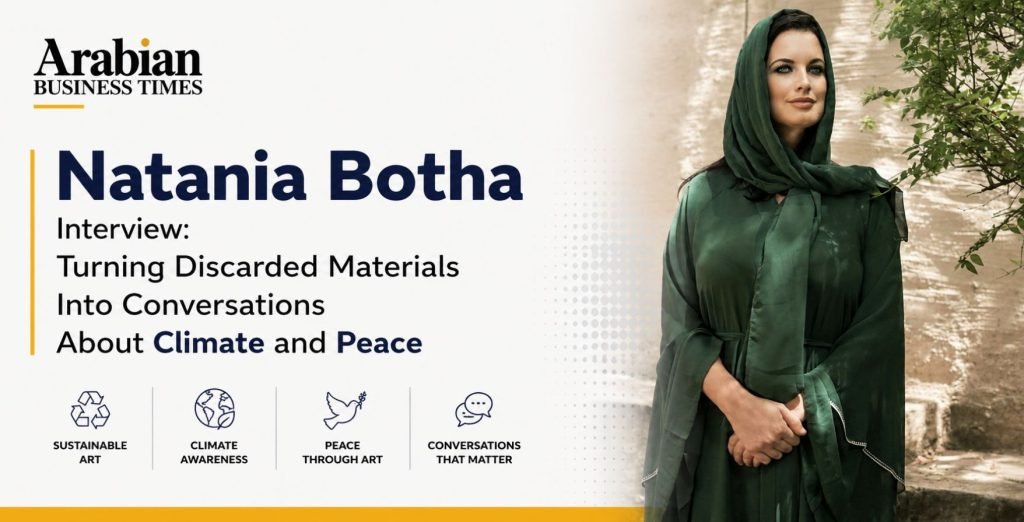
Natania Botha didn’t set out to become a sustainable artist. The path found her early, growing up in a small mining town in South Africa surrounded by platinum dust and heavy industry. That environment taught her something most people learn much later, if at all: that the relationship between a community and its environment is never abstract.
“My journey into sustainable art wasn’t planned, it evolved naturally from the experiences that shaped my life,” Natania Botha says. “I grew up in the small mining town in South Africa, surrounded by platinum dust, heavy industry, and the realities of environmental degradation. From an early age I understood that our relationship with the environment directly affects our communities, our health, and our future.”
That early awareness eventually turned into fieldwork. “I travelled across South Africa documenting climate initiatives and community resilience. Seeing both the devastating impacts of climate change and the incredible innovation happening at grassroots level fundamentally changed me.” The turning point arrived at a conference. “The defining moment came during the International Adaptation Conference in Botswana, where I was exposed to futurist thinking and conversations about the world we are collectively creating. I realised that I could communicate these complex environmental issues in a way that statistics and reports often cannot, through art. Shortly afterwards, I made the life-changing decision to focus my attention to creating my art studio.” As she puts it now, “Every sculpture I create is an invitation for people to pause, reflect, and reconnect with the natural world.”
Starting With a Question, Not an Answer
Natania Botha’s creative process inverts how most people imagine artmaking begins. She starts with a problem, not a picture.
“Every artwork begins with a question rather than an answer,” she says. “I ask myself what environmental or social conversation needs to happen and how I can translate that into something people can feel emotionally.” Her material choices follow directly from that instinct. “I primarily work with reclaimed, discarded, and repurposed materials, giving new life to objects that would otherwise become waste. I believe every material carries a story, and when transformed through art, it becomes a symbol of possibility rather than pollution.”
Her sculptures range across a wide set of themes: “climate resilience, biodiversity, circular economy principles, women in sustainability, water security, weapons of war and our interconnectedness with nature.” Whatever the subject, she wants viewers to leave with the same underlying idea. “Sustainability is not about perfection, it is about possibility. Waste is often only waste because we have not yet imagined a better purpose for it.”
Why Artists Belong in the Climate Conversation
Asked what role artists can play in addressing a challenge as vast as climate change, Natania Botha points to something scientific data alone often can’t deliver: emotional access.
“Artists have always been society’s storytellers,” she says. “Climate change is often communicated through scientific language and policy discussions, which are essential, but they can sometimes feel distant from everyday life. Art creates an emotional connection. It allows people to experience environmental issues rather than simply understand them intellectually.” The effect, in her view, ripples outward in practical ways. “A sculpture made from recycled materials can inspire conversations that a report cannot. A public artwork can make communities curious. An exhibition can encourage businesses to rethink sustainability. Artists have the unique ability to make the invisible visible. We transform data into emotion.”
What the Green Economy Actually Requires
Natania Botha sees the green economy as a collaboration problem as much as a technical one, and she’s specific about what each sector brings to the table.
“The green economy succeeds when sustainability is viewed not as a cost, but as an investment,” she says. “Businesses bring innovation, governments create enabling policy environments, and communities provide local knowledge and lived experience. When these sectors collaborate instead of operating independently, transformative solutions emerge.” She singles out one structural mechanism in particular. “Public-private partnerships are particularly important because they allow creativity, entrepreneurship, and social development to work together. We also need greater investment in green skills, creative industries, youth innovation, and the circular economy.” Artists, she argues, shouldn’t be left out of that process. “Creativity helps people visualise change before it becomes reality.”
Lessons From Working Across Borders
International exhibitions and collaborations have shaped how Natania Botha thinks about her mission beyond any single artwork.
“Working across different countries has taught me that while environmental challenges differ, our hopes for the future are remarkably similar,” she says. “International collaborations have broadened my perspective by showing me how local solutions can inspire global change. They have reinforced my belief that art is a universal language capable of crossing cultural, political, and geographic boundaries.” That exposure has shifted her focus over time. “These experiences have encouraged me to think beyond creating individual artworks and instead focus on creating conversations and partnerships that leave lasting impact.”
Where Technology Fits Without Replacing the Human Hand
Natania Botha welcomes new tools into her practice, but she’s precise about where she draws the line between assistance and authorship.
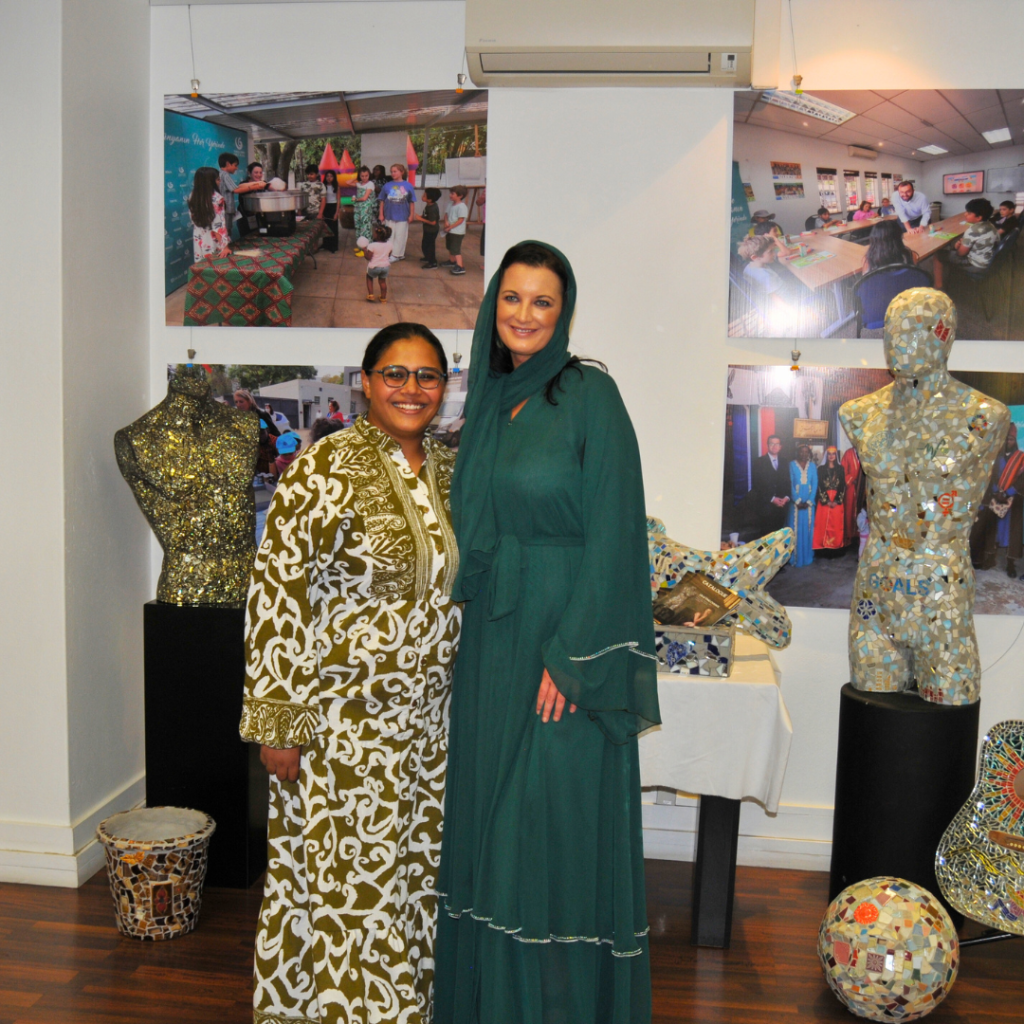
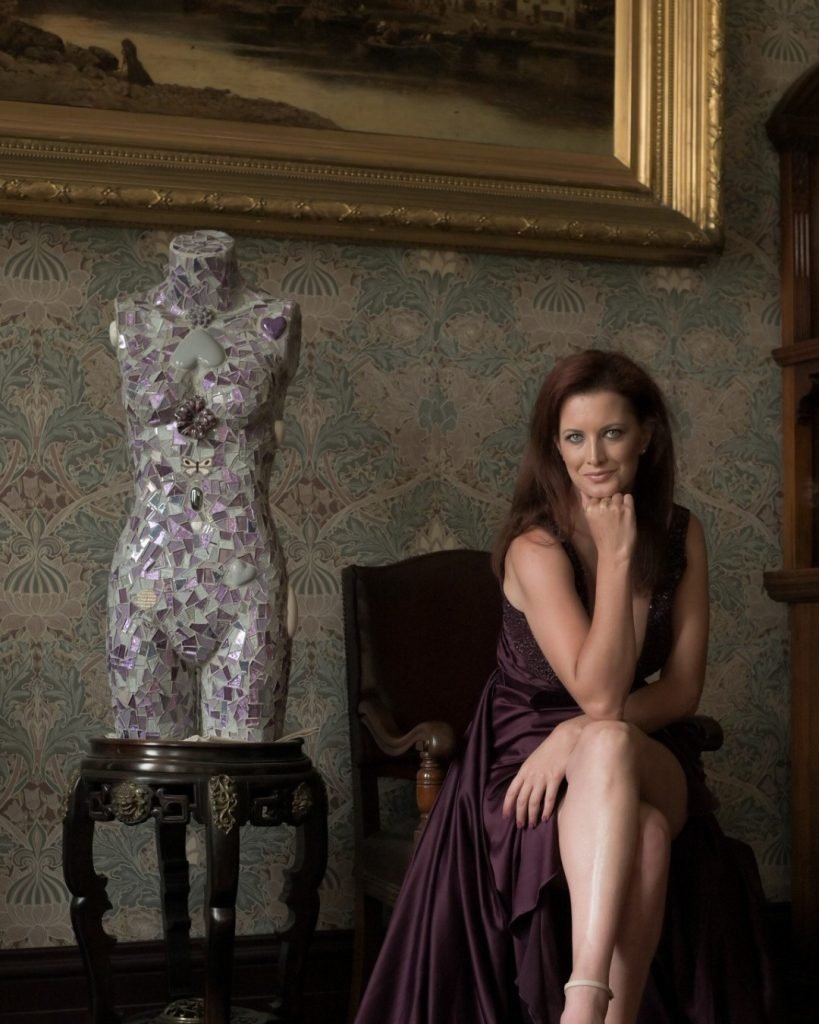
“Technology should enhance creativity rather than replace it,” she says. “Artificial Intelligence offers exciting opportunities for artists, from concept development and research to education and expanding global accessibility. Digital platforms also allow sustainable artists to reach audiences around the world without traditional barriers.” Still, something in her process resists automation entirely. “Authenticity remains deeply human. My sculptures carry the marks of countless hours of placing every individual mosaic piece by hand. That physical connection cannot be replicated by technology.” Her outlook on where the field is headed reflects that balance. “The future belongs to artists who embrace technology as a collaborative tool while remaining grounded in human experience, craftsmanship, and purpose.”
The Work That Means the Most
Awards and recognition aside, Natania Botha measures her career by a different standard entirely.
“While I am deeply grateful for the awards and recognition I have received, the achievements that mean the most to me are those where I have witnessed art creating genuine human connection and lasting impact,” she says. Teaching stands out among those experiences. “One of the most rewarding aspects of my journey has been teaching mosaic art to individuals with Down syndrome. Watching participants discover confidence, develop new skills, and express themselves creatively has reinforced my belief that art is far more than something we admire, it is a powerful tool for empowerment, inclusion, and personal transformation.”
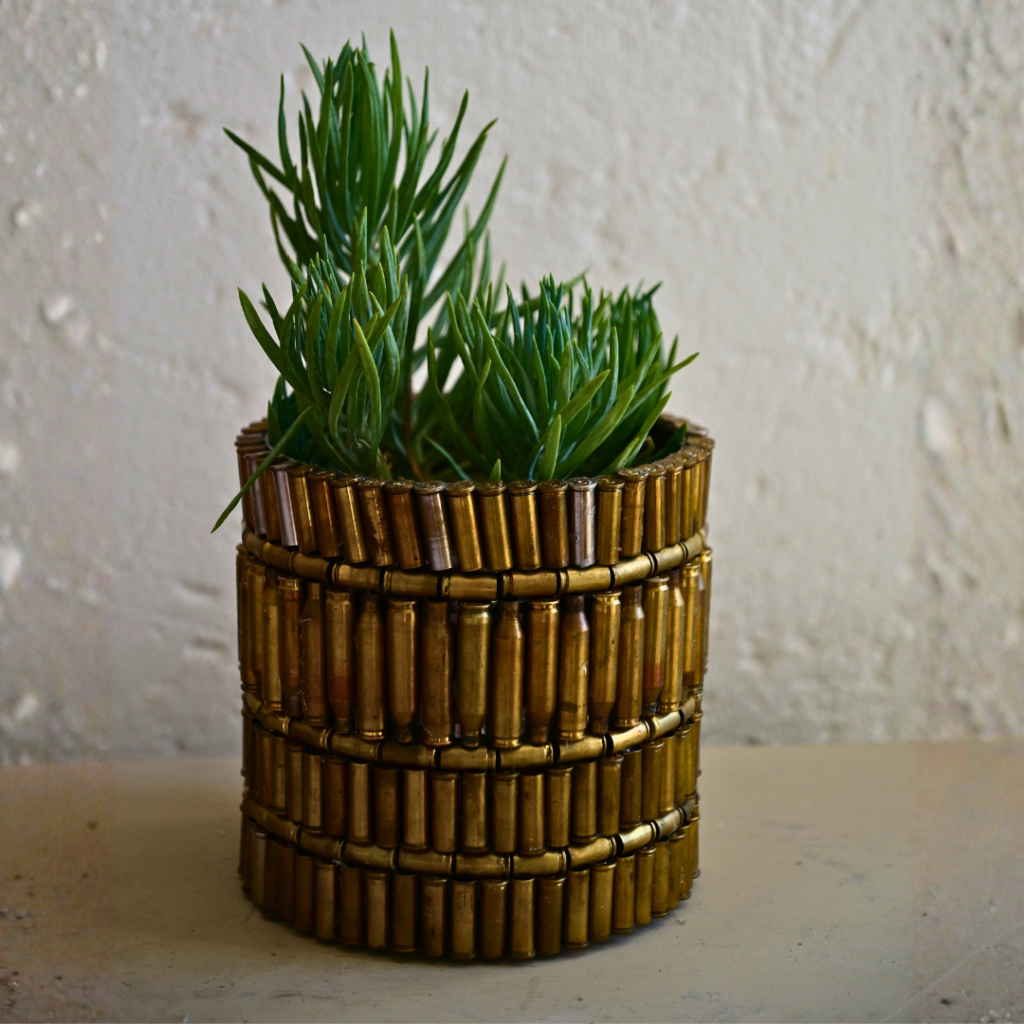
Her Full Metal Jacket series carries similar weight, built from an unlikely material. “Created from spent bullet casings. By transforming the remnants of conflict into works of art, I wanted to challenge perceptions and spark conversations about peace, reconciliation, and our shared humanity. The series reflects my belief that even objects associated with violence can be reimagined as symbols of hope, resilience, and dialogue.” Her broader definition of achievement follows the same thread. “My greatest achievement is not measured by exhibitions or accolades, but by knowing that my work encourages people to think differently, to see beauty in what has been discarded, possibility where others see limitations.”
What Comes Next
Natania Botha’s ambitions extend well past individual sculptures, toward projects that bring multiple sectors into the same room.
“My vision extends beyond creating sculptures. I want to establish larger collaborative public art installations that bring together communities, businesses, environmental organisations, and governments around shared Sustainable Development Goals,” she says. Education is a growing part of that plan. “I am passionate about expanding educational programmes that teach young people how creativity, entrepreneurship, and environmental stewardship can work together.” Her long-term hope is cultural rather than purely artistic. “I hope my work contributes to a world where sustainability becomes part of everyday culture rather than an occasional conversation. If future generations see waste as opportunity, collaboration as strength, and creativity as a driver of positive change, then I believe my work will have fulfilled its purpose.”
A Philosophy Rooted in Broken Pieces
Asked what advice she’d give young artists and environmental advocates hoping to make a difference, Natania Botha’s answer traces back to the medium she works in most.
“Start before you feel ready,” she says. “You do not need a perfect studio, unlimited funding, or international recognition to begin making a difference. What you need is purpose, consistency, and the courage to keep learning.” Collaboration across disciplines matters just as much. “Some of the world’s greatest solutions emerge when artists work alongside scientists, engineers, educators, entrepreneurs, and policymakers.”
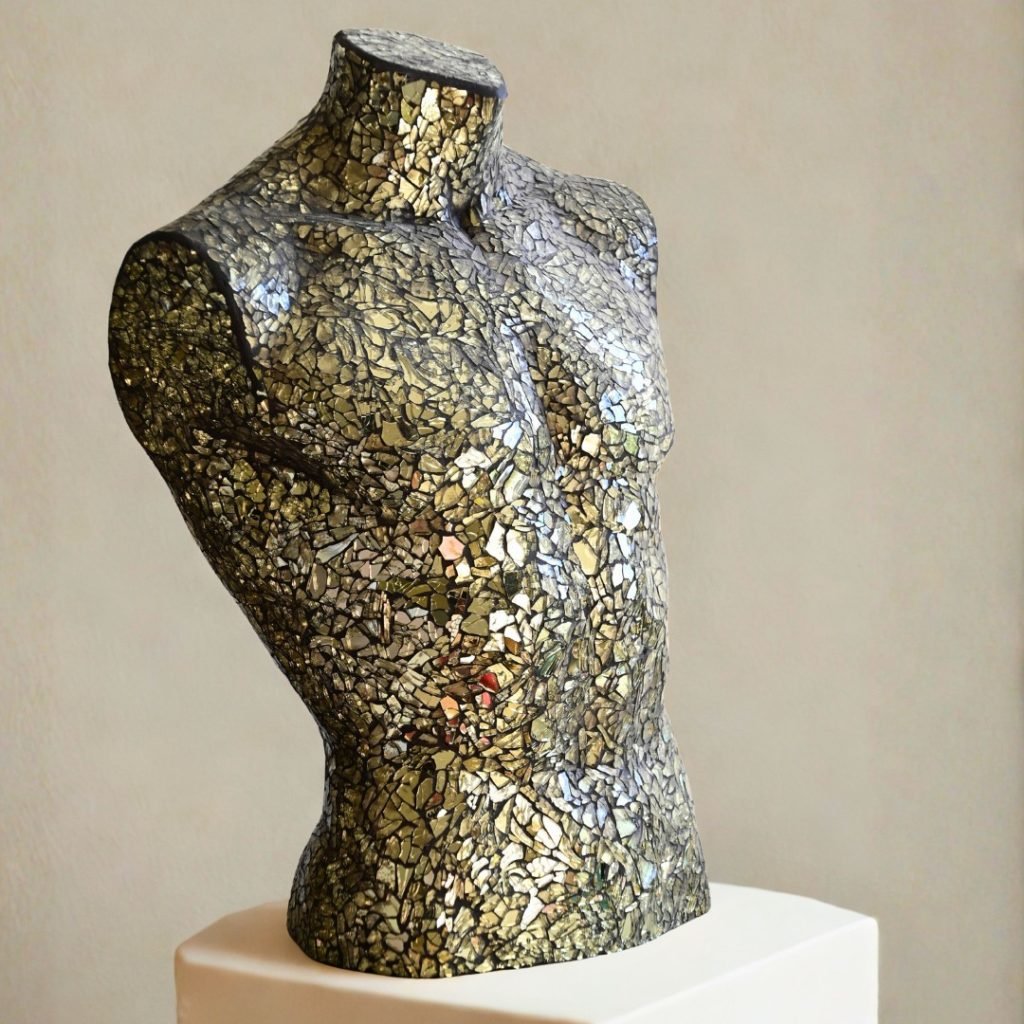
She closes on a principle that has guided both her art and her life. “Every broken piece still has value. In mosaic, broken fragments come together to create something stronger and more beautiful than they were individually. I believe the same is true for people, communities, and even our planet.” Her final message is aimed squarely at the next generation. “Never underestimate the power of your imagination. The future is not something we inherit, it is something we create, one decision, one partnership, and one act of courage at a time.”