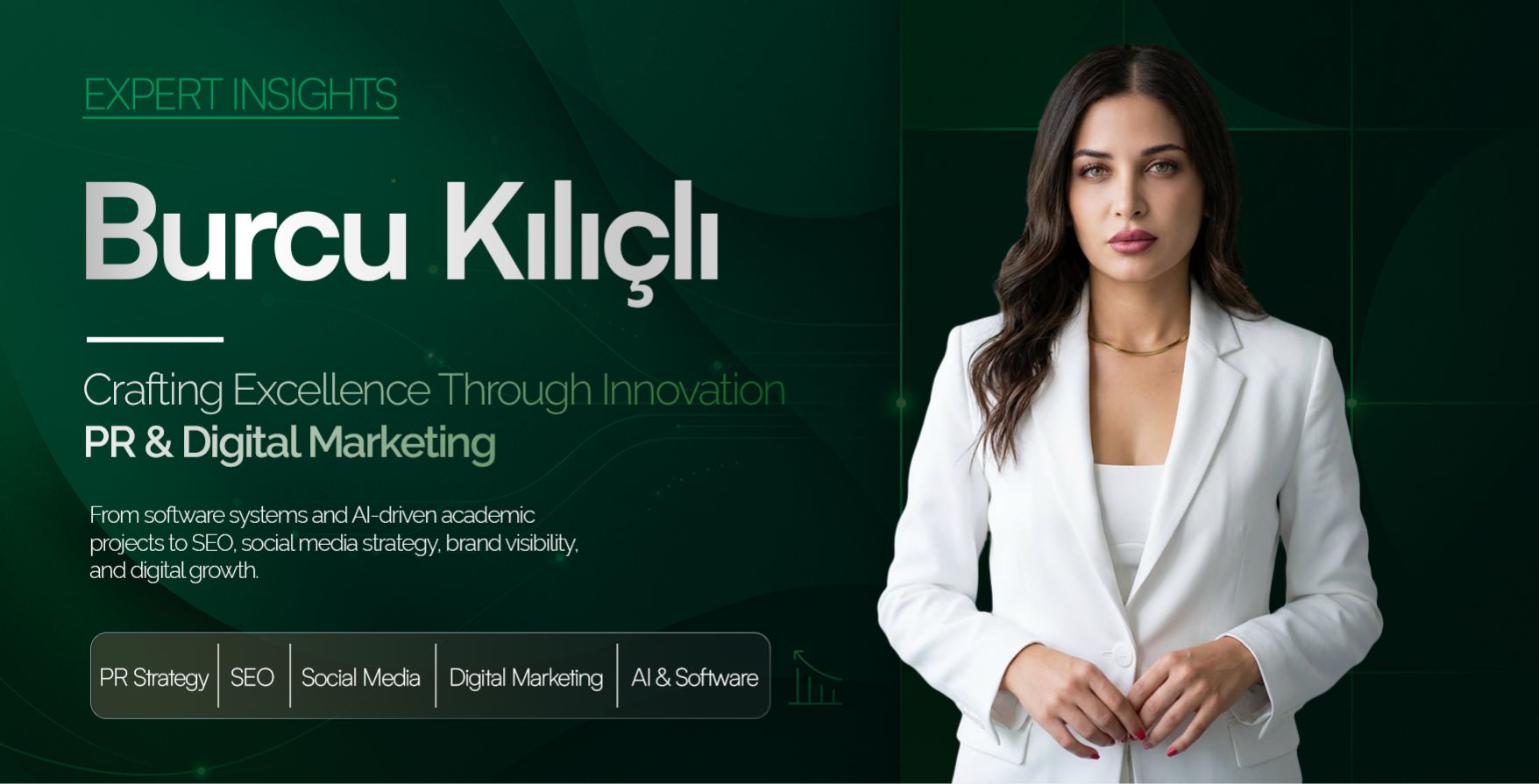
Most careers in digital marketing don’t start with computer vision systems and distributed Raspberry Pi architectures. Burcu Kilicli’s did. Now General Manager at Pella Global, Kilicli spent her early career as a software engineer building AI-powered technical systems for organizations including TÜBİTAK and BOTAŞ before moving into digital marketing and business strategy. That unusual path, she says, was never really a departure. It was an expansion.
“My journey has always been driven by curiosity and a passion for solving problems,” Kilicli says. “I started in software engineering because I enjoyed building technology that creates real value.” Competitive sports ran alongside that early technical career and left their own mark. “Competitive sports taught me discipline, resilience, and the importance of continuous improvement.”
Her move toward marketing and strategy came from watching how technology actually changes outcomes for businesses. “As technology evolved, I became increasingly interested in how innovation could help businesses grow. That naturally led me into digital marketing and business strategy, where I realized that technology is most powerful when it directly improves customer experience and business performance,” she says. Today, she doesn’t see a hard line between the two disciplines. “My background allows me to combine technical expertise with strategic thinking. I don’t see technology and marketing as separate disciplines—they work best together to create sustainable business growth.”
The Project That Taught Her How Technology Actually Works
Before Kilicli built marketing systems, she built engineering systems under real-world constraints, and one stretch of that work still shapes how she approaches every project today.
“One of the most challenging experiences was developing AI-powered computer vision systems and distributed Raspberry Pi architectures for real-world applications. These projects required balancing technical performance with reliability and scalability,” she says. Working with major organizations added another layer of complexity. “Working on projects for organizations such as TÜBİTAK and BOTAŞ taught me that successful technology is never just about writing code. It’s about understanding the problem, collaborating with different teams, and developing solutions that deliver measurable results.” That lesson became a permanent operating principle. “Those experiences shaped my approach to every project today: technology should always solve real business challenges rather than simply showcase innovation.”
Why a Technical Background Changes How She Sees Marketing
Kilicli’s engineering roots give her a vantage point that most marketers don’t have, and she says it shows up in how she approaches every campaign and system she builds.
“My technical background gives me a different perspective on digital marketing. Understanding software architecture, AI, cybersecurity, and databases allows me to see how digital systems work beyond the surface,” she says. That perspective changes her priorities. “While many marketers focus only on campaigns, I focus on building integrated systems powered by data, automation, and analytics. This enables better decision-making, stronger customer experiences, and more sustainable growth.” She sees that combination becoming more valuable as the industry evolves. “In today’s digital world, marketing is becoming increasingly technology-driven, and having both technical and strategic knowledge creates a significant competitive advantage.”
Software Engineering and Marketing, Working Together
Kilicli is careful to frame her career shift not as leaving one field for another, but as connecting two disciplines that were always meant to work together.
“My transition wasn’t about leaving software engineering—it was about expanding its impact. I realized that great technology alone doesn’t create success unless people understand, adopt, and trust it,” she says. Digital marketing gave her a way to close that gap. “Digital marketing gave me the opportunity to combine technical innovation with business strategy and customer engagement. Today, software engineering helps me build solutions, while marketing helps me communicate their value.” The result, in her view, is a stronger outcome than either discipline could produce alone. “Together, these disciplines allow businesses to grow faster, make smarter decisions, and create stronger relationships with their customers.”
Where AI Takes the Customer Journey Next
With a technical foundation in AI systems, Kilicli has a grounded view of where the technology is heading in marketing over the next five years.
“Artificial Intelligence will transform every stage of the customer journey. Over the next five years, AI will enable more personalized marketing, smarter SEO strategies, predictive analytics, and faster business decision-making,” she says. But she’s careful not to overstate what the technology alone can deliver. “Technology alone won’t be enough. As AI-generated content becomes more common, authenticity and human creativity will become even more valuable.” Her prediction for who wins in this new landscape centers on combination rather than adoption. “I believe the future belongs to organizations that successfully combine AI with strategic thinking, ethical innovation, and meaningful customer experiences.”
Building a Career in a Male-Dominated Industry
As a woman who built her career in software engineering and AI, Kilicli has navigated an industry that hasn’t always made space for her, and she’s direct about what got her through it.
“Building a career in technology as a woman has taught me the importance of confidence, persistence, and continuous learning. While the industry has traditionally been male-dominated, I believe expertise, dedication, and results speak louder than stereotypes,” she says. Her advice to young women considering the same path is simple and direct. “Don’t be afraid to start. Believe in yourself, stay curious, and never stop learning. Every challenge is an opportunity to grow stronger and gain valuable experience.” She sees a bigger stake in the outcome, too. “Technology needs diverse perspectives, and I hope more women choose careers in software engineering, artificial intelligence, and cybersecurity because they have the ability to shape the future of innovation.”
What Moving From Turkey to Dubai Taught Her
Relocating from Turkey to the UAE gave Kilicli a new professional environment to test her thinking against, and she says the change reshaped how she works.
“Moving from Turkey to Dubai gave me the opportunity to work in one of the world’s most dynamic business environments. The UAE encourages innovation, embraces new technologies, and brings together talented professionals from different cultures and industries,” she says. The exposure to that mix of people and approaches has stayed with her. “Working in such an international ecosystem has broadened my perspective and strengthened my ability to adapt, collaborate, and think globally. It has also shown me that while technologies evolve quickly, trust, communication, and delivering value remain universal principles of success.”
The Digital Transformation Misconception Kilicli Sees Most Often
Having worked on the technical side of digital transformation projects, Kilicli has a clear-eyed view of where companies most often go wrong.
“One of the biggest misconceptions is that digital transformation is simply about adopting new technologies. In reality, it’s about changing the way businesses operate, make decisions, and create value for their customers,” she says. She’s watched plenty of companies fall into the same trap. “Many companies invest in software or AI without having a clear strategy or understanding how these technologies should support their long-term goals. Successful digital transformation requires the right combination of technology, people, processes, and continuous improvement.” Her rule for keeping projects on track is straightforward. “Technology should always serve business objectives—not the other way around.”
Staying Ahead in a Field That Never Stops Moving
Keeping up with a fast-moving technology landscape is a constant discipline for Kilicli, not a one-time effort.
“Technology evolves every day, so continuous learning is an essential part of my career. I regularly follow industry research, attend technology events, explore new AI tools, and stay connected with global technology communities,” she says. A handful of emerging areas have her particular attention right now. “What excites me most today is the rapid development of generative AI, autonomous AI agents, computer vision, and intelligent automation. These innovations are transforming how businesses operate and opening opportunities that were unimaginable just a few years ago.” Her philosophy on staying current isn’t about mastering everything at once. “Staying ahead isn’t about knowing everything—it’s about remaining curious, adapting quickly, and never stopping the learning process.”
Where Software Engineering and AI Are Headed Over the Next Decade
Looking further out, Kilicli sees the boundary between software engineering and artificial intelligence continuing to dissolve, and with it, a shift in what skills actually matter.
“Over the next decade, I believe software engineering and artificial intelligence will become even more interconnected. AI will no longer be just a tool—it will become an essential part of how businesses develop products, make decisions, and interact with customers,” she says. That shift will demand more from engineers than technical skill alone. “Software engineers will need to think beyond coding. Skills such as strategic thinking, data analysis, cybersecurity, and business understanding will become just as important as technical expertise.” Her prediction for which organizations come out ahead ties back to values as much as capability. “The organizations that succeed will be those that combine innovation with ethics, human creativity, and long-term vision.”
A Career Built on Repeated Reinvention
Kilicli’s path across industries and countries hasn’t been without its uncertain stretches, and she doesn’t pretend otherwise.
“Every career includes moments of uncertainty, and mine has been no exception. One of the biggest challenges was stepping into new industries and adapting to completely different business environments while continuing to grow professionally,” she says. Her response to that uncertainty became a pattern she’s repeated throughout her career. “Rather than seeing change as a risk, I chose to see it as an opportunity to learn. Every new challenge pushed me to expand my knowledge, strengthen my confidence, and become more adaptable.” Her definition of resilience reflects that same mindset. “Resilience is not about avoiding difficulties—it’s about continuing to move forward despite them.”
What She’d Tell a Startup With Limited Resources
Asked where a resource-constrained startup founder should focus first, Kilicli doesn’t hesitate between technology, branding, or marketing. She goes further back than any of them.
“If I were advising a startup with limited resources, I would tell them to focus on solving a real problem before investing heavily in technology or marketing,” she says. Everything else, in her view, follows from that foundation. “A great product that genuinely addresses customer needs will always create a stronger foundation than expensive campaigns. Once the product is validated, technology, AI, branding, and marketing should work together to support sustainable growth.” Her closing point on the subject is about sequencing, not scope. “Success doesn’t come from doing everything at once—it comes from building the right priorities in the right order.”
Leadership Built on Trust and Transparency
As General Manager at Pella Global, Kilicli has had to define her own leadership philosophy, and she describes it as being less about authority and more about what she helps other people become.
“To me, leadership is not only about managing a team; it is about inspiring people, building trust, and creating a culture where everyone can grow together,” she says. A specific set of values underpins that approach. “My leadership philosophy is built on trust, transparency, empathy, and continuous improvement. I believe a great leader’s role is not only to achieve goals but also to help people discover their strengths, develop themselves, and create their own success stories.” Balancing technical rigor with creative freedom is part of that same philosophy. “Balancing technical excellence with creativity means encouraging innovation while always keeping the needs of people and businesses at the center of every decision.”
What’s Next
Kilicli’s current work sits at the intersection of everything she’s built her career on: AI, marketing, automation, and business strategy, aimed at helping companies operate more efficiently.
“Today, I’m focused on projects that combine artificial intelligence, digital marketing, automation, and business strategy to help companies become more efficient and competitive,” she says. Her longer-term goals extend beyond any single project. “My goal is to contribute to projects that create value on a global scale by bringing together technology, innovation, and human-centered solutions. I also hope to support the next generation of professionals—especially women in technology—by encouraging them to pursue ambitious careers and embrace continuous learning.” For Kilicli, the measure of success isn’t trend-following. “Long-term success is about creating solutions that make a lasting impact rather than simply following trends.”
A Message for the Next Generation
Asked what she’d tell aspiring software engineers, entrepreneurs, and especially young women in technology, Kilicli’s message returns to the same themes that have carried her career from engineering to strategy to leadership.
“My message to aspiring software engineers, entrepreneurs, and especially young women in technology is simple: never stop learning and never underestimate your potential,” she says. “The technology industry changes constantly, but curiosity, discipline, adaptability, and integrity will always remain your greatest strengths. Don’t be afraid to take on challenges or step outside your comfort zone, because that’s where the greatest opportunities begin.” Her closing thought reframes what success actually means. “Build your skills, believe in your vision, and remember that success is not defined by where you start, but by your willingness to keep growing.”
One Lesson for Future Innovators
Asked to distill her professional journey into a single lesson for future innovators, Kilicli offers a line that ties together curiosity, learning, and purpose.
“Innovation begins with curiosity, grows through continuous learning, and becomes meaningful when it creates value for others,” she says.
Burcu Kilicli is General Manager at Pella Global. More on her work can be found at burcukilicli.com and on Instagram at @burcu.kilicli.