
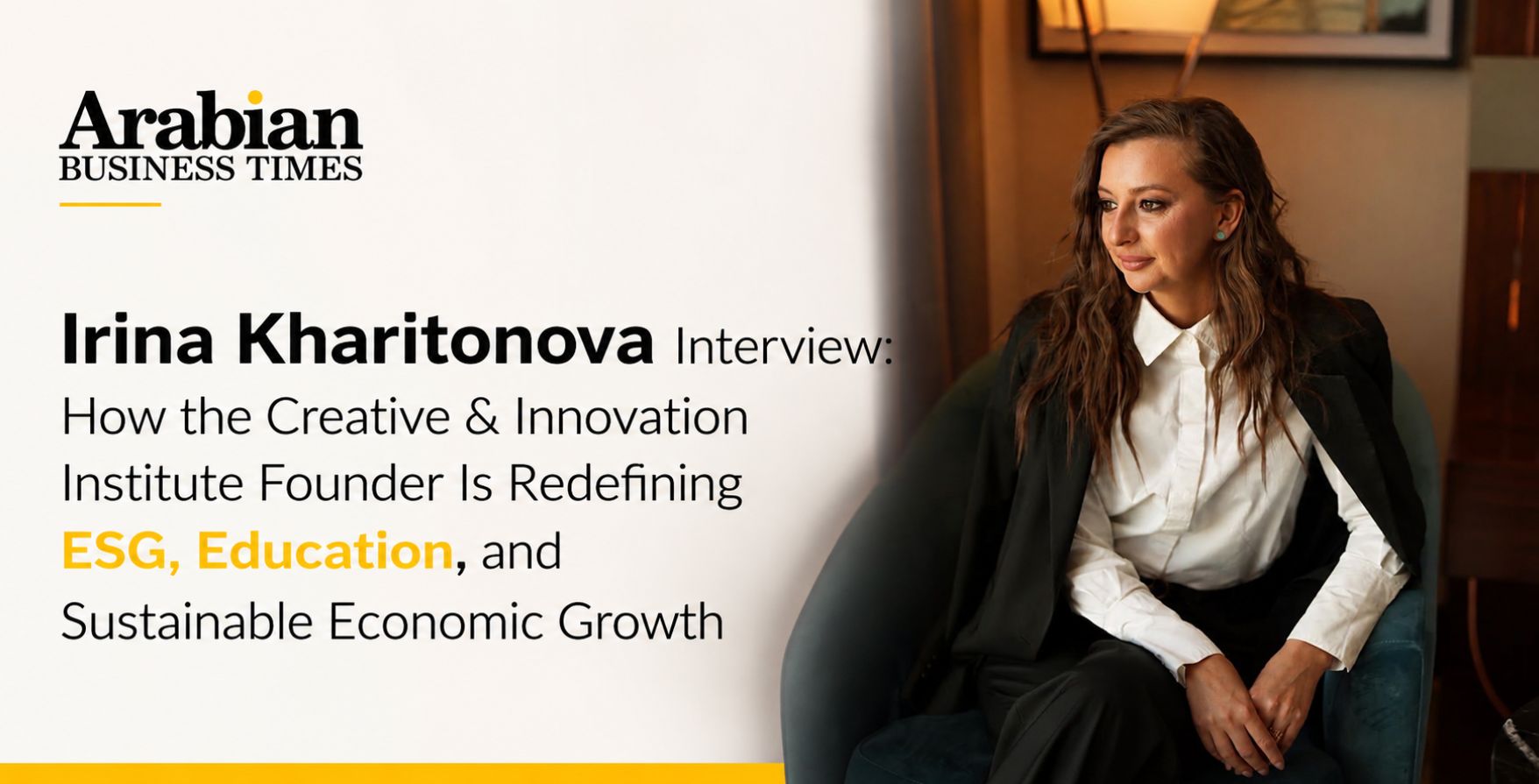
Irina Kharitonova, Founder of the Creative & Innovation Institute, on building ecosystems where culture, ESG, education, and AI reinforce one another
There is a tendency, in both policy and business circles, to treat creativity and sustainability as parallel tracks; one belonging to culture, the other to compliance. Irina Kharitonova has spent her career arguing, and demonstrating, that this separation is a mistake. As Founder and CEO of the Creative & Innovation Institute, and Head of the Center for Sustainable Development, ESG & Innovation at Karaganda Technical University named after Abylkas Saginov, Irina Kharitonova works at the intersection of fields most organizations still treat as unrelated: creative economy, ESG consulting, education reform, and innovation policy.
Her résumé reflects that conviction. She has led Sustainable Development Goal 11, Sustainable Cities and Communities, within the Senate Project Office of the Republic of Kazakhstan, collaborated with UNESCO, GIZ, the British Council, UNDP, and OSCE on international development projects, and created PLATON 5D, an educational methodology now nominated for the UNESCO Prize for Education for Sustainable Development. She is also the founder of EcoPlaton, a digital environmental education platform, and the architect of Kazakhstan’s first gamified eco-trail.
What follows is Irina Kharitonova’s account of how she arrived at this multidisciplinary approach, why she believes ESG is fundamentally misunderstood, and what she sees as the defining opportunity for emerging economies, including her own region, Central Asia; in the years ahead.
“Creativity, Sustainability, Education, and Innovation Are Not Separate Fields”
Irina Kharitonova traces her professional path back to the creative industries, where she came to see culture and art not as soft assets but as economic infrastructure; capable, in her words, of transforming cities, businesses, and communities. That early conviction deepened as her work expanded into tourism, urban development, and public policy, fields that taught her a lesson she still applies today: lasting development requires balancing economic growth against environmental responsibility and social well-being simultaneously, not sequentially.
That realization led her toward ESG, sustainable development, and educational innovation; and eventually to founding the Creative & Innovation Institute, which she built to connect these areas through research, international cooperation, education, and applied innovation projects.
If there is a single defining moment in her career, Irina Kharitonova points to her time leading SDG 11 within Kazakhstan’s Senate Project Office. Working alongside government institutions, universities, businesses, and international partners on that initiative, she says, demonstrated something she now treats as a guiding principle: meaningful transformation only happens when different sectors collaborate around a shared vision. Her stated mission today is to build ecosystems in which creativity functions as a catalyst for sustainable economic development and innovation, not a peripheral activity, but a structural one.

Inside the Creative & Innovation Institute
Under Irina Kharitonova’s leadership, the Institute operates across four interconnected pillars: ESG and sustainable development consulting; creative economy and cultural innovation; educational transformation and future skills; and international research and innovation partnerships. Through these channels, the organization supports businesses, universities, municipalities, and public institutions in designing ESG strategies, developing sustainable innovation projects, building creative ecosystems, and forming international collaborations.
A central priority, Irina Kharitonova explains, is helping organizations move past theoretical commitments and into measurable implementation; citing examples ranging from sustainable tourism and circular economy initiatives to educational platforms and digital environmental solutions. Her broader thesis is that future competitiveness will hinge on how effectively organizations combine technology, creativity, sustainability, and human capital, rather than treating these as isolated investments.
Lessons From Working With UNESCO, GIZ, and the British Council
Years of collaboration with international bodies including UNESCO, GIZ, the British Council, UNDP, and OSCE have shaped Irina Kharitonova’s view of what makes cross-border development work actually succeed. Her first conclusion is unambiguous: there is no universal solution for sustainable development. Every country, city, and community carries its own cultural identity, economic realities, and development priorities, which means successful cooperation depends on adapting global models to local contexts rather than transplanting them wholesale.
Her second lesson concerns return on investment. While infrastructure projects can reshape physical environments, Irina Kharitonova argues that education delivers the highest long-term return precisely because it changes mindsets, and mindsets, in her view, are what ultimately shape the future. Her third takeaway is about process: the most successful international projects she has been part of were built on trust, openness, and knowledge-sharing among governments, academia, businesses, civil society, and young people, treated as equal partners rather than a hierarchy of stakeholders.
Reframing ESG as Business Transformation, Not Paperwork
Irina Kharitonova is direct about what she considers the industry’s most persistent misconception: that ESG is primarily about producing sustainability reports. In her assessment, ESG is better understood as a business transformation framework, one that, when properly integrated into decision-making, improves operational efficiency, strengthens risk management, attracts investment, increases employee engagement, and builds resilience against future disruption.
A second misconception she pushes back on is the assumption that sustainability is inherently costly. In practice, she notes, resource efficiency, circular economy models, renewable energy adoption, and responsible governance frequently reduce costs while opening new market opportunities. Her conclusion is pointed: companies that treat ESG as an investment rather than a compliance exercise are the ones positioned to become tomorrow’s market leaders.
For organizations unsure where to begin, Kharitonova lays out a practical sequence rather than a theoretical one. Start with an ESG assessment to understand environmental and social impact. Integrate sustainability into core business strategy instead of isolating it within a single department. Invest in employee education, since people ultimately drive transformation. Explore circular economy principles, energy efficiency, responsible procurement, and digital technologies that reduce environmental footprint. And finally, build partnerships; because in her experience, sustainable development is rarely achieved alone, and collaboration between business, academia, government, and communities is what accelerates innovation into scalable solutions.

PLATON 5D: Teaching Sustainability as a Way of Thinking
Among her most personal projects is PLATON 5D, the educational methodology she created and which has since been nominated for the UNESCO Prize for Education for Sustainable Development. Irina Kharitonova built the program around a conviction that the future will not belong solely to those with technical knowledge, but to those who can think creatively, solve complex problems, collaborate across disciplines, and understand their responsibility toward society and the environment.
PLATON 5D combines creativity, innovation, entrepreneurship, environmental awareness, systems thinking, and social responsibility through project-based learning, encouraging children not just to identify problems but to design practical solutions for their own communities. The underlying philosophy, as Kharitonova describes it, is that sustainability should not be taught as a standalone subject, it should become a way of thinking that informs every other discipline.
Where Artificial Intelligence Fits Into Sustainable Development
Irina Kharitonova views artificial intelligence as one of the most powerful tools available for advancing sustainable development, citing its capacity to improve ESG data analysis, optimize resource management, accelerate climate research, monitor biodiversity, enhance environmental reporting, and support evidence-based decision-making. Within the creative economy specifically, she expects AI to democratize innovation by giving individuals and small businesses access to advanced creative tools previously available only to larger organizations.
That said, she draws a firm distinction between augmentation and replacement. AI, in her view, should support human creativity rather than substitute for it, the greatest value emerges when human imagination, ethics, and critical thinking are combined with AI’s analytical capabilities. She believes responsible AI governance will become just as important to organizations as technological adoption itself.
Central Asia’s Opportunity to Build a Creative Economy
As an advocate for creative economies in emerging markets, Irina Kharitonova argues that regions like Central Asia hold a distinct competitive advantage: the ability to build modern creative ecosystems without first repeating outdated industrial development models. Creative industries, she notes, generate high-value intellectual capital while requiring comparatively low environmental impact, making them an efficient path to economic diversification.
Countries that invest in design, digital technologies, cultural heritage, creative entrepreneurship, education, film, gaming, architecture, sustainable tourism, and innovation, she argues, can diversify their economies while creating high-quality jobs. She points specifically to Central Asia’s unique cultural assets, talented young population, and expanding international partnerships as evidence that the region has the potential to become one of the emerging centers of creative innovation globally.
Measuring Success Beyond Recognition
Irina Kharitonova has received substantial recognition for her work, but she’s careful to locate the real measure of success elsewhere. Awards are meaningful, she says, but the greatest achievement is watching ideas evolve into real change. She cites PLATON 5D’s UNESCO nomination as confirmation that educational innovation developed in Kazakhstan can meaningfully contribute to global conversations about sustainability and the future of education.
She also points to her work leading SDG 11 initiatives, connecting education, creative industries, urban innovation, environmental awareness, and community engagement into projects with measurable impact, as a milestone she considers equally significant. For Kharitonova, success isn’t ultimately about the recognition itself, but about the number of people empowered to create positive change as a result.
Building Bridges Between Europe and Central Asia
Looking ahead, Kharitonova’s long-term goal is to help build international ecosystems in which creativity, sustainability, science, education, and innovation reinforce one another rather than operating in silos. The Institute is currently expanding international research partnerships, developing ESG education programs, supporting green innovation, and promoting sustainable urban development, work that draws on collaborations with partners in Germany, Latvia, Türkiye, Uzbekistan, Kyrgyzstan, and other countries.
A particular priority going forward is strengthening cooperation between Europe and Central Asia through joint research, educational exchange, and innovation projects. Ultimately, Irina Kharitonova hopes this body of work demonstrates that sustainable development is not solely an environmental responsibility, but also an opportunity to build more resilient economies, more inclusive societies, and better futures for the next generation.
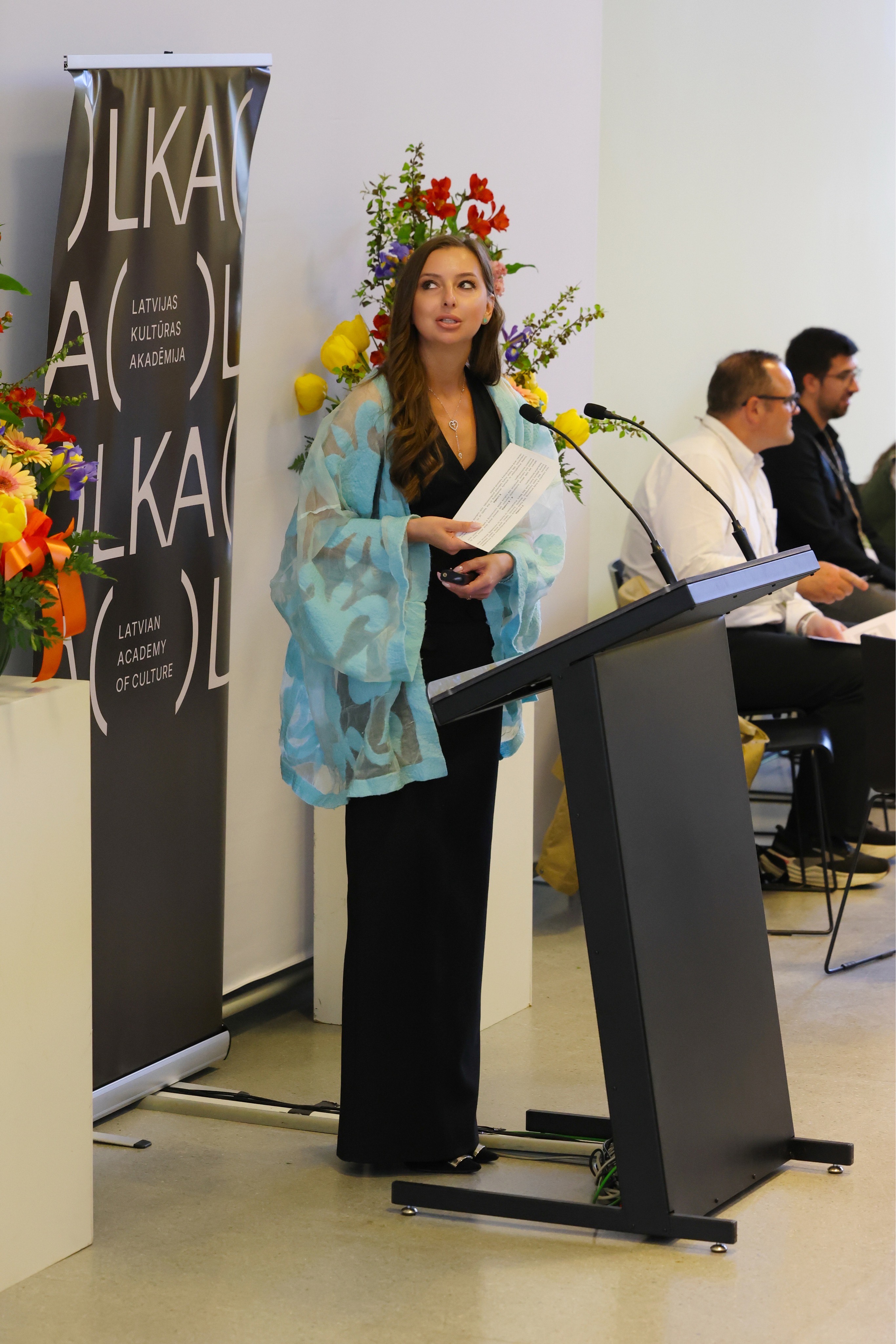
A Closing Challenge to the Next Generation
Asked what advice she would leave for those entering this field, Irina Kharitonova doesn’t mince words: the world does not need more people who simply follow existing paths. It needs people willing to ask better questions, collaborate across disciplines, and create solutions that improve the lives of others.
Her closing message is a call to combine rather than specialize narrowly; noting that some of the greatest innovations occur where science meets creativity, technology meets humanity, and business meets social responsibility. She urges aspiring professionals to stay curious, keep learning, and build partnerships rather than competition, with a final reminder that true success is measured not only by financial results, but by the positive impact left on people, communities, and the planet.
About Irina Kharitonova: Founder & CEO of the Creative & Innovation Institute; Head of the Center for Sustainable Development, ESG & Innovation at Karaganda Technical University named after Abylkas Saginov; International Expert in Creative Economy, ESG and Sustainable Development. She is the creator of the PLATON 5D educational methodology, nominated for the UNESCO Prize for Education for Sustainable Development (2026); Head of SDG 11 “Sustainable Cities and Communities” within the Senate Project Office of the Republic of Kazakhstan; Founder of the EcoPlaton digital environmental education platform and Kazakhstan’s first gamified eco-trail. She is an international speaker on creative economy, ESG, sustainable tourism, and innovation, and leads international projects with partners across Germany, Latvia, Türkiye, Uzbekistan, Kyrgyzstan, and beyond.
Follow her work on Instagram at @irina_kharitonova_official and @creative_innovation_institute.