
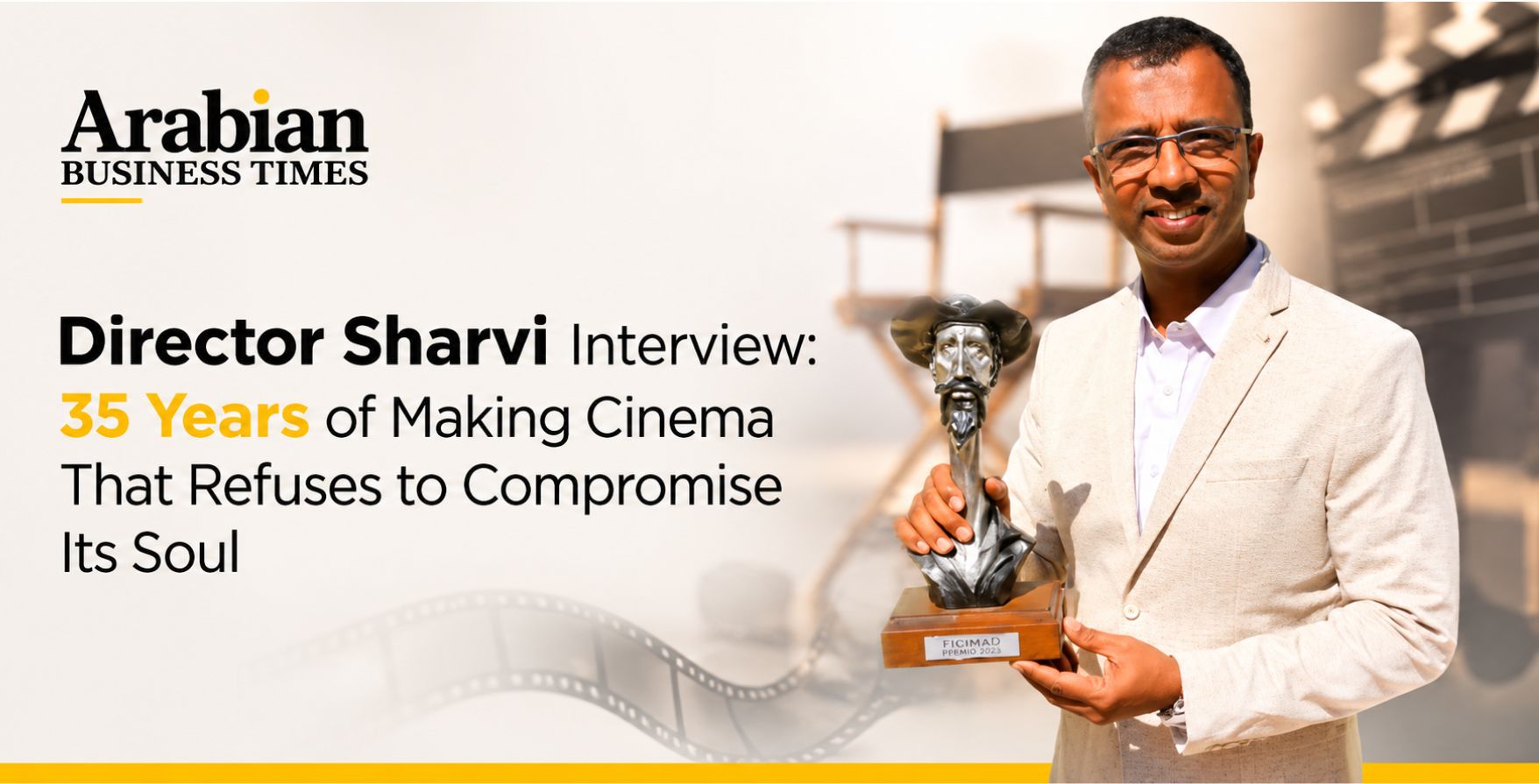
Some directors chase scale. Director Sharvi has spent 35 years chasing something harder to pin down: the moment a story connects. From his start as an assistant director in the Malayalam film industry to his own award-winning films Do Over and Better Tomorrow, his career has moved through nearly every era of Indian cinema, from single-screen theaters to OTT platforms to the arrival of AI in the editing room.
“My journey goes all the way back to right after I finished my education,” Sharvi says. He started as an assistant director under I.V. Sasi and P.G. Viswambharan. “I’ve always had a deep passion for watching movies. That passion, plus the inspiration I got from a few Indian directors I admired, is what pushed me into the direction department. I wanted to learn the craft from the ground up.”
Over 35 years, Director Sharvi has watched technology reshape the industry more than anything else. “Young audiences today demand more—they want strong stories backed by world-class technical quality,” he says. “With OTT and mobile viewing, we’re no longer just making films for the big screen. We have to create for every screen, which completely changes how we approach filmmaking.”
From Commercial Films to Stories That Matter
“Earlier in my career, I focused mainly on commercial films,” Sharvi says. “But after the pandemic, I felt drawn to low-budget, story-driven cinema based on true incidents. There’s a different kind of satisfaction in working on performance-oriented films that also carry social awareness.” That instinct produced Do Over and Better Tomorrow, both of which found an audience on the festival circuit. Going forward, he wants balance: “Telling meaningful stories, but also crafting films that connect with a wider, commercial audience.”
The Hardest Part of the Job
Ask Director Sharvi about his toughest moments, and he doesn’t describe a difficult shoot. He describes the films that never got made. “The hardest moments are when I have to shelve those projects—not because the story isn’t strong, but because we can’t lock in the right star cast or find a production house that can move at the right time,” he says. “Letting go of a film you believe in is painful. But it taught me that Leadership is also about patience and timing, because long-term success often comes from embracing challenges rather than rushing outcomes. Perseverance doesn’t always mean pushing through; sometimes it means waiting for the right moment so the story gets the justice it deserves.”
Designing a Film Around the Budget You Have
“The creative process always starts with the story,” Sharvi says. “Once an idea connects with me emotionally, I spend time developing it into a tight screenplay—because a strong script is the foundation, no matter the budget.” From there, practical decisions take over. “Not every director gets a big star cast or massive production house. So I design my projects to fit the budget I have, without compromising the soul of the story,” he says. His guiding rule: “Make the film safely for the producer, but never let budget decide the emotion on screen.”
Where AI Fits, and Where It Doesn’t
“Technology and AI are going to transform storytelling and filmmaking faster than we’ve ever seen,” Sharvi says. “AI, virtual production, real-time VFX—these aren’t gimmicks anymore, they’re becoming part of the language of cinema.” But he’s firm about the limits. “Technology can’t replace emotion. The future belongs to directors who use tech to serve the story, not the other way around; a principle that also reflects the broader discussion about what AI cannot replace in leadership”
What Makes a Set Actually Work
“Filmmaking is collaboration—you can’t do it alone,” Director Sharvi says. “The most essential qualities I’ve seen are mutual respect, clear communication, and a shared belief in the story we’re telling. The sets that work best are the ones where everyone, no matter their role, feels the emotion of the script. If the story connects with us first, it has a better chance of connecting with the audience later. That’s the culture I try to build on every film.”
Advice for Filmmakers Without a Big Name
“My advice to young filmmakers is this: fall in love with your story, but stay practical about your execution,” Sharvi says. “It’s rare for a first-time director to get big stars or a massive production house, and waiting for that can kill your momentum.” His alternative: “Watch films similar to your story that were made on a tight budget and still connected with audiences. Study how they did it.” His closing line is blunt. “Cinema isn’t about compromise; it’s about resourcefulness. The industry respects results, not excuses.”
The Film That Started It All
Asked which project means the most to him, Director Sharvi doesn’t point to his biggest success. He points to his first. “My first film as a director in 1999 holds the most personal significance for me,” he says. “It was in Malayalam, with the legendary actor Thilakan and a multi-star cast. For any filmmaker, your first film is always special; it’s the moment a dream becomes real. I still remember the first day on set, calling ‘action’ and realizing, ‘This is actually happening.’ No matter what I do in my career, that film will always be the most personal to me, because it’s where my journey as a director truly began.”
What’s Next
Sharvi is currently developing two new scripts, blending festival-level storytelling with broader commercial appeal. “One is a thriller rooted in a true incident, and another is an emotional family drama,” he says. “Both are designed for today’s audience: strong narratives, tight budgets, but high technical quality.” His ambition is straightforward: “Films that respect their intelligence and their time. The goal is simple: make cinema that stays with you after the credits roll.”
A Message for the Next Generation
Asked for one lasting message, Director Sharvi returns to the set from 1999 where it all began. “I didn’t fully understand then what I know now after 35 years: cinema is one of the most powerful mediums in the world. In two hours, a film can cross countries, languages, and generations. That’s why a filmmaker carries the same responsibility as a teacher. We shape how people feel, what they remember, and sometimes, how they see the world.”
His message to those picking up a camera today: “Entertain with all your heart, but never forget your conscience. Tell stories that respect your audience, reflect your culture, and leave society a little more thoughtful than you found it. The camera is in your hands now. The world is watching. Make it count.”
Connet to him: