Mark Cuban has spent more than four decades doing the same thing in different costumes: spotting a market that runs on confusion, friction, or bad pricing, and building something simpler underneath it.
He did it with computer resellers in Dallas in the 1980s, with internet radio in the 1990s, and with an NBA franchise in the 2000s. Now, with prescription drugs in the 2020s. Along the way, he became one of the most recognizable businessmen in America, a fixture of “Shark Tank” for sixteen seasons, and, according to Forbes’ real-time billionaire tracker, a man worth roughly $6 billion as of 2026.
Opening Summary: Mark Cuban’s Net Worth at a Glance
Cuban’s fortune is known for that single transaction: the 1999 sale of Broadcast.com for the internet streaming company he co-founded with Todd Wagner.
That deal, struck at the absolute peak of the dot-com bubble, made Cuban an instant billionaire and gave him the capital base for everything that followed: the Dallas Mavericks, a media conglomerate, a venture portfolio of several hundred startups, and, most recently, a pharmaceutical company built to undercut the entire U.S. drug-pricing system.
What makes Cuban unusual among his billionaire peers is how openly he talks about the mechanics of his own wealth.
He has also disclosed the exact size of his Amazon stock position. He has told CNBC the precise dollar figure he invested across sixteen years of “Shark Tank.” Few billionaires share that data with journalists. This is why his net worth story is so well documented compared to most of his Forbes 400 peers.
His current business interests span four distinct categories: a 27% minority stake in the Dallas Mavericks following a 2023 sale of majority control, an active media and entertainment portfolio under 2929 Entertainment. A fast-growing public-benefit pharmacy company called Cost Plus Drugs, and a sprawling venture capital book built through both Shark Tank and his outside investment vehicle, Mark Cuban Companies.
What Is Mark Cuban’s Net Worth in 2026?
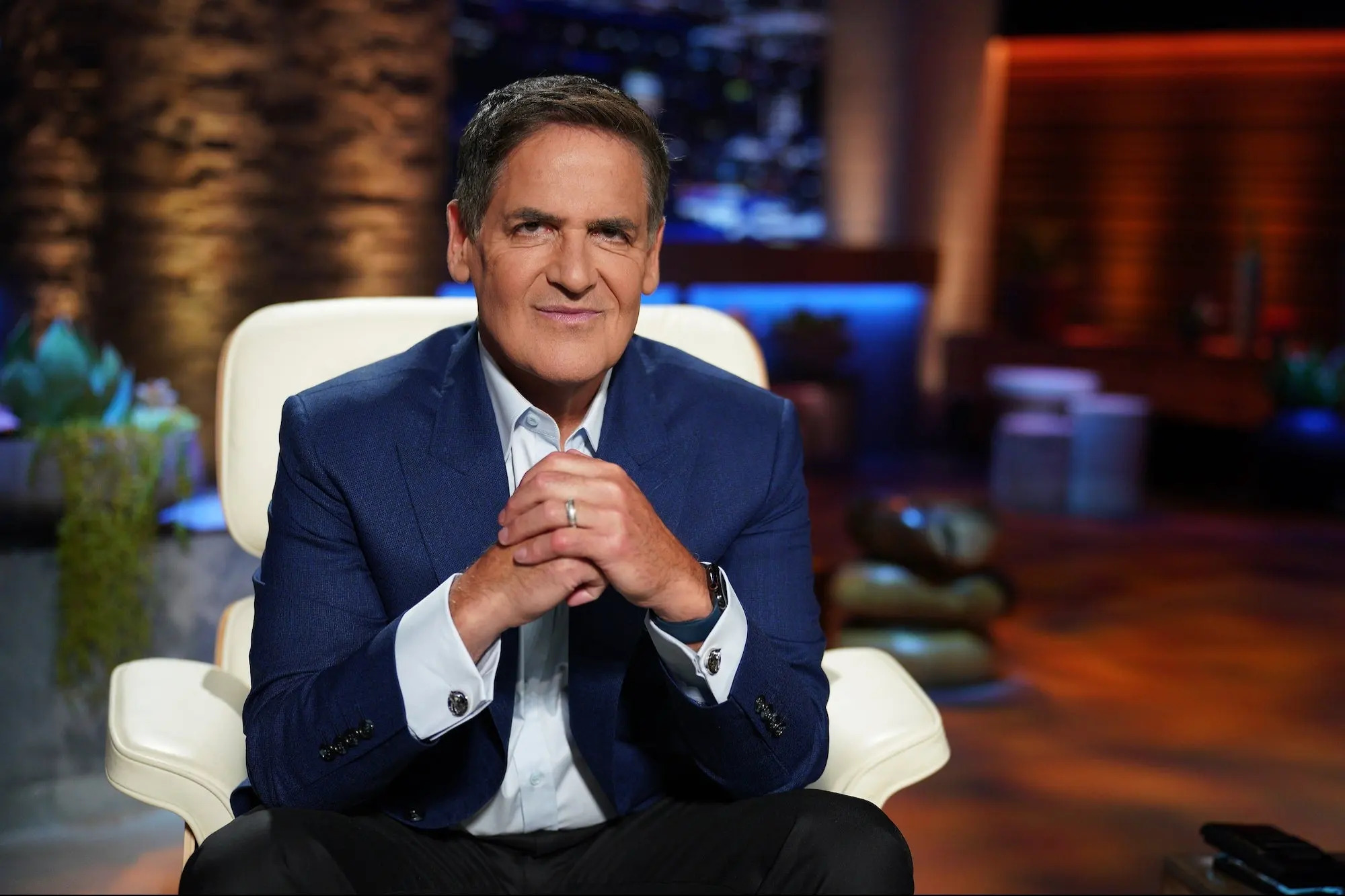
Knowing about an exact number on Cuban’s wealth is harder than it looks, and it’s worth being upfront about. Forbes’ real-time tracker has placed him at approximately $6.0 billion through much of 2026, ranking him in the high 600s on its global billionaire list.
Bloomberg’s Billionaires Index has tracked him in a similar but not identical $5.7 billion to $6.4 billion band over the same period. A handful of independent valuation sites have put the figure as high as $6.8 billion. None of these trackers is wrong, exactly. They’re just making different assumptions about how to value the parts of Cuban’s wealth.
Roughly two decades ago, almost all of Cuban’s net worth sat in Yahoo. Today, the bulk of it sits in private equity positions. A basketball team, a pharmacy company, dozens of venture stakes. Cuban himself has consistently declined to confirm or dispute any outlet’s specific figure.
Wealth Growth Timeline
| Year | Estimated Net Worth | Key Wealth Event |
| 1990 | ~$2 million (after tax) | Sells MicroSolutions to CompuServe for $6 million |
| 1999 | ~$1.4 billion (in Yahoo! stock) | Broadcast.com sold to Yahoo! for $5.7 billion in stock; becomes a billionaire overnight |
| 2000 | Low single-digit billions | Buys the Dallas Mavericks for $285 million; unwinds his Yahoo! position through an options collar just ahead of the crash |
| 2011 | Roughly $2.3–2.6 billion (Forbes-tracked) | Mavericks win the NBA Championship; Cuban becomes a full-time “shark” on Shark Tank |
| 2019 | ~$4.1 billion (Forbes) | Discloses a roughly $1 billion personal stake in Amazon stock |
| 2022 | ~$4.6–5.4 billion | Launches Cost Plus Drugs in January |
| 2023 | ~$4.6–5.7 billion | Sells a 73% controlling stake in the Mavericks to the Adelson and Dumont families at a $3.5 billion valuation, retains 27% |
| 2025 | ~$5.7 billion | Exits Shark Tank after Season 16; closes out the show having invested about $33 million across his run |
| 2026 | ~$6.0 billion (Forbes real-time) | Cost Plus Drugs partners with Humana’s CenterWell Pharmacy on employer prescription pricing |
Figures before 2022 should be read as point-in-time snapshots pulled from Forbes’ archived billionaire rankings. Cuban’s own businesses have gone through periods of both rapid appreciation (the Mavericks) and outright write-downs (several Shark Tank companies and 2929 Entertainment properties).
How Mark Cuban Compares to the Rest of the Shark Tank Cast
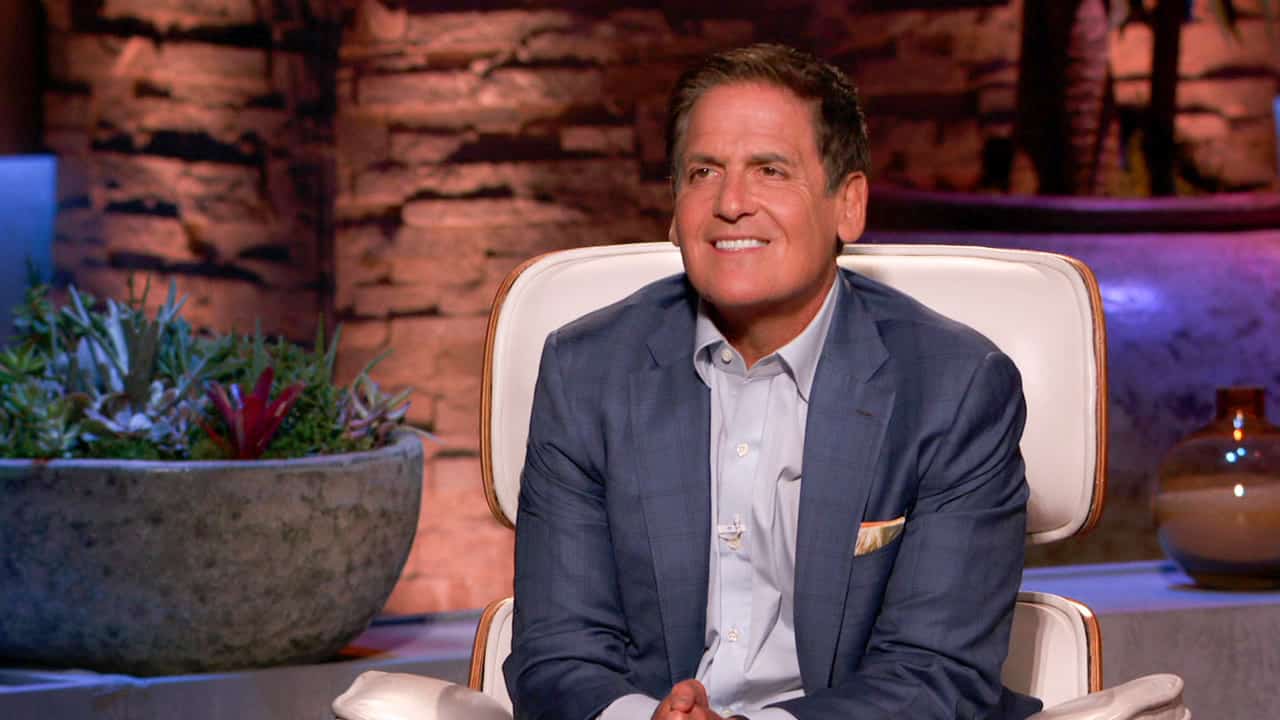
Cuban is the richest person who has ever sat behind the Shark Tank desk.
Various trackers place Kevin O’Leary around $400 million, Daymond John in the $300–350 million range, Robert Herjavec around $200–300 million, Lori Greiner somewhere between $150 million and $250 million, depending on the source, and Barbara Corcoran around $100 million.
Put together, the other five Sharks’ fortunes don’t add up to even a fifth of Cuban’s. The gap exists for one structural reason: every other Shark built a fortune the traditional way, through years of compounding product sales, licensing deals, and brand royalties.
Cuban’s fortune was built on a single nine-figure-to-ten-figure exit during the most overheated stock market window in modern history, then protected by a well-timed hedge.
How Does Mark Cuban Make Money?
Cuban’s income today comes from a diversified mix, though it is heavily weighted toward asset appreciation rather than salary or cash flow.
His minority ownership of the Dallas Mavericks is his single largest position by value. Even after selling 73% of the franchise in 2023, the 27% he retained sits within a team that Sportico valued at over $5 billion in its October 2025 rankings, meaning his remaining slice alone is worth well over a billion dollars. That too, excluding from whatever cash he received in the original sale.
Cost Plus Drugs is his most active current operating business. Structured as a public-benefit corporation, it sells roughly 2,300 mostly generic medications. Cuban has said the company is profitable without needing to raise prices. It’s April 2026, in partnership with Humana’s CenterWell Pharmacy, built around a platform called SwiftyRx. This extends that pricing model into employer-sponsored health plans, a much larger and more lucrative market than direct-to-consumer sales alone.
His public equities portfolio contributes meaningfully too, though it’s concentrated rather than diversified. He disclosed in 2019 that he held close to $1 billion in Amazon stock, a position he had been building since around 2015, and has separately described Netflix, bought around 2009, as his second-largest individual holding.
His venture capital activity, both through Shark Tank and his separate vehicle, Mark Cuban Companies, adds a smaller but steady contribution. By his own account to CNBC Make It, he invested roughly $33 million across his sixteen seasons on the show, has recovered up to $35 million in cash, and values his remaining equity stakes in those companies at a minimum of $250 million on a mark-to-market basis.
Media and entertainment assets, including AXS TV, Magnolia Pictures, and what remains of 2929 Entertainment, generate smaller and less consistent revenue.
Industry estimates have put Shark Tank appearance fees somewhere in the $50,000-per-episode range in recent years, which would put his annual salary from the show, even during a full 22-episode season, well under $2 million, a meaningful sum for almost anyone, but immaterial next to billion-dollar equity positions.
Early Life and Background
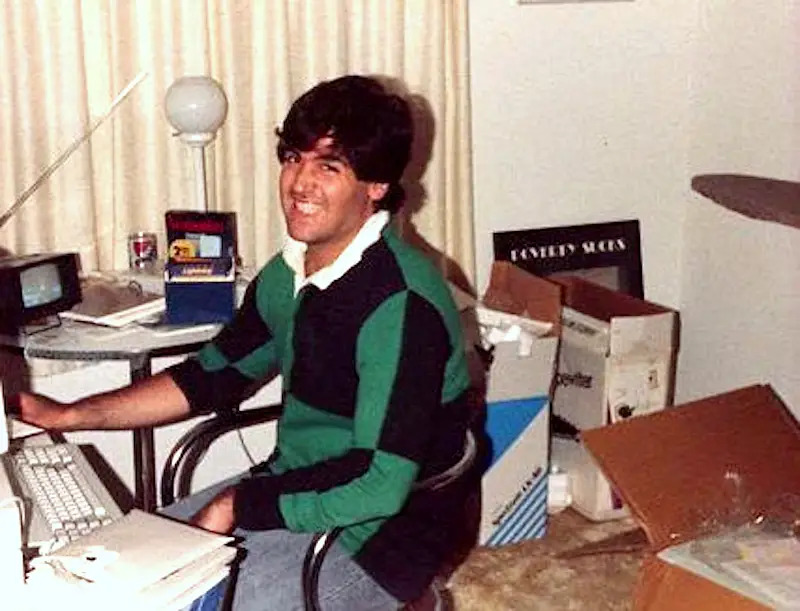
Mark Cuban was born on July 31, 1958, in Pittsburgh, Pennsylvania, and grew up in Mt. Lebanon, a suburb where his family was, by his own description, anything but affluent. His father, Norton Cuban, worked as an automobile upholsterer; his mother, Shirley, moved between jobs. The family was Jewish, with roots that ran through Russia, Ukraine, Lithuania, and Bessarabia — his paternal grandfather had changed the family name from “Chabenisky” to “Cuban” after arriving at Ellis Island.
At nine, Cuban was bundling Pittsburgh Pirates baseball cards and reselling them on the playground at a markup. At twelve, he went door to door selling garbage bags to afford an expensive pair of basketball shoes. By his teens, he had moved into stamps and coins, and he has said the stamp business taught him more about supply, demand, and timing than any class he later took.
At sixteen, when a strike shut down the Pittsburgh Post-Gazette, he drove to Cleveland, bought newspapers in bulk, and sold them back in Pittsburgh. An early, almost comically literal lesson in arbitrage.
He skipped his senior year of high school entirely, enrolling at the University of Pittsburgh, then transferred after a year to Indiana University’s Kelley School of Business, A choice he has said came down to tuition cost rather than prestige. He graduated in 1981 with a degree in management, having spent his college years running a bar called Motley (eventually shut down after an underage-drinking incident), teaching paid disco lessons to sorority members, and dabbling in a chain-letter scheme. After graduation, he briefly took a conventional job at Mellon Bank in Pittsburgh before deciding, in his own words, that working for other people simply wasn’t going to be his path.
Success Story: How Mark Cuban Built His Fortune
The version of this story Cuban tells most often starts with getting fired, three separate times, before he turned thirty. The third firing is the one that mattered. In 1982, newly arrived in Dallas with little more than a beat-up car and a few hundred dollars, Cuban took a job at Your Business Software, one of the city’s first personal computer software retailers.
He was supposed to open the store each morning. Instead, one day, he left to close a deal with a client. He was fired on the spot. What he’d learned on the job, though, he kept. Cuban has said he spent his nights reading software manuals cover to cover, absorbing technical knowledge that put him ahead of colleagues with formal computer science degrees who weren’t doing the same extra work.
That self-taught expertise, combined with the relationships he’d built with software customers, gave him the foundation to start his own company. In 1983, with backing from former clients and a partner, former Texas Instruments executive Martin Woodall, he founded MicroSolutions, a systems integrator and software reseller that grew to more than $30 million in annual revenue.
In 1990, he sold it to CompuServe, then an H&R Block subsidiary, for $6 million, walking away with roughly $2 million after taxes. That night, the celebration produced one of the more famous footnotes in Cuban lore: at dinner, asked what he planned to do with his new money, Cuban picked up a phone at the table, called American Airlines, and bought a $250,000 unlimited lifetime flight pass on the spot, later adding a $150,000 companion pass.
American discontinued the program in the mid-1990s after a handful of pass-holders racked up tens of millions of frequent-flier miles, but Cuban’s pass kept working for him for years afterward, he eventually gifted it to his father, and after his father’s death, passed it along to a friend, using the one transfer the airline allows.
The real fortune came nine years later. In 1995, Cuban and fellow Indiana alumnus Todd Wagner took over a small streaming venture called Audionet, built initially to webcast Indiana Hoosiers basketball games over a single server and an ISDN line. Renamed Broadcast.com in 1998, the company grew to 330 employees and helped stream the first-ever live Victoria’s Secret fashion show.
Its 1998 IPO produced one of the largest first-day stock gains in Wall Street history at the time, and less than a year later, at the absolute height of the dot-com mania, Yahoo! bought the company for $5.7 billion in stock. Cuban, who owned roughly a third of Broadcast.com, received about 14.6 million shares of Yahoo!, worth roughly $1.4 billion, the day the deal closed.
This is the part of the story Cuban tells with the most relish, because it’s the part where he didn’t just get lucky, he made a deliberate, contrarian bet against his own windfall. Restricted by a lockup period from selling his shares outright, and convinced the internet bubble couldn’t last, he set up what’s known as a costless options collar: buying puts that would pay off if Yahoo! stock fell, and selling calls that capped his upside, financing one with the other.
“Pigs get fat, hogs get slaughtered,” he has said of the logic, adding that he didn’t need every last dollar of potential upside. When the bubble burst and Yahoo! stock collapsed from roughly $118 to around $8 a share, a 93% drop, Cuban’s puts didn’t just protect his fortune; they multiplied it.
He has said publicly that the hedge ultimately made him more money than the original sale itself, a claim corroborated by financial analysts who’ve called it one of the most consequential individual trades in Wall Street history.
With that capital secured, Cuban moved into ownership rather than just investment. In January 2000, he bought the Dallas Mavericks from Ross Perot for $285 million, with no outside partners. The team he inherited had a losing record; under his ownership, it became a perennial playoff contender, won the franchise’s only NBA Championship in 2011, and by the time Cuban sold a controlling stake in 2023, had appreciated by well over ten times its purchase price.
The biggest failures in Cuban’s career are less dramatic but instructive. He passed on an early investment opportunity in a young company called Uber, proposing a valuation roughly half of what its founder, Travis Kalanick, whom Cuban had previously backed at the file-sharing startup Red Swoosh, was asking for. Kalanick never called back.
Yahoo!’s acquisition of Broadcast.com itself is now widely regarded by media analysts as one of the worst internet acquisitions of the dot-com era, with the streaming service shut down within a few years. A reminder that even Cuban’s signature deal looked, from the buyer’s side, like a value-destroying mistake.
Major Businesses and Investments
MicroSolutions: The First Real Sale
MicroSolutions wasn’t really a major technology innovation. Instead, it showed Mark Cuban’s smart business approach: finding a simple market that others ignored. In this case, small businesses in Dallas that needed help setting up computer systems, and doing better than competitors by providing excellent customer service and strong product knowledge. When he sold the company to CompuServe for $6 million in 1990, it wasn’t a huge deal financially. But it was an important step because it gave him money and credibility to take advantage of opportunities during the rise of the internet.
Broadcast.com: The Billion-Dollar Pivot
Broadcast.com is the company that defines Cuban’s net worth story, and it’s worth understanding what it actually was: an early, primitive form of what would later become podcasting and live-streaming infrastructure. Cuban’s stake, reported at roughly 28% according to the company’s own 1998 IPO prospectus, made him the largest individual beneficiary of the Yahoo! acquisition.
Dallas Mavericks: From $285 Million to a Multibillion-Dollar Exit
Cuban’s purchase of the Mavericks remains arguably his single best long-term investment, and unusually for him, it was a patient one rather than a quick flip. Over more than 20 years of owning the team, the Dallas Mavericks won an NBA championship and became one of the most successful and valuable teams in the league.
By 2023, the team was valued at $3.5 billion, which was the amount agreed on when Mark Cuban sold a 73% stake to Miriam Adelson and her son-in-law, Patrick Dumont, making their family the main owners. Cuban kept 27% ownership and said he would still stay involved in basketball decisions. The exact amount of money he personally made from the sale was never revealed, but the team’s $3.5 billion value was about 12 times more than what he originally paid for it.
That relationship has since soured. In 2026, Cuban told the Intersections podcast he didn’t regret selling the team but did regret the buyer, saying plainly, “I don’t regret selling. I regret who I sold to.” It’s a rare moment of public second-guessing from a man who otherwise frames nearly every major decision as deliberate and calculated.
2929 Entertainment, Magnolia Pictures, Landmark Theatres and AXS TV
Alongside Broadcast.com co-founder Todd Wagner, Cuban built 2929 Entertainment as a vertically integrated film and media operation spanning production, distribution and exhibition. The 2003 purchase of Landmark Theatres, a 58-screen art-house chain, gave the venture a retail foothold; Magnolia Pictures became a notable distributor of independent and foreign films; and AXS TV, focused on live music and combat sports.
Cuban and Wagner sold Landmark for an undisclosed profit in 2018 and sold a majority stake in AXS to Anthem Sports and Entertainment in 2019, also on undisclosed terms. The media portfolio has never approached the scale of Cuban’s tech or sports holdings, generating, by various industry estimates, somewhere in the range of $16 million in annual revenue across its properties. A reminder, in Cuban’s own framing, that glamorous industries don’t always generate glamorous returns.
Cost Plus Drugs: The Mission-Driven Bet
Launched commercially in January 2022, the Mark Cuban Cost Plus Drug Company is Cuban’s most actively evolving business today and the one he talks about with the most evident personal investment. Its pitch is radical transparency: every medication’s listing shows the manufacturer’s actual cost, a flat 15% markup, and a $5 shipping fee, cutting out the pharmacy benefit managers that Cuban argues inflate prices throughout the supply chain.
The company opened its own Dallas manufacturing facility in 2023 to address drug shortages directly. Its April 2026 partnership with Humana’s CenterWell Pharmacy — aimed at building transparent, pass-through pricing tools for employers. Represents Cuban’s clearest attempt yet to scale the model beyond individual consumers into the much larger employer-sponsored insurance market. This put it in direct competitive territory with the Trump administration’s newly launched TrumpRx initiative.
Public Markets: Amazon, Netflix and the VC Portfolio
Cuban’s personal stock portfolio is notably concentrated rather than diversified, a deliberate departure from conventional wealth-management advice that he’s discussed openly.
His roughly $1 billion Amazon position, built gradually since around 2015, and his Netflix holding, established around 2009, reflect a strategy of betting on a small number of companies he personally uses and believes will remain relevant for a decade or more, rather than spreading capital across an index.
Layered on top of that is a venture portfolio Cuban has described as exceeding 300 individual investments with dozens of exits, a power-law book where, by his own admission, most positions go nowhere and a small handful do enormous work.
The Shark Tank Years
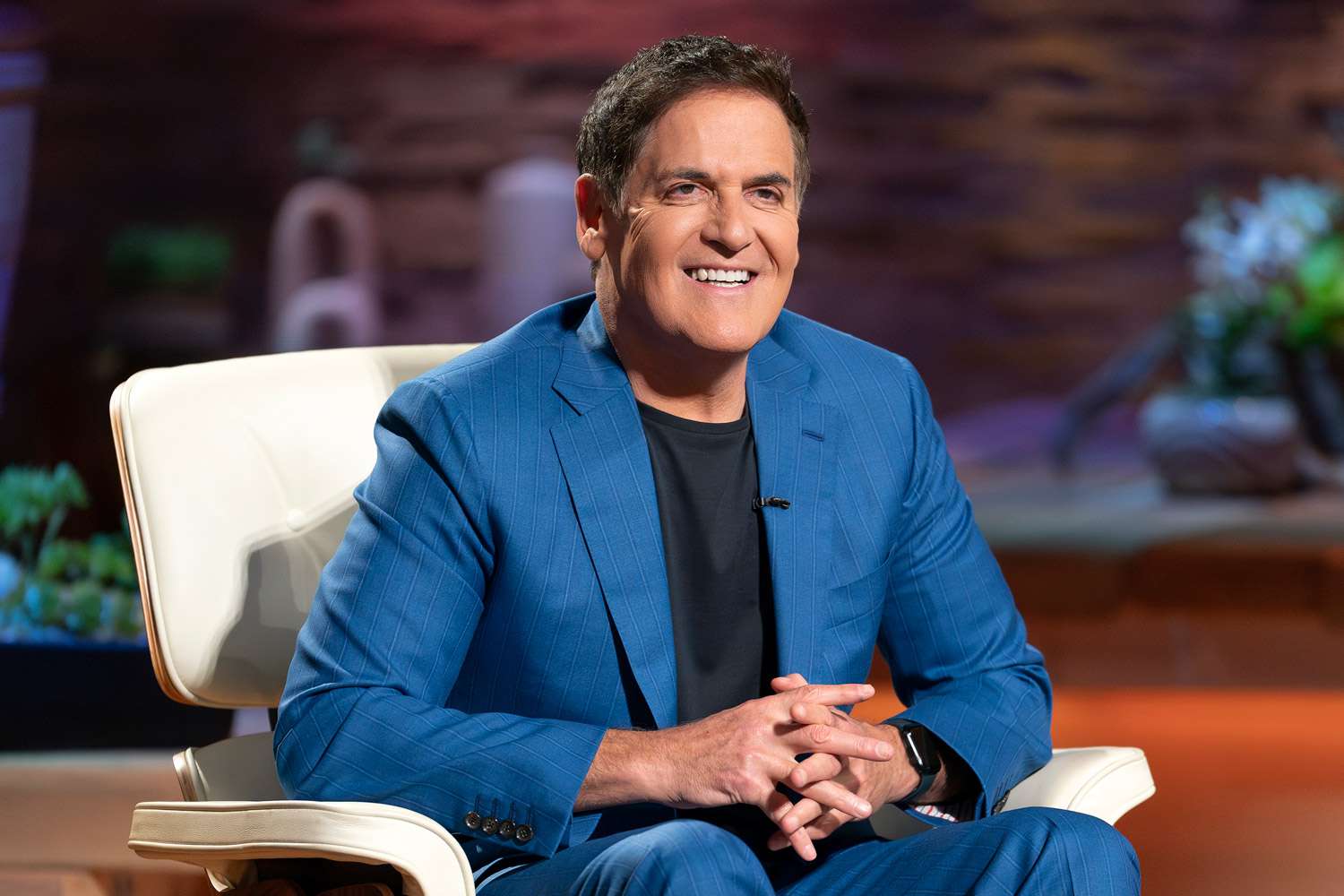
Cuban first appeared on Shark Tank as a guest investor in Season 2, which aired in 2011, and became a full-time main cast member from Season 3 onward. Over sixteen seasons, he built a reputation as the show’s most willing risk-taker, frequently the one shark prepared to write the largest check, take the most unconventional pitch seriously, or extend an unsecured line of credit on a handshake.
The precise scale of his Shark Tank investing has been described differently across various points in his run. In a 2022 interview, Cuban put his total at around $20 million across roughly 85 deals. By the time he gave his exit interview to CNBC in May 2025, after his final episode aired, the cumulative figure had grown to about $33 million invested, with up to $35 million already recovered in cash, and his remaining equity stakes valued on a mark-to-market basis at a minimum of $250 million.
Separately, fan-maintained deal-tracking sites have logged more than 260 on-air handshake agreements worth upward of $60 million in commitments.
His best-documented wins include Ten Thirty One Productions, a Halloween-attraction company that received a roughly $2 million investment for 20%, among the largest single commitments in the show’s history; Rugged Maniac obstacle-course races; and BeatBox Beverages, a canned-cocktail brand. His most candid public admission of failure came in a 2022 interview in which he acknowledged he had not, on a pure cash basis, recovered everything he’d put in, a frank statement from a man who has said repeatedly that the show was never really about maximizing his own returns. “Sometimes my deals are purely to help [an entrepreneur] or send a message,” he wrote in 2022.
Cuban announced his departure from the show in late 2023, citing a desire to spend more summers with his teenage children before they left for college rather than filming.
His final episode aired May 16, 2025, as part of the Season 16 finale, closing with a joint $250,000 investment alongside Barbara Corcoran for a 20% stake in a gourmet deviled-egg restaurant, a fittingly Texan, unglamorous final deal for a Shark whose career began with garbage bags and stamp collections.
The Three Deals That Built Protected the Fortune
Three transactions account for nearly all of Cuban’s net worth, and isolating them shows how differently each one behaved.
MicroSolutions to CompuServe (1990): roughly $6 million, with Cuban netting about $2 million after taxes. Modest in dollar terms, but the deal that financed his entry into the internet era and established the operating playbook, find an underpriced niche, out-serve the incumbents, sell at the right moment, that he’d repeat at far larger scale a decade later.
Broadcast.com to Yahoo! (1999) plus the options collar (1999–2001): the headline sale was $5.7 billion in stock, of which Cuban’s roughly one-third ownership translated into about $1.4 billion in restricted Yahoo! shares. The collar trade that followed — buying puts around an $85 strike price and selling calls around $205 while Yahoo! traded near $95 — is the move that actually determined how much of that fortune survived the crash. By his own account, the hedge ultimately generated more profit than the underlying sale, turning what could have been a near-total wipeout (Yahoo! shares fell as low as roughly $8) into a fortune Cuban has at various points pegged above $2 billion in realized, after-hedge proceeds.
Dallas Mavericks majority sale (2023): a $285 million purchase in 2000 became the basis for a 73% sale at a $3.5 billion franchise valuation in 2023 – better than a twelvefold increase before even counting the 27% stake Cuban retained, which by Sportico’s October 2025 estimate of the franchise’s total value above $5 billion is itself worth well over a billion dollars on paper.
Set against each other, the pattern is consistent: Cuban’s biggest wins came not from picking the single best long-term asset and holding it (he has openly said a simple, untouched S&P 500 investment of his original after-tax Broadcast.com proceeds would likely be worth considerably more today than his current net worth), but from a willingness to exit decisively, hedge aggressively against his own concentrated positions, and redeploy capital into ventures — a basketball team, a media company, a pharmacy startup — that interested him personally rather than ones that simply promised the highest expected return.
Business Analysis: Cuban’s Investment Philosophy
Mark Cuban has a very different way of taking risks compared to most billionaires who have built their own success. Instead of spreading his money across many different investments, he usually puts a lot of his time, money, and energy into one big idea at a time. Just like Broadcast.com, the Dallas Mavericks, or Cost Plus Drugs. But once that idea becomes successful, he makes sure to protect what he has earned instead of risking everything again.
His style of running businesses is also very hands-on. Unlike many rich investors who simply give money and let others do the work, Cuban likes to be directly involved.
For example, when he owned the Mavericks, he was often close to the team during games. On the TV show Shark Tank, he personally checked the businesses he wanted to invest in. And when talking about Cost Plus Drugs, he often explained and defended the company himself instead of letting a PR team do it.
What makes Cuban successful is not just being good with money. It’s his ability to make bold decisions when other people are unsure. He sold his Broadcast.com stock when many people thought it didn’t matter, bought the Dallas Mavericks when few people wanted the team, and started a pharmacy company in an industry controlled by powerful companies. In each case, people doubted him at first, but later he proved them wrong.
At the same time, Cuban has admitted that his way of doing things may not have made him as rich as possible. He said that if he had simply invested his money from selling Broadcast.com into the stock market and left it there, he would probably be even wealthier today. But for Cuban, money was never the only goal. He once said, “I’ve got two and a half billion, how much do you need?” This shows that for him, success is not just about having the most money, but also about having freedom, staying involved in interesting work, and building things he cares about.
Lesser-Known Facts, Awards and Philanthropy
Cuban holds a Guinness World Records credit for the largest single e-commerce transaction recorded at the time, after paying $40 million online for a Gulfstream V private jet in October 1999. He competed on “Dancing with the Stars” in 2007, just seven weeks after hip-replacement surgery. He is the author of the bestseller “How to Win at the Sport of Business” and has executive-produced several films, including the Oscar-nominated “Good Night, and Good Luck.”
His philanthropic record centers on the Fallen Patriot Fund, which he founded in 2003 to support families of U.S. military personnel killed or wounded in Iraq, personally matching the first $1 million in donations through the Mark Cuban Foundation. In 2015 he donated $5 million to Indiana University to fund the Mark Cuban Center for Sports Media and Technology. During the COVID-19 pandemic, he used social media to offer small businesses informal advice on surviving lockdowns, and in 2020 he personally arranged housing and addiction treatment for former NBA player Delonte West after finding him in crisis.
Among his recognitions are induction into the Texas Business Hall of Fame, the Horatio Alger Award, the SXSW Hall of Fame, an Ernst & Young Entrepreneur of the Year award, and GQ’s Man of the Year. He married Tiffany Stewart in 2002 in a private ceremony in Barbados; the couple have three children and live in Dallas’s Preston Hollow neighborhood, alongside a beachfront California property purchased for $19 million in 2018.
Lessons Entrepreneurs Can Learn From Mark Cuban
- Knowledge compounds faster than credentials. Cuban outworked colleagues with formal computer science training simply by reading manuals every night – depth of preparation beat the depth of pedigree.
- Getting fired isn’t a failure if you extract the lesson. Three firings before age thirty didn’t deter him; each one sharpened his read on what he didn’t want to tolerate from an employer.
- Sell into euphoria, not into panic. Cuban’s instinct to distrust an obviously overheated market and act on that distrust before the crowd did is the single decision that separated him from dozens of other dot-com-era paper billionaires.
- Protect concentrated wealth before you need to. The options collar wasn’t a reaction to the crash; it was set up while Yahoo! stock was still near its highs, precisely because Cuban assumed he wouldn’t be able to react fast enough once the turn actually came.
- You don’t need every dollar of theoretical upside. “Pigs get fat, hogs get slaughtered” is as much a risk-management philosophy as a one-liner, capping your gains in exchange for capping your losses is a legitimate strategy, not a failure of ambition.
- Diversify your platform, not just your portfolio. Cuban’s reach across television, sports, healthcare, and venture capital means a downturn in any single industry doesn’t threaten his overall relevance or deal flow.
- Mission-driven businesses can still be commercially serious. Cost Plus Drugs proves that “doing good” and “running profitably” aren’t mutually exclusive positioning choices, provided the underlying economics are real.
- Patience and impatience both have their place. Cuban held the Mavericks for 23 years but exited Broadcast.com’s stock within months of the lockup ending – the lesson isn’t “always hold” or “always sell,” it’s “know specifically what kind of asset you’re holding and why.”
- Direct, hands-on involvement is a competitive edge at his scale. Many billionaires delegate; Cuban’s willingness to personally vet pitches, post on social media, and defend his own pricing model has kept him closer to his businesses than passive ownership would allow.
- Net worth is one scoreboard, not the only one. Cuban has openly acknowledged a simpler, passive strategy would likely have left him richer — and has just as openly said that wasn’t the point.
Frequently Asked Questions
What is Mark Cuban’s net worth in 2026?
Forbes’ real-time tracker placed his net worth at approximately $6.0 billion through much of 2026, with Bloomberg’s Billionaires Index citing a similar $5.7–6.4 billion range.
How did Mark Cuban become rich?
His core fortune came from selling Broadcast.com to Yahoo! for $5.7 billion in stock in 1999, then protecting that windfall from the dot-com crash through an options hedge before the bubble burst.
What companies does Mark Cuban own or co-own today?
He retains a 27% minority stake in the Dallas Mavericks, founded and runs the Cost Plus Drugs Company, co-owns 2929 Entertainment (including Magnolia Pictures and AXS TV), and holds equity in several hundred companies through his venture vehicle and past Shark Tank deals.
What was Mark Cuban’s biggest single investment?
Measured by dollar value, the Dallas Mavericks purchase — $285 million in 2000, sold in part for a $3.5 billion valuation in 2023 — dwarfs every other individual deal in his career.
Is Mark Cuban a billionaire?
Yes. He has held billionaire status continuously since the 1999 Broadcast.com sale closed, surviving the dot-com crash thanks to his hedge.
What is Mark Cuban’s salary from Shark Tank?
Industry estimates place Shark Tank appearance fees in the tens of thousands of dollars per episode, putting his show-related income at well under $2 million annually. A small fraction of his overall wealth.
How much did Mark Cuban invest on Shark Tank in total?
By his own account to CNBC Make It in 2025, roughly $33 million across sixteen seasons, with up to $35 million already recovered in cash and remaining equity valued at a minimum of $250 million.
Did Mark Cuban really lose money on Shark Tank?
On a pure cash basis at points during his run, yes — he acknowledged as much in 2022. By the time he exited in 2025, however, his combined cash returns and equity value put him well ahead overall.
Why did Mark Cuban sell the Dallas Mavericks?
He has said the emotional weight of ownership, a desire not to pass the team to his children, and the strategic advantage of partnering with a family connected to real estate and hospitality (the Adelsons of Las Vegas Sands) all factored into the 2023 sale.
What is Cost Plus Drugs and how does it make money?
A public-benefit pharmacy company launched in 2022 that sells mostly generic medications at the manufacturer’s cost plus a flat 15% markup and $5 shipping, expanding in 2026 into employer-sponsored prescription plans through a partnership with Humana’s CenterWell Pharmacy.
How much is Mark Cuban’s Amazon stock worth?
He disclosed in 2019 that his position was worth close to $1 billion, a holding built gradually since around 2015; he has not disclosed an updated figure since.
Is Mark Cuban richer than the other Shark Tank investors combined?
Essentially, yes. Various trackers place Kevin O’Leary, Daymond John, Robert Herjavec, Lori Greiner, and Barbara Corcoran’s net worths combined at well under $1.5 billion – a fraction of Cuban’s roughly $6 billion.
Final Thoughts
Mark Cuban’s wealth story resists the tidy “self-made genius” template that net-worth journalism often defaults to, and that’s precisely what makes it useful. He has been candid that a passive investment of his original Broadcast.com proceeds would likely have made him considerably richer than he is today. What his actual record shows instead is a particular kind of discipline: take concentrated, uncomfortable risks, hedge them the moment they pay off, and then spend the resulting capital on businesses, a struggling NBA franchise, a film distributor, a pharmacy company swimming against an entire industry’s pricing model, that he found personally worth building rather than merely profitable to hold.
With Cost Plus Drugs scaling into the employer health-insurance market and his Mavericks stake still appreciating on paper even after the 2023 sale, the open question for 2027 and beyond isn’t whether Cuban stays a billionaire. It’s whether his next act, in an industry as politically charged and structurally entrenched as American healthcare, can produce anything like the outsized return his last two acts did.
This article reflects publicly reported figures and statements as of June 2026. Net worth estimates for privately held assets are approximations by Forbes, Bloomberg and other financial trackers, not audited disclosures, and should be read as a range rather than a precise figure.
Related Business Leaders & Entrepreneur Success Stories
Interested in learning more about influential entrepreneurs, business leaders, and wealth creators in the GCC? Explore these in-depth profiles and interviews:
- Sara Al Madani Net Worth: Business Ventures, Investments & Success Story
- Raja Easa Al Gurg Net Worth 2026
- Anas Bukhash Net Worth 2026: The Entrepreneur Behind ABtalks
- How GCC Leaders Are Using AI to Grow Their Business
- Ammara Aftab Interview: AI, Leadership & Digital Transformation in Pakistan
- Anis Sfar Interview: Dubai Real Estate, AI & the Future of Property Investment
- Dr. George Syrmalis Interview: Innovation, Biotechnology & Global Entrepreneurship