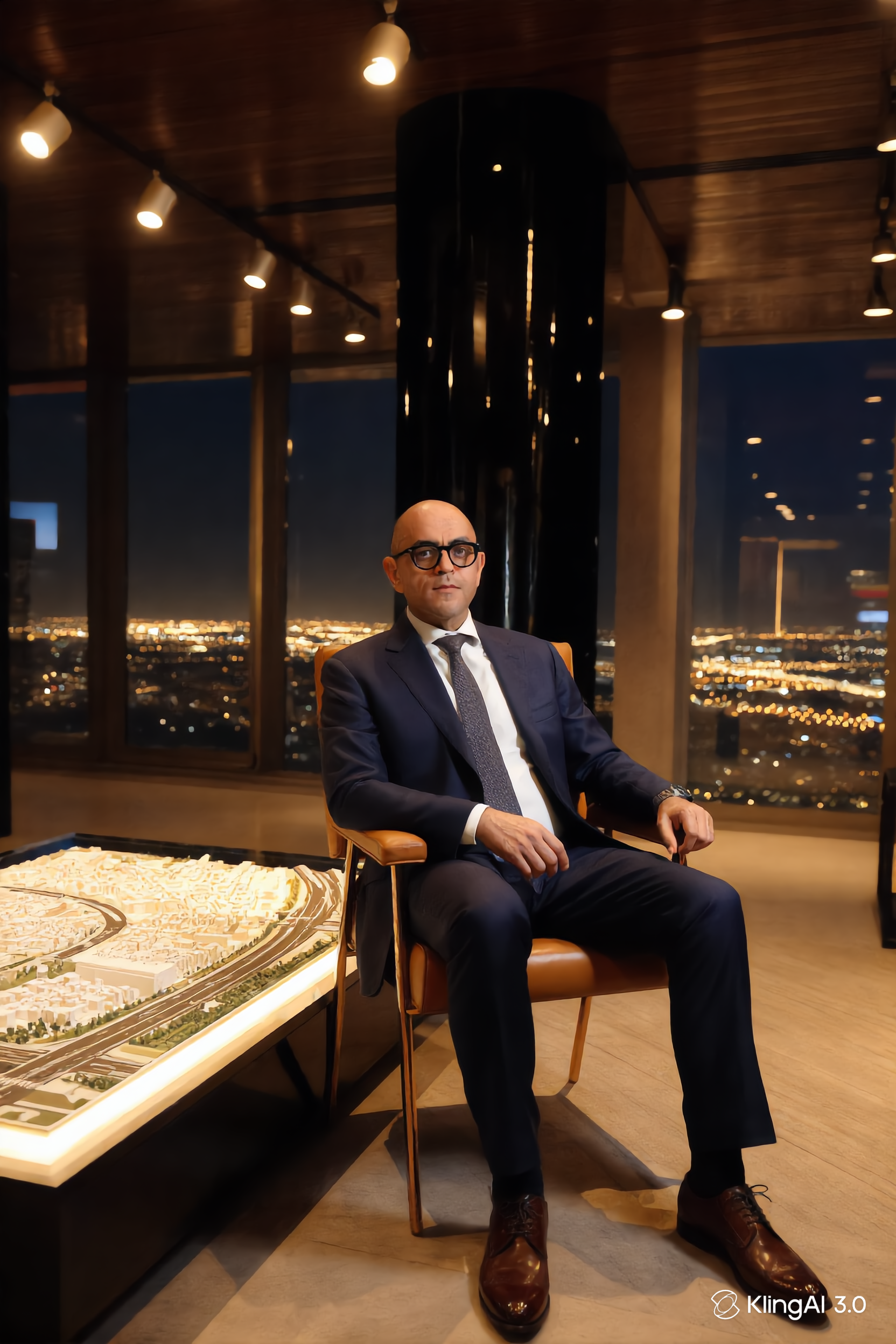
“The investors who will win the next decade are not the ones who simply buy property — they are the ones who understand the intersection of data, technology, and human insight.”
Leadership & Professional Journey
1. Can you share your journey into the real estate industry and what inspired you to become a leader in this field?
Anis Sfar: My path into real estate was driven by a conviction that property is one of the most powerful vehicles for wealth creation — not just for the ultra-wealthy, but for anyone with the right knowledge and access. I was fascinated early on by how real estate sits at the intersection of economics, human psychology, and urban development. It tells the story of where people want to live, how cities evolve, and where capital flows.
Dubai, in particular, drew me in because of its unique position as a city that is still being written. The opportunity to operate in a market that is simultaneously global in its ambition and deeply rooted in a region of immense capital was something I could not ignore. Leadership in this field, for me, is about being a trusted guide in a complex landscape — helping investors navigate decisions that genuinely change their financial futures.
2. What motivated you to join and contribute to the growth of Elevatia Real Estate?
Anis Sfar: Elevatia was built on a very specific vision: to serve international high-net-worth investors who demand more than just a transaction. They want insight, discretion, and a partner who thinks as long-term as they do. That mission resonated with me deeply.
What motivated me was the opportunity to build something meaningful in the off-plan luxury segment, where timing, developer relationships, and market intelligence are everything. I wanted to create an agency that operates more like a private investment advisory than a traditional real estate brokerage – and Elevatia gave me the platform to do exactly that.
3. How has your background in business administration influenced your leadership and decision-making approach?
Anis Sfar: Business administration gave me a framework for thinking systematically — understanding financial models, organisational dynamics, and strategic positioning before making any move. It trained me to ask the right questions: What is the risk-adjusted return? What does the data actually tell us, as opposed to what we want to believe? What is the opportunity cost?
In practice, this means I approach leadership with both rigour and adaptability. I rely on structured analysis but I also know when to trust pattern recognition built from years in the field. The two are not contradictory — they reinforce each other.
4. What are the key principles that guide your leadership style today?
Anis Sfar: Three principles sit at the core of how I lead. First, clarity over comfort – I would rather give a client or a team member honest, sometimes difficult information than a reassuring answer that leads them in the wrong direction. Trust is built through honesty, not pleasantness.
Second, execution before perfection. The real estate market moves fast. A good decision made today is often worth more than a perfect decision made too late. I push my team to act with informed speed.
Third, continuous reinvention. The leaders who will matter over the next decade are those who embrace technology, adapt their models, and never stop learning. Complacency in this industry is the beginning of irrelevance.
“Dubai is not just a market — it is a living thesis on what a global city can become when vision and capital meet without bureaucratic friction.”
— ANIS SFAR
CEO, Elevatia Real Estate
Real Estate Industry & Market Outlook
5. What major changes have you observed in the real estate sector over the past few years?
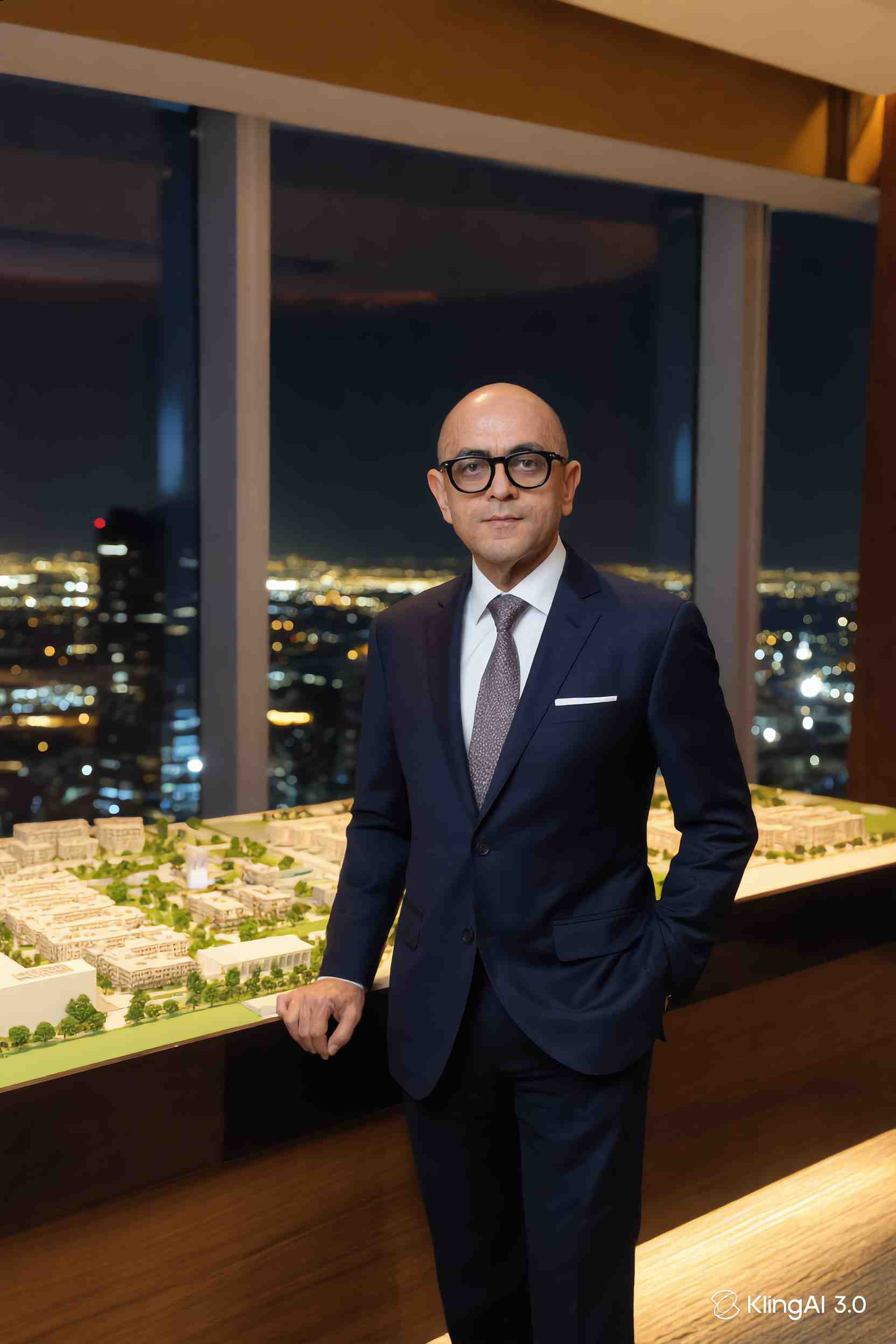
Anis Sfar: The most profound shift has been the globalisation of the buyer pool. Five years ago, a developer in Dubai was marketing primarily to regional buyers. Today, the same development is being acquired by investors from Europe, Asia, Africa, and the Americas simultaneously. Digital connectivity, remote work, and geopolitical wealth migration have fundamentally changed who participates in real estate markets.
Alongside that, the rise of off-plan as the dominant investment vehicle in Dubai has been remarkable. Investors have recognised that early entry into well-located projects by reputable developers offers capital appreciation that secondary market transactions simply cannot match. This is not a temporary trend – it reflects a structural maturity in how sophisticated investors approach the asset class.
6. What trends do you believe will define the future of real estate over the next decade?
Anis Sfar: Four trends will be definitive. First, the continued migration of global capital into politically stable, tax-efficient markets – Dubai, Singapore, select European cities. Second, the integration of AI and data analytics into every stage of the investment cycle, from site selection to exit timing.
Third, sustainability and wellness infrastructure will move from premium differentiators to baseline expectations. Buyers will demand developments that are built for long-term livability, not just short-term appeal. And fourth, tokenisation and fractional ownership will begin to democratise access to institutional-quality real estate – though this remains an emerging space that requires careful regulatory navigation.
7. Which property sectors currently present the most promising investment opportunities?
Anis Sfar: In the Dubai context, branded residences continue to offer exceptional value – especially those tied to globally recognised hospitality brands. The premium these assets command at resale, combined with the operational income potential, creates a compelling risk-return profile for international investors.
Waterfront and island communities are also consistently outperforming the broader market. The scarcity of such inventory, combined with sustained demand from HNW buyers seeking lifestyle-driven investments, means pricing in these segments has remained resilient even during periods of broader market softening. Beyond Dubai, I am also watching the Riyadh market closely — Vision 2030 is creating a development pipeline unlike anything the region has seen.
8. How should investors prepare for market fluctuations and economic uncertainty?
Anis Sfar: The first principle is to invest in markets and assets where the fundamentals are structurally strong — population growth, infrastructure investment, regulatory transparency, and demand depth. Dubai checks all of these boxes. When a market has genuine structural drivers, short-term volatility becomes noise rather than signal.
Beyond market selection, liquidity management is critical. Investors who over-leverage during benign cycles are the first to suffer when conditions tighten. I advise clients to always maintain a liquidity buffer — real estate is not a liquid asset, and the ability to hold through a cycle is often the difference between a loss and a significant gain.
9. What are the biggest mistakes first-time real estate investors make?
Anis Sfar: The most common and costly mistake is emotional buying — falling in love with a property rather than evaluating it as a financial instrument. A beautiful apartment in the wrong location with poor rental yield is not an investment; it is an expensive indulgence.
The second major mistake is ignoring total cost of ownership. Purchase price is only one number. Service charges, registration fees, agent commissions, maintenance provisions, and financing costs all compound over time. Investors who model only the headline price consistently underestimate the true return on their capital. Working with an advisor who forces you to look at the complete picture — not just the exciting parts — is essential.
“AI will not replace the real estate professional. But the professional who masters AI will replace the one who does not.”
— ANIS SFAR
CEO, Elevatia Real Estate
Real Estate Portfolio Management
10. What are the foundations of a successful real estate portfolio?
Anis Sfar: Three foundations are non-negotiable: quality of location, quality of developer, and alignment with your investment thesis. Every asset in a portfolio should have a clear, documented reason for being there — whether that is income generation, capital appreciation, or hedging against currency risk. Portfolios built on vague optimism tend to perform poorly in adversity.
Beyond individual asset quality, portfolio construction requires deliberate thinking about correlation. A portfolio of five luxury apartments in the same community is not diversified — it is concentrated risk with a pleasant view. True portfolio strength comes from combining assets with different demand drivers, timelines, and yield profiles.
11. How do you balance risk and return when managing investment portfolios?
Anis Sfar: The starting point is always a clear definition of what the investor is actually trying to achieve. Risk tolerance is not universal — a 35-year-old building long-term wealth has a very different risk profile than a 60-year-old seeking income security. Calibrating the portfolio to the individual’s actual circumstances, not an abstract model, is what good advisory work looks like.
In practice, I tend to structure portfolios with a core of high-quality, lower-volatility assets that anchor the return — established communities with proven rental demand — and a satellite allocation to higher-upside opportunities like early-stage off-plan in emerging districts. The core provides stability; the satellite provides growth. The ratio between them is determined by the client’s profile, not a generic formula.
12. What metrics should investors track regularly to evaluate portfolio performance?
Anis Sfar: Gross and net yield are the obvious starting points, but they are insufficient on their own. I focus clients on a set of six metrics: net yield after all costs; capital appreciation rate versus the comparable market index; occupancy rate and average vacancy duration; loan-to-value ratio and debt service coverage; total return on invested equity; and portfolio liquidity – the weighted average time to realise cash from each asset if required.
Tracking these quarterly, not annually, creates early visibility into problems before they become significant. A declining occupancy rate, for instance, is a leading indicator of yield compression that most investors only notice when it has already materially impacted their returns.
13. What role does diversification play in long-term real estate success?
Anis Sfar: Diversification is the single most reliable form of risk management available to real estate investors. But it must be genuine diversification — across geography, asset type, tenant profile, and development stage — not superficial variety within the same market segment.
I have seen portfolios that appeared diversified on paper because they held ten properties, but all ten were driven by the same demand variable: short-term tourism rentals in one city. When that market experienced regulatory pressure, the entire portfolio was affected simultaneously. True diversification means that the failure of one assumption does not cascade across the whole portfolio.
14. How frequently should investors review and adjust their portfolios?
Anis Sfar: A formal comprehensive review should happen at minimum annually – assessing each asset against its original investment thesis, current market valuation, and the investor’s evolving personal circumstances. But a lighter monitoring cadence of quarterly performance tracking keeps the investor connected to their portfolio between full reviews.
The trigger for an unscheduled review should be any significant change: a material shift in local market conditions, a change in the investor’s liquidity needs, or a developer or regulatory development that affects a specific asset. Waiting for the annual review in these circumstances is not discipline – it is negligence.
Artificial Intelligence & Technology
15. AI is transforming nearly every industry. How do you see AI impacting real estate?
Anis Sfar: AI is already reshaping real estate across multiple layers simultaneously. At the data layer, it enables the processing of transaction histories, demographic shifts, infrastructure announcements, and satellite imagery at a scale that was simply impossible for human analysts. At the client layer, it is transforming how properties are marketed, visualised, and matched to buyer profiles. And at the operational layer, it is automating processes — from document management to maintenance scheduling — that previously consumed enormous human bandwidth.
The deeper implication is this: AI is compressing the information advantage that sophisticated institutional investors have historically held over individual buyers. It is levelling a playing field that was deliberately uneven for decades. That is a profound and underappreciated transformation.
16. Which AI-driven technologies are currently creating the greatest value for investors and property managers?
Anis Sfar: Predictive analytics for rental yield forecasting and vacancy risk modelling is delivering genuine alpha for sophisticated investors. The ability to analyse micro-market supply pipelines alongside macroeconomic indicators to predict where yields are heading over a 12-to-18-month horizon is something that previously required a team of analysts. Today, AI-powered platforms can surface these insights in minutes.
For property managers, AI-driven maintenance prediction — using sensor data and usage patterns to flag issues before they become failures — is reducing operational costs materially. And for marketing, the convergence of AI-generated visual content with hyper-personalised digital distribution is transforming how developers and agencies reach qualified buyers globally. We are deploying these capabilities at Elevatia, and the results are tangible.
17. Can AI improve property valuation accuracy and market forecasting?
Anis Sfar: Significantly, yes — with an important caveat. AI-driven automated valuation models have demonstrated that they can outperform traditional comparable-based appraisals in markets with deep, clean, standardised transaction data. In those environments, the speed and consistency of AI valuation is a genuine advance.
However, real estate markets have important idiosyncratic variables that remain difficult to fully encode — the quality of a specific view, the reputation of a building’s management, the micro-positioning within a community. Experienced professionals who combine AI-generated baseline valuations with on-the-ground contextual knowledge will consistently outperform either pure-AI or pure-human approaches. The optimal model is augmentation, not replacement.
18. How is Elevatia Real Estate integrating technology into its operations and decision making processes?
Anis Sfar: At Elevatia, technology integration is not a department — it is a mindset embedded across every function. On the client intelligence side, we use data platforms to track market movements, developer performance, and pricing dynamics in real time, enabling us to give clients advisory grounded in current data rather than historical intuition.
On the marketing side, we have invested significantly in AI-driven content production — from property visualisation to multilingual digital campaigns targeting our international buyer segments across English, Arabic, and Russian-speaking markets. The result is a marketing operation that moves at the speed of the market, not the speed of a traditional creative production cycle. We are also exploring AI-assisted matching tools that connect investor profiles to opportunities with a precision that manual processes cannot replicate.
19. Do you believe AI will replace certain real estate functions, or primarily enhance human expertise?
Anis Sfar: Replacement will occur in specific, well-defined functions — primarily those that are data-intensive, repetitive, and do not require relational nuance. Document processing, initial property screening, automated market reporting, and routine client communications are all in this category. AI will handle these better, faster, and more cost-effectively than human labour within this decade.
But the high-value functions in real estate — complex negotiation, trust-based advisory for significant capital decisions, navigating the emotional dimensions of large transactions, interpreting political and regulatory risk — these are deeply human competencies that AI will enhance but not replace. The professionals who understand this distinction and invest in developing their uniquely human skills, while leveraging AI for everything else, will be irreplaceable. Those who do not will find themselves competing with a machine on the machine’s terms. That is a competition no one should want to enter.
Closing Question
20. As AI, technology, and changing investor expectations continue to reshape the industry, what will separate successful real estate companies from those that struggle in the coming decade?
Anis Sfar: The companies that will win are those that understand that technology is a multiplier, not a substitute for genuine expertise and genuine relationships. The agencies that will struggle are those that adopt technology as a cosmetic, a shinier website, a few AI-generated images, while the core of their business remains transactional, reactive, and undifferentiated.
The winners will be built on three pillars. First, deep market intelligence that is continuously updated, not episodically researched. Second, a client experience that feels genuinely personalised and advisory, where the investor believes they have a partner who is thinking about their long-term interests, not just closing the next deal. And third, operational agility, the ability to move fast when markets shift, because the companies that cannot adapt their models in real time will be constantly behind the curve.
At Elevatia, we are building for all three. Dubai is entering its next chapter of growth, the GCC as a whole is experiencing a generational capital transformation, and international investors are increasingly awake to what this region offers. The real estate companies that combine world-class market access with technology-amplified intelligence and genuine advisory depth, those will be the defining names of the next decade. That is the standard we hold ourselves to every day.
Connect with Anis Sfar
Anis Sfar – CEO, Elevatia Real Estate
- Official Website: Elevatia Properties
- Personal Instagram: @anissfar_dxb
- Company Instagram: @elevatiarealestate
- LinkedIn: Anis Sfar on LinkedIn
About This Interview
This exclusive interview is part of Arabian Business Times’ leadership and innovation series, featuring global executives, entrepreneurs, and industry experts who are shaping the future of business, technology, and investment. Explore more exclusive interviews and insights on Arabian Business Times
Explore More Expert Insights on AI, Innovation & Business Leadership
- ➜ How Biotech Startups Raise Money in 2026
- ➜ How Affiliate Attribution Is Changing in 2026 – Insights from Mukul Kaushik
- ➜ How TikTok Shop Is Transforming Fragrance Brands Through Social Commerce
- ➜ Featured Profile: Dr. Sofica Bistriceanu
- ➜ Featured Profile: Dr. Desziree Richardson
- ➜ Featured Profile: Dr. Carolyn M. Rubin