
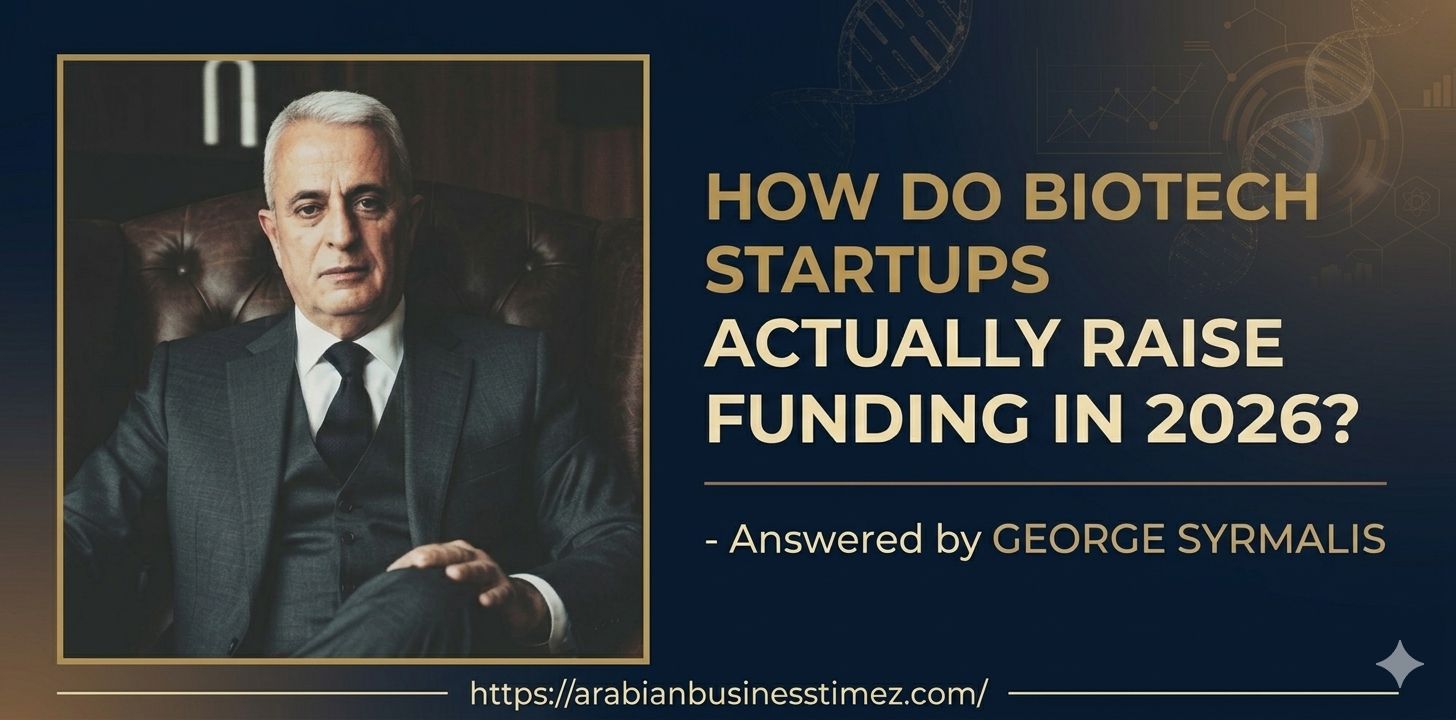
There is a polite version of the answer to this question and there is an honest one. The polite version is the one founders want to hear: that capital is recovering, that the public-market window has reopened, that a good idea with good data will find its backers. The honest version is the one I give the founders who sit across from me, and it is this. The rules by which biotechnology raises money have changed; most founders are still raising as though it were 2021; and that single mismatch explains the majority of the disappointments I see.
I have spent more than three decades at the intersection of medicine and capital, first as a physician-scientist, then as a biotechnology entrepreneur, and now as a financier who has carried companies from a first institutional round through to public listing more than ten times. I have watched the sector inflate, deflate, and reset. What follows is not a
motivational essay. It is a description of how money actually moves into biotechnology in 2026, and what a founder must do to be on the receiving end of it.
The market as it actually is

Begin with the numbers, because sentiment is a poor guide. Global biotechnology venture investment reached roughly thirty-eight billion dollars in 2025, a meaningful recovery, close to a third higher than the prior year and within sight of the 2021 peak. That figure invites optimism. The detail beneath it does not. In the first quarter of 2026, J.P. Morgan’s biopharma venture data recorded around fifty seed and Series A investments worth some 2.3 billion dollars, down sharply from sixty deals and 3.7 billion in the same months of 2025. First-time financings are on course for their weakest year since before the pandemic. The aggregate is healthier; the point of entry is harder.
What this tells you is that the recovery is real but uneven, and it is uneven in a specific direction. Founders navigating today’s more selective funding environment can benefit from understanding the broader principles of building a successful startup in the GCC, where strong fundamentals and execution remain critical to attracting investors. The commentators call it bifurcation, the haves and the have-nots. I prefer the older language: capital has become discriminating again, as it always does once the speculative phase of a cycle exhausts itself. A company with clinical data, a credible management team, and a programme in an area investors actually want is being competed over. A company with a platform, a deck, and a promise is being ignored. Both founders read the same headlines about recovery. Only one of them is experiencing it.
Where the exits are, because exits determine entries
Founders fixate on the raise in front of them. Investors think about the exit behind it, because the exit is what funds the next raise. So understand the exit landscape before you try to understand the funding one.
The public market has reopened, but selectively. After a drought that produced only eleven biotech listings in 2025, among the lowest counts in living memory, 2026 began with genuine activity. The first quarter saw more capital raised through biotech listings than any quarter since 2021, with several offerings clearing three hundred million dollars and a median raise well above what the prior year produced. Names such as Aktis Oncology early in the year and, later, Kailera demonstrated that the bell can be rung again. But the window is, as the analysts put it, open and still selective. A good number of this year’s debutants now trade below their issue price. The companies forming the backbone of the reopening are product-focused, with late-stage, de-risked data; the broad platform stories remain a harder sell.
Two consequences follow for the founder raising privately today. First, the crossover round, the late private financing that immediately precedes a listing, is no longer optional theatre. It has become a genuine prerequisite, and an oversubscribed crossover is now the clearest signal that a company is ready for the public markets. Second, and more important, the listing is not the likeliest exit at all. Trade sale remains the more lucrative path: in 2025 the median acquisition premium for venture-backed biotechs ran far above the typical first-day return on a listing, and well over two hundred billion dollars of pharmaceutical M&A created the liquidity that is now flowing back into new fundraising. If you are building a company, you should be building it to be acquired as readily as to be listed, and you should know which of the two your science actually suits.
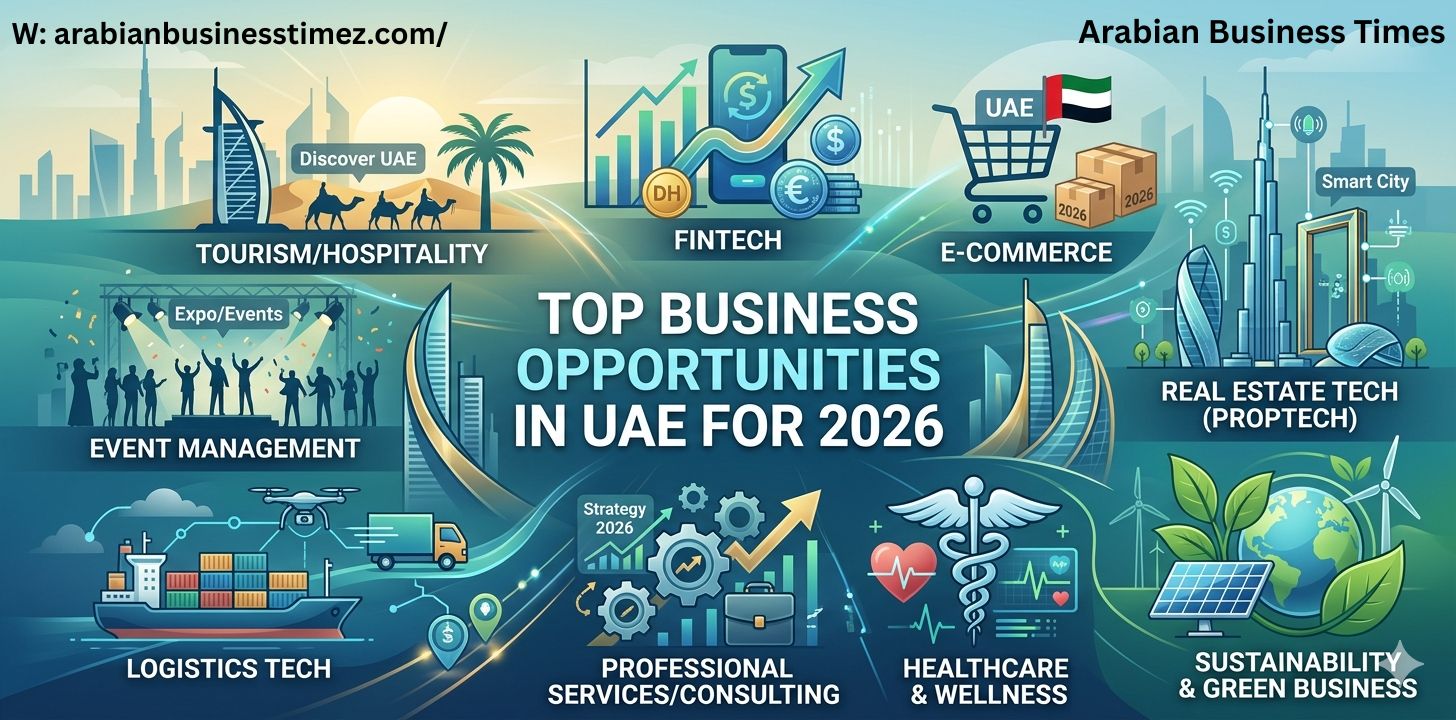
Healthcare, biotechnology, and advanced technology continue to attract investor interest and are increasingly viewed among the top business opportunities in the UAE for 2026.
What capital wants now

Strip away the cycle-specific detail and the requirements are old-fashioned, which is to say durable. Investors want data before narrative. They want a management team that survives institutional scrutiny rather than one that charms a seed round. They want a programme whose regulatory path is mapped, not assumed. And they want to invest through specialists whose thesis matches the science, not generalists chasing a theme.
The one genuinely new element is the role of computation. The intersection of artificial intelligence and drug discovery has become the most active corner of the sector, drawing not only the established life-science funds but technology investors crossing over from outside the industry. This is real capital and it is not going away. But I would counsel founders against mistaking the tool for the thesis. Money that funds an AI-enabled discovery engine still expects, in the end, a molecule that works in a patient. The fundamentals have not been suspended. They have been dressed in new vocabulary.
The rapid adoption of AI in drug discovery reflects a wider transformation taking place across industries. Similar trends are explored in our analysis of how GCC leaders are using AI to grow their business.
The four channels, and the one most founders never reach

In practice, money reaches a biotechnology company through four channels. The first is the specialist venture syndicate, the domain investors who still write the foundational cheques and whom every founder already knows to court. The second is corporate venture: the pharmaceutical majors have expanded their investing arms considerably, and their capital arrives with a potential commercial partner attached, which is both its attraction and its complication. The third is the crossover and public-market capital described above, available only once a company has earned its way to the threshold.
The fourth channel is the one most founders never properly access, and it is the one I know best. Sovereign capital. The sovereign and quasi-sovereign funds of the Gulf, and their counterparts in Asia, now command assets measured in the trillions and, under the diversification mandates of Saudi Vision 2030 and the broader regional life-science strategies, they are deliberately building positions in healthcare and biotechnology. We have watched these funds move from passive co-investors to architects of the industry itself, launching domestic manufacturing platforms and consolidating pharmaceutical holdings of real scale. This is patient, long-horizon capital with strategic intent behind it, and it behaves quite differently from the venture money founders are accustomed to.
It is also, deliberately, hard to reach. Sovereign capital does not respond to cold outreach or a polished deck. It is approached through a small number of intermediaries trusted to bring it institutional-grade opportunities, prepared to its documentation and governance standards and structured to its requirements, including a preference for clean common equity instruments consistent with the Shariah considerations that govern much of this capital base. At Bioscience Equity Partners, the investment bank I founded, and through Antisoma Venture Capital, its affiliated fund, this is the work we do: anchoring a round and syndicating the balance across a consortium of sovereign and institutional investors that a company could never assemble on its own. I describe it candidly to every founder who asks. Access of this kind is earned, not extended. The companies that reach it are the ones that submit to a structured, gated process and accept that documentation, compliance, and scientific scrutiny come before the capital, not after.
Sovereign capital is also helping accelerate innovation across multiple sectors, including the fast-growing fintech ecosystem highlighted in our feature on the top 10 fintech startups in the UAE.
The discipline that closes a round
Whatever channel you pursue, the discipline is the same, and it is the part founders most often neglect. Raise for a trajectory, not a transaction. Growth-focused planning is essential at every stage of a company’s journey. Many of the same principles are discussed in our guide on how to scale a small business in Dubai. The companies that close are those that have mapped the full path, the first institutional round, the crossover two to three years out, the listing or the sale beyond it, and can show an investor precisely where this cheque sits in that arc. Prepare your documentation to the standard the most demanding investor in your intended syndicate would require, not the least. Build a board and a management team that an institution can underwrite. And match your capital to your science with precision, because the wrong investor on your cap table is more expensive than no investor at all.
I am, by temperament, a traditionalist about these things. The instruments change, the vocabulary changes, the fashionable therapeutic area changes from one cycle to the next. The underlying relationship does not. Capital is entrusted by people who must answer for it to companies run by people who must steward it, and it has always flowed toward discipline, evidence, and seriousness of purpose. The founders who raise successfully in 2026 will not be the ones who chased the year’s enthusiasm. They will be the ones who understood that the market had become demanding again, and met it on those terms.
Effective capital allocation often begins with strong leadership. Explore our list of the top tech company CEOs in the UAE who are driving innovation across the region.
Related Articles
- How to Build a Successful Startup in the GCC
- Top Business Opportunities in UAE for 2026
- How GCC Leaders Are Using AI to Grow Their Business
- Top 10 Fintech Startups in UAE
- How to Scale a Small Business in Dubai
- Top 10 Tech Company CEOs in the UAE


Great insights. For founders still at the pre-clinical stage, what is the most important milestone investors want to see before considering a Series A round?