By Arif Hussain — AI & Digital Transformation Consultant
The UAE has discreetly become one of the most exciting places on earth for fintech. Go to any coffee shop in Dubai or Abu Dhabi, and you will see people sharing expenses through apps, buying US stocks on their phones or snapping up a share in a property for as little as $500. What used to be a trip to the bank branch, a mountain of paperwork, and three working days now takes three minutes on a smartphone. For entrepreneurs looking to tap into this ecosystem, understanding the setup process is crucial. Here’s a practical guide on how to start a business in Dubai without connections.
This is no accident. The UAE government has deliberately fostered an environment that is conducive to the growth of fintech. The Dubai International Financial Centre (DIFC) and Abu Dhabi Global Market (ADGM) have regulatory sandboxes where startups can test ideas before going live. The Virtual Assets Regulatory Authority (VARA) has issued clear rules for crypto companies that most other countries have not yet agreed on. And the Dubai Economic Agenda D33 and other initiatives have made digital finance the centrepiece of the country’s next decade of growth.
The numbers prove it. As of early 2026, the UAE is home to more than 1,600 active fintechs that have raised over $6.5 billion in funding collectively. The country accounts for approximately 39% of all fintech investment in the Middle East and North Africa, more than any other market in the region.
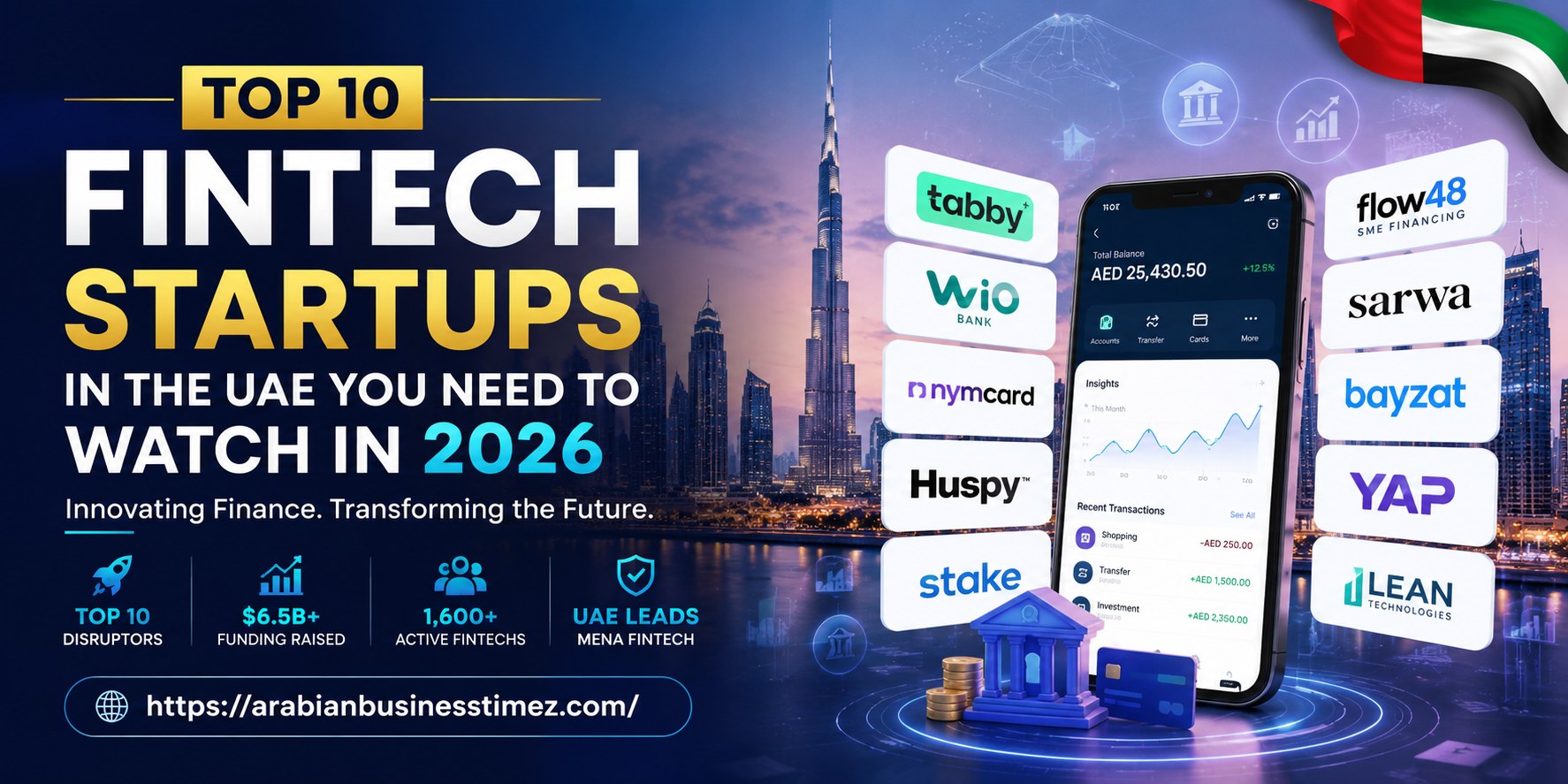
These are the 10 startups that are most impressive right now, judged on funding, traction, product and what they do next.
The UAE’s rapid rise as a business hub is no coincidence. If you’re planning to enter this ecosystem, check out our complete guide on ????
starting a business in Dubai without connections
1. Tabby — The BNPL Giant That Is Now Going Much Bigger
Founded: 2019 | Headquartered: Dubai | Valuation: $4.5 billion
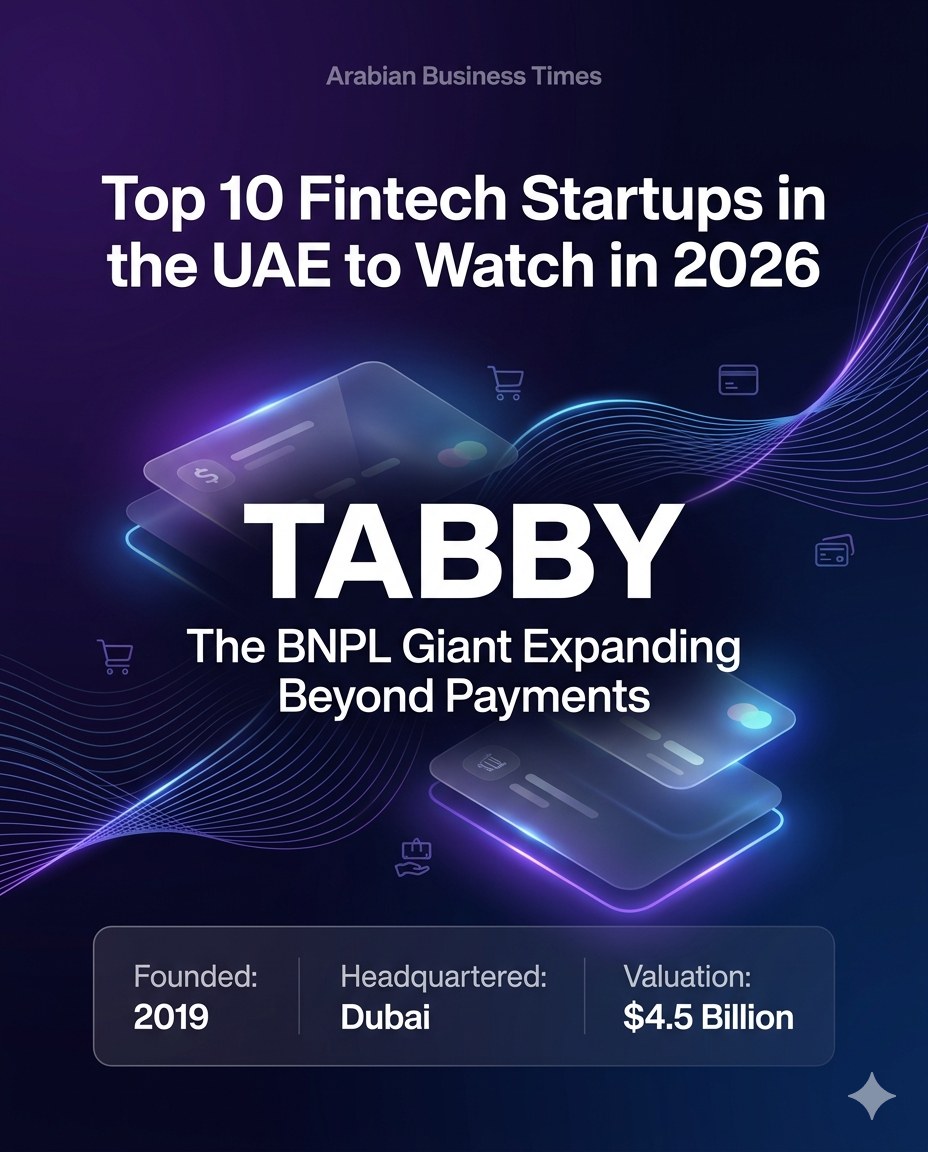
If you’ve shopped online in the UAE or Saudi Arabia in the past two years, you’ve almost certainly seen Tabby at checkout. Its name is built on buy now, pay later — allowing shoppers to split purchases into four interest-free installments without a credit card.
And it worked brilliantly. After a secondary share sale in October 2025, Tabby hit a valuation of $4.5 billion, becoming the most valuable fintech startup in the entire region. Total funding is $604 million, the most of any fintech company in the UAE.
But what is interesting about Tabby in 2026 is what it does after. The company has recently obtained a Stored Value Facilities licence from the Central Bank of the UAE. That means it can now hold customer funds, offer spending accounts, issue payment cards and develop money management tools. CEO Hosam Arab has been clear: Tabby isn’t trying to be a BNPL app forever. It wants to be the Middle East’s financial super app.
That transition is a lot more believable than it sounds on paper, as it already has millions of active users who trust it with their shopping decisions.
2. Wio Bank — The Neobank Built for Everyone From Freelancers to Founders
Founded: 2022 | Headquartered: Abu Dhabi | Backers: ADQ, Alpha Dhabi, e&, First Abu Dhabi Bank
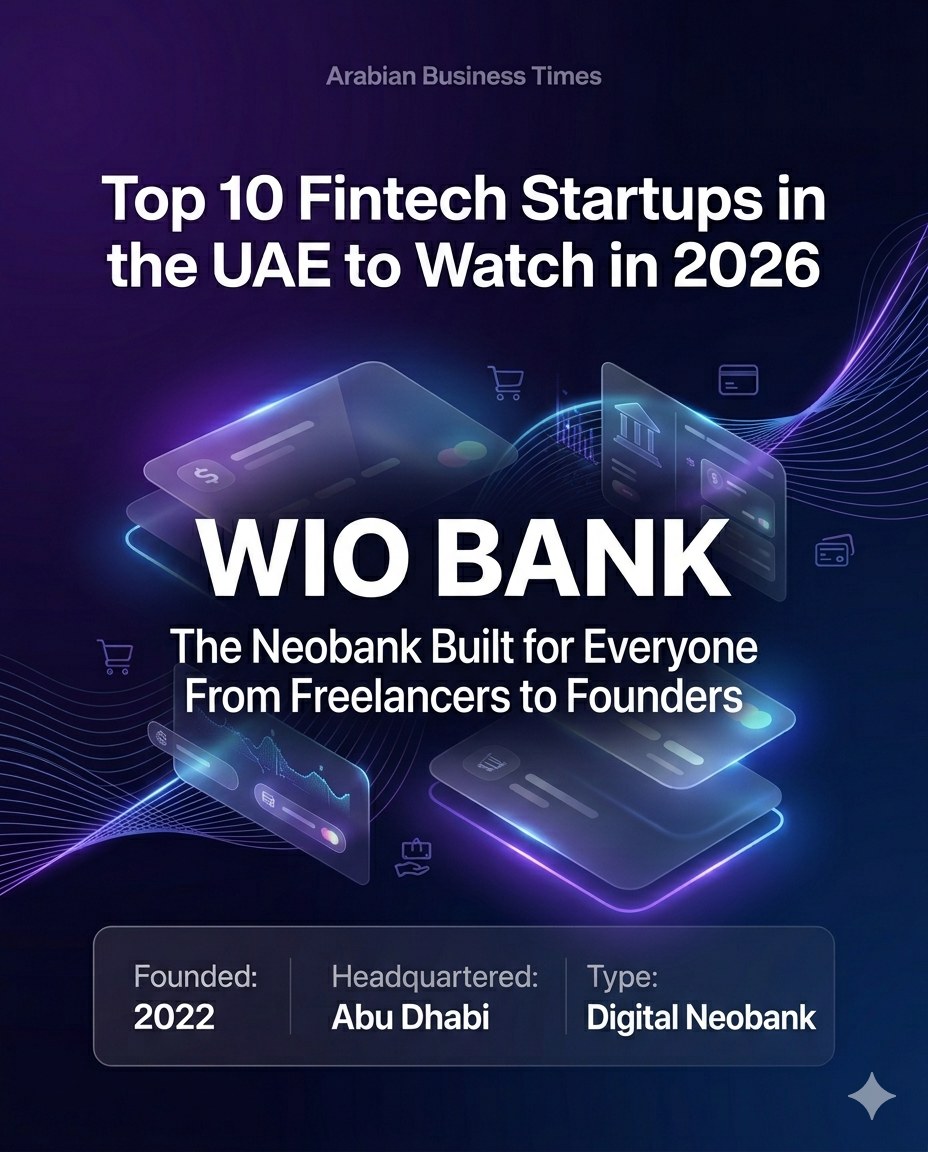
Wio Bank is the kind of digital bank that makes you wonder why traditional banking was ever that complicated. Accounts can be opened in minutes, there are no foreign exchange fees on overseas spending, and customers earn 1 percent cashback on overseas debit transactions; Wio provides a complete banking-as-a-service platform with embedded finance features for businesses that can be embedded into other apps.
It already has more than 250,000 retail customers and over 120,000 businesses and turned profitable in 2024, an achievement that many digital banks across the world are still trying to achieve. Recognized in the Fintech 50 list for 2025 by Forbes Middle East.
In January 2026, Wio launched what it claims is the UAE’s first bank account designed for content creators, including automated invoicing, unlimited virtual cards, and multi-currency balances at a fixed AED/USD rate. It’s a small product in the grand scheme of things, but it’s telling of how the bank thinks: identify a bunch of folks who are being badly served by the options out there, and build something that actually fits their life.
The bank will launch a dedicated payments company later this year, in 2026. Keep an eye on this one.
3. NymCard — The Engine Running Behind Other Fintechs
Founded: 2018 | Headquartered: Abu Dhabi | Total Funding: $70 million

NymCard is unknown to most people. But if you’ve used a digital wallet in the UAE, there’s a good chance it was NymCard’s infrastructure that got your card up and running.
The company operates an API-first, full-stack payment infrastructure for banks, fintech startups, enterprises and telecom companies. nCore allows businesses to run their own card programs, process transactions, offer digital lending and move money in real time, all through its platform, without having to build that infrastructure themselves.
We have partnered with more than 50 banks and fintech companies across more than ten countries. Also named in the CB Insights Fintech 100 for 2025, one of only a handful of MENA companies to make that list. The Series B funding round in March 2025 raised $33 million, bringing total investment to just under $70 million.
Right now, the company has three areas of focus: card issuing processing, embedded lending and money movement. NymCard is precisely the type of infrastructure provider that can benefit from the increased interest from companies in the region to add financial services to their products without becoming banks themselves. The rapid rise of fintech infrastructure shows how big the opportunity is. If you’re planning to build in this space, here’s how to build a successful startup in the GCC.
4. Huspy — Making Mortgage Broking Feel Like It Belongs in 2026
Founded: 2020 | Headquartered: Dubai | Total Funding: ~$100 million
Buying a home in the UAE has traditionally involved too many phone calls, too much paper and too much uncertainty about whether you actually qualify for a mortgage, whether you’re an expat or even a citizen. And Huspy was hell-bent on changing that.
The platform provides mortgage brokers and real estate agents with a complete technology stack to help them manage their clients, and homebuyers with transparent access to mortgage options, property listings and all the supporting services in one place. Today, the company helps facilitate over $7 billion a year in real estate transactions across Europe and the Middle East and has helped over 25,000 families buy homes.
The Series B round in July 2025 raised $59 million, bringing total funding to around $100 million. That capital is being deployed as it expands into major cities across Europe, adding to its presence in the UAE and Spain.
The size of the mortgage market and the fact that the broker industry remains so fragmented mean the runway ahead is huge.
5. Stake — Turning Regular People Into Property Investors
Founded: 2020 | Headquartered: Dubai | Total Funding: ~$58 million

The biggest hurdle to investing in real estate in Dubai, or anywhere for that matter, has always been the entry price. Stake broke that barrier by allowing users to buy fractional shares in income-producing properties, starting from pocket change. This growth is closely tied to Dubai’s booming property sector. You can explore the top real estate companies in Dubai, driving this demand.
2M+ users across 211+ countries are now on the platform. Not many Dubai startups have that sort of global reach, which is a testament to the city’s status as a destination for real estate and the hard work Stake has put in to make the experience accessible regardless of where you live.
The numbers behind the business are pretty compelling. The gross merchandise value of Stake has grown at a compound annual growth rate of over 130% over the last three years. StakeOne launched in October 2025 and allows investors to buy full ownership of premium properties from developers like Emaar and Ellington. It also moved into the US industrial real estate, giving its users access to income-producing assets in a totally different market.
The Series B round in February 2026 raised $31 million in an oversubscribed round, which is typically a good sign of investor conviction. The cash is going to expand in Saudi Arabia and the US.
6. Flow48 — Fast Financing for Businesses That Cannot Wait
Founded: 2022 | Headquartered: Dubai | Total Funding: ~$68 million
Small businesses in the UAE often find themselves up against the same wall: they have invoices outstanding, strong revenue and real growth happening, but banks will not lend them money quickly enough to act on opportunities. That’s what Flow48’s whole model is designed to solve.
The platform provides revenue-based financing to SMEs and uses data analytics and risk assessment tools to underwrite loans that do not require traditional collateral. A company must have been trading for at least one year and have annual revenues of at least $100,000 to apply. Eligible businesses can be funded up to $20 million within 24 to 48 hours.
It closed a Series A in February 2025, raising $55 million – mostly from Parisian VC Breega, with participation from Endeavour Catalyst, Speedinvest and others. The company is active in the UAE and South Africa and is expanding into Saudi Arabia.
Revenue-based finance has been a global growing category for a few years. In a market like the UAE where SMEs account for a significant share of economic activity but struggle to get traditional credit, Flow48 is positioned squarely where the need is. Access to capital is just one part—scaling efficiently is what truly matters. Here’s how to scale a small business in Dubai in 2026.
7. Sarwa — The Investment Platform That Just Hit $1 Billion
Founded: 2017 | Headquartered: Dubai | AUM: $1 billion+

Right from the start, Sarwa’s founders heard that retail investing wouldn’t work in the MENA region. People said investors here were different. There was no appetite at all.
They were incorrect. Sarwa has just crossed $1 billion in client assets, becoming the first UAE-founded fintech platform to cross that milestone. What began as a robo-advisor providing low-cost, diversified portfolios for retail investors has evolved into a platform for self-directed stock trading and other personal finance tools.
The platform grew through the DIFC FinTech Hive accelerator and was first in the DFSA regulatory sandbox, a route that gave it credibility and regulatory clarity that newer entrants had to work harder for. That trust edge, built in the early days, is difficult to replicate.
The GCC fintech industry is expected to grow at a CAGR of 15% through 2030. The wealth management category is underserved relative to the size of the region’s asset base. Sarwa is right at that crossroads.
8. Bayzat — Fixing HR and Insurance for Middle East Businesses
Founded: 2012 | Headquartered: Dubai
One of the more veteran names on this list is Bayzat and that is part of the story. Over more than a decade it has built a platform that handles HR, payroll, employee benefits and insurance all in one place, and keeps getting better.
The value proposition is simple, but actually useful. For instance, the UAE has a highly international workforce and there are complex labour laws, insurance requirements and payroll regulations. Bayzat automates the administrative side of that and its customers say they save 15-20 hours per week on HR and finance tasks.
In a world where SMEs are the backbone of the economy and where compliance missteps come with real penalties, a platform that keeps businesses on the right side of regulations while cutting through the paperwork has lasting value. Bayzat has been working with more than 2,000 companies and is growing its product offering.
9. YAP — The Digital Payment App Built for Everyday Life
Founded: 2020 | Headquartered: Dubai
YAP is a little more straightforward than some of the other, more complex fintech offerings on this list. This is not aimed at businesses or property investors, but instead focuses on the basics: giving individuals a clean, easy way to manage day-to-day payments, track their spending and send money.
The platform is partnered with RAK Bank and gives users a digital payment account, a Mastercard, spending insights and budgeting tools, without the overhead of a traditional bank relationship. For expats living in the UAE, who account for around 90% of the population, a simple account with clear fees, with no requirement for a salary certificate or months of bank statements, is worth something.
YAP is expanding across several MENA markets and is often cited as one of the leaders in consumer-facing digital banking for the region, along with Wio.
10. Lean Technologies — The Open Banking Infrastructure Quietly Powering MENA Fintech
Founded: 2019 | Headquartered: Riyadh & Dubai

Lean Technologies isn’t a household name within the fintech ecosystem, but its significance is immense. The company provides the open banking infrastructure enabling other fintech apps to connect to users’ bank accounts, verify payments, access financial data and initiate transfers.
Imagine it as the plumbing. If a UAE fintech app asks you to link your bank account, there’s a good chance it’s using Lean’s technology to facilitate that connection. Its platform is trusted by companies like Sarwa, Binance MENA and LuLu Finance.
As the UAE’s open banking regulation continues to evolve and more fintech products become dependent on real-time financial data, Lean is the kind of infrastructure company that appreciates in value with every new product that comes to market. Analysts following the space have marked it as one of the most intriguing companies to watch in 2026, a potential dark horse that most consumers will never know by name, but will use every day. As fintech evolves, technologies like AI are becoming central to growth. See how GCC leaders are using AI to grow their business.
Why the UAE Fintech Ecosystem Keeps Growing
A few structural factors make the UAE different from most other markets.
The regulatory framework is very progressive. This strong regulatory support is one of the reasons why entrepreneurs are actively exploring new ventures in the region. If you’re considering entering this market, here are the top business opportunities in the UAE for 2026. The DIFC and ADGM sandboxes allow companies to build and test without being crushed with compliance requirements before they have proven their products work. VARA’s digital asset rules, among the clearest in the world, have drawn serious companies that were operating in regulatory grey zones elsewhere.
The demographics are useful as well. The UAE’s population is young and technology-savvy. More than 90% are expatriates who often need to send money abroad, manage finances without deep bank relationships and find flexible ways to save and invest. That’s a natural market for fintech products.
Then there’s the government commitment. The Dubai Economic Agenda D33 has set clear targets for the digital economy. The 100% foreign ownership policy and startup visas have removed friction for founders. Accelerators such as Abu Dhabi’s Hub71 have created pipelines of funded startups.
The result: A fintech market that reached $2.2 billion in investment by mid-2026 and continues to draw some of the most interesting founders in the region.
Final Thought
The companies on this list aren’t just cool startups. They are building the financial infrastructure that millions of people in the UAE and across MENA really use.” From the mechanic in Sharjah who secures an SME loan in 48 hours to the young professional in Dubai who just bought their first property share for a few hundred dirhams, fintech here is no longer a buzzword. This is how people really deal with money.
2026 looks to be the year when several of these companies move up from regional leaders to true global players. The funding is there, the talent is there, and the regulatory environment is one of the most supportive in the world. It’s a good time to be tuned in.”
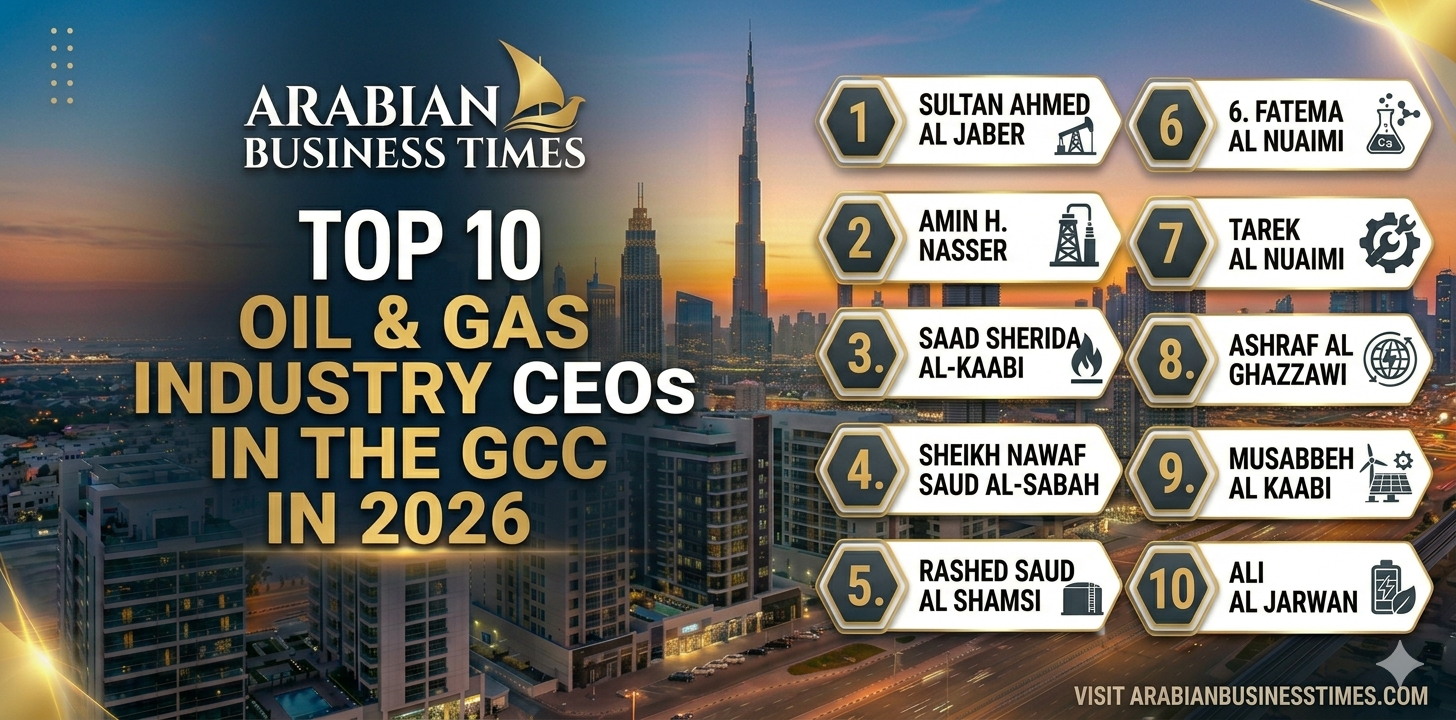
To better understand the leadership shaping the region’s economy, explore insights from top oil & gas CEOs in the GCC and the top tech company CEOs in the UAE.
UAE Fintech Startups — People Also Ask (PAA) Section
Q1. What are the top fintech startups operating in the UAE?
Top fintech startups in the UAE are: Tabby (BNPL, $4.5B valuation), Wio Bank (digital banking), NymCard (embedded payments infrastructure), Huspy (mortgage tech), Stake (fractional real estate investing), Sarwa (wealth management), Flow48 (SME financing), Lean Technologies (open banking), Bayzat (HR and insurance), YAP (digital payments).
Q2. How do you launch a financial technology venture in the Middle East?
To establish a fintech company in the UAE, select a jurisdiction (DIFC, ADGM or UAE Mainland), register your legal entity and apply for the relevant licence with the DFSA, FSRA or Central Bank of UAE. Allow 6–12 months for the whole process, and ensure you’re AML/KYC compliant from day one.
Q3. Which fintech startups offer digital payment solutions in the UAE?
UAE-based fintech startups providing digital payment solutions are Tabby, YAP, Wio Bank, NymCard, Lean Technologies and e& money. NymCard provides the card issuance infrastructure for many apps, and Lean Technologies offers bank-to-bank payments through open banking APIs in the UAE and Saudi Arabia.
Q4. Where can fintech startups find seed funding in the Gulf region?
Gulf fintech startups have access to seed funding from Hub71 (Abu Dhabi), DIFC FinTech Hive, Flat6Labs, Shorooq Partners, VentureSouq and QED Investors. – Non-dilutive options are government grants from the Mohammed Bin Rashid Innovation Fund and Khalifa Fund. The average seed round in the UAE is about $1.8 million.
Q5. How can I invest in fintech startups based in Dubai?
You can invest in Dubai fintech startups through regulated crowdfunding platforms such as Eureeca and Beehive or VC firms like Shorooq Partners and VentureSouq. Retail investors also have indirect access to the sector via Sarwa’s investment platform, which is regulated by the DFSA and now manages more than $1 billion of client assets.
Q6. What are the licensing requirements for digital financial services in the UAE?
Digital financial services in the UAE require a licence from the Central Bank (mainland), DFSA (DIFC) or FSRA (ADGM). Payment service providers must have a minimum capital of AED 3 million. Digital banking licences require AED100 million. All operators must have AML/CFT policies, annual audits and cybersecurity compliance.
Q7. Where can I find genuine reviews for UAE-based fintech startups?
You can read authentic reviews of UAE fintechs on sites such as the Apple App Store, Google Play Store, Trustpilot, and Reddit groups, including r/UAE and r/DubaiExpats. G2 and Capterra offer verified reviews from business users on B2B products such as NymCard and Bayzat, along with features and more.
Q8. Which accelerators support fintech startups in the UAE?
Top UAE fintech accelerators include DIFC FinTech Hive (Dubai), Hub71 and Techstars Abu Dhabi (Abu Dhabi), ADGM RegLab, in5 by TECOM and Flat6Labs. DIFC FinTech Hive is the most niche-specific, engaging founders directly with banks, regulators and investors in the MENA financial ecosystem.
Q9. Which UAE fintech startups offer mobile banking apps for residents?
UAE residents can access full digital banking with Wio Bank, everyday payments with YAP, licensed digital banking with Zand or mobile investing with Sarwa. Tabby will also be launching spending accounts and payment cards in 2026 after it received its Central Bank Stored Value Facilities licence approval.
Q10. Which technology platforms are best for building a payment processing solution in the UAE?
Some of the best platforms for UAE payment processing are NymCard (card issuance and embedded finance), Lean Technologies (open banking and bank transfers), Checkout.com (payment gateway) and Network International (merchant acquiring). Startups can also leverage Stripe for fast, developer-friendly integration across the UAE and global markets.