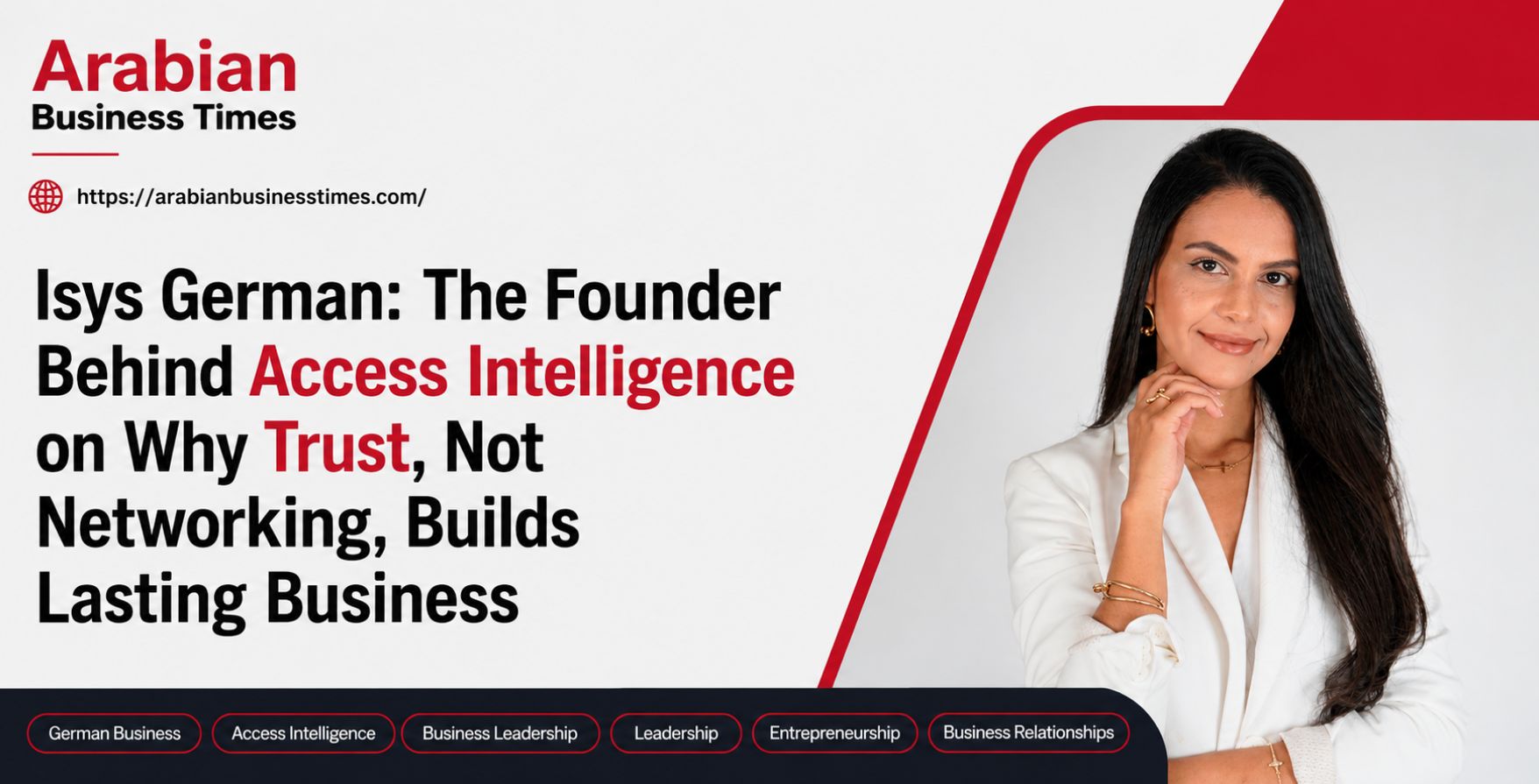
Isys German, Founder of German Business and author of The Invisible Architecture of Connections, on the hidden discipline behind strategic relationships, faith-driven leadership, and the future of human trust in an AI-powered world
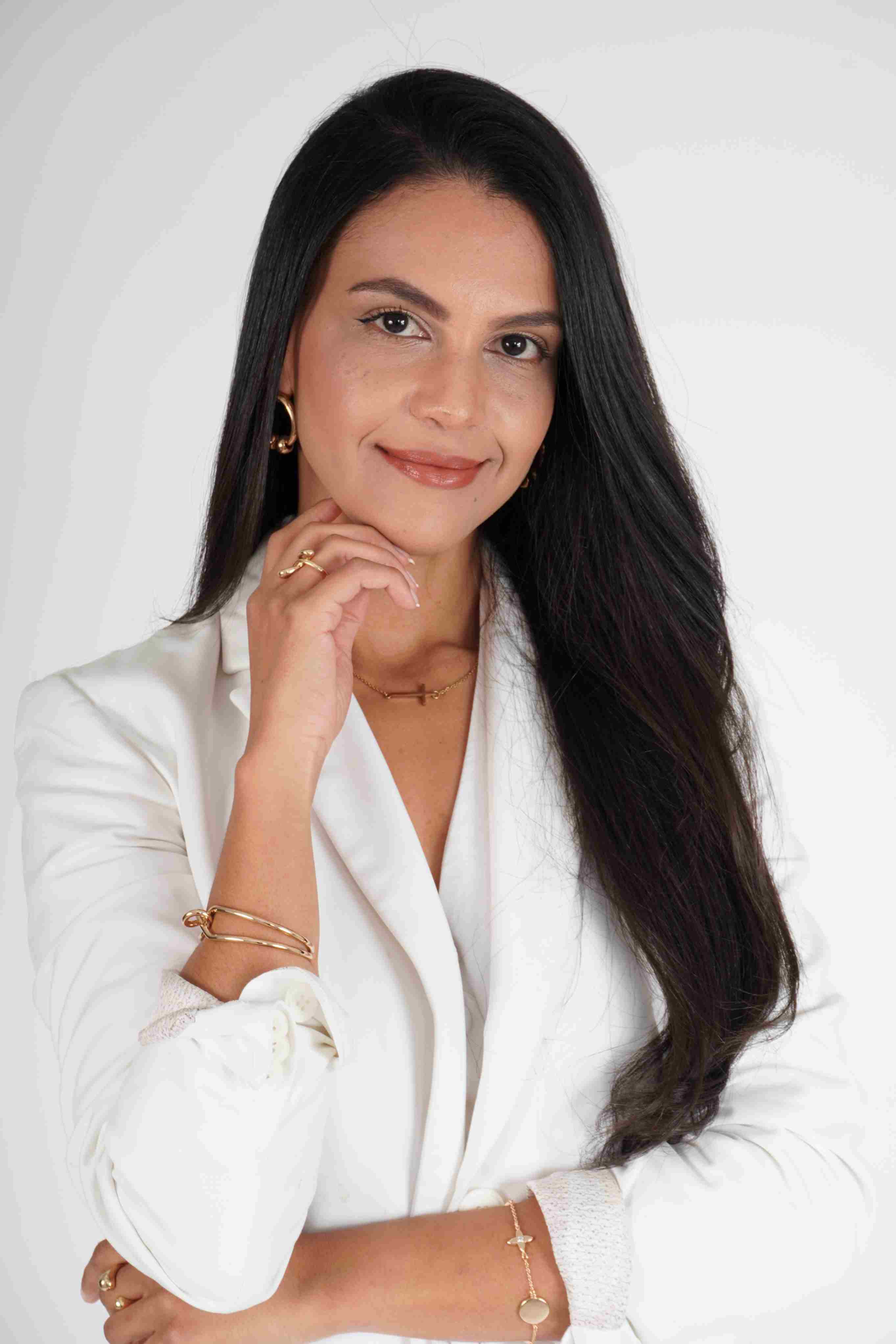
The mechanics of corporate matchmaking are moving away from traditional networking. For Isys German, Founder of German Business and author of The Invisible Architecture of Connections, building commercial access requires a structural framework she calls Access Intelligence; a system developed from over a decade of practical execution. As Founder of German Business and author of The Invisible Architecture of Connections, German has spent more than a decade studying what actually happens before, during, and after access is created. That body of work now has a name — Access Intelligence — a framework German describes as a living system, born from practice and continuously evolving.
Speaking with Arabian Business Times, German details the operational transition from informal industry introductions to a structured corporate model, the role of personal ethics in global negotiation, and the boundaries of automated tools in high-stakes relationship management.
Operational Evolution and Market Context
Your career is centered around building meaningful connections and creating business opportunities. Could you share your entrepreneurial journey and what inspired you to establish German Business?
Building a business around access and connections was not part of my original plan.
In the beginning, connections happened naturally. Because I had the opportunity to meet people from different industries and environments, I often found myself bringing together individuals, companies, and opportunities without any structured intention behind it.
Over time, those introductions began leading to significant business opportunities, and people started reaching out to me specifically to help connect one side with the other.
At the same time, I also began to notice the challenges behind that process. Opportunities would often take longer than expected, more intermediaries would get involved, and eventually, many of them would simply disappear.
That was the starting point for German Business; a challenge familiar to solo founders building trust from zero in Dubai, where access rarely comes pre-built.
This mirrors a pattern seen across the region; many founders in the Gulf build their first ventures not from capital, but from access and relationships, a path we’ve explored in how founders are starting businesses in Dubai without connections.
As the years went by, after facilitating countless strategic connections and following their outcomes, I realized there was something much bigger behind them. The challenge was not simply connecting people. It was understanding the context, the timing, the criteria, and everything that influences an opportunity before, during, and after access is created.
That experience led to what we now call Access Intelligence. It wasn’t born from theory; it was born from practice. It continues to evolve because markets evolve, businesses evolve, and relationships evolve. That’s why I often say it is a living system.
For me, entrepreneurship became a way to build the kind of freedom I was looking for. So I started with what I had at the time: access, connections, and a willingness to learn. From there, I gradually turned that into a business.
The Architecture of Corporate Trust
Your book, The Invisible Architecture of Connections, suggests that success is built on relationships that often go unnoticed. What inspired you to write this book, and what is the most important lesson readers should take away from it?
The book was born out of the need to bring greater clarity to something I had observed in practice for many years.
After more than a decade working with strategic access and connections, I realized that many people viewed a connection simply as a contact, an introduction, or a meeting. In reality, however, results rarely depend on that alone.
There is an invisible architecture behind every relationship. Trust, context, timing, interests, criteria, and the way these elements are managed all directly influence what that connection can become.
That is what motivated me to write The Invisible Architecture of Connections.
The book is entirely based on real experiences and on the way we have developed this perspective over the years. It does not present a ready-made methodology or a step-by-step guide to doing business. I often say that both the book and my articles are lenses. They were written to expand the way people observe relationships, not to tell them exactly what they should do.
Every company, every entrepreneur, and every context has its own particularities. That is why I believe much more in developing the ability to read situations than in offering formulas.
Perhaps the book’s main message is precisely this: opening a door is rarely the hardest part. The real challenge is understanding everything that supports that opportunity so it can truly be transformed into meaningful results.
Today, the book also helps those who are interested in working with us understand how we view access, connections, and the building of opportunities.
Strategic Relationship Capital vs. High-Volume Networking
You often speak about access, intelligence, and strategic relationships. In today’s highly competitive business environment, how can entrepreneurs build authentic, long-term relationships rather than simply expanding their network?
I believe there is a very common misconception: many people think that building relationships simply means meeting more and more people.
In my experience, that is rarely the main challenge.
Most of the time, the real challenge is developing the relationships that already exist and having clear criteria for building new ones.
I see many people attending events, collecting contacts, handing out business cards, and trying to sell too quickly. Everything happens spontaneously, without reading the context, without understanding who is on the other side and, above all, without thinking about creating value before offering something.
In the end, many of those contacts become nothing more than names saved on a phone.
Strategic relationships are built differently. They require time, consistency, respect, and an intention that goes beyond immediate interest.
If I had to summarize my answer in a single word, it would be: serve.
Create value first. Serve first. Then reap the rewards.
When a relationship begins only with the expectation of receiving something, it tends to be fragile. But when it begins with a genuine willingness to contribute, trust starts to develop naturally. And, in my view, it is from that trust that the best long-term opportunities emerge.
Isys German on the Qualities That Define Trustworthy Global Leaders
Business is becoming increasingly global and interconnected. What qualities do you believe define successful leaders who are able to build trust and partnerships across different cultures and industries?
I believe trust begins long before any negotiation takes place.
Competence is important. Strategy, knowledge, and experience are important as well. But when we talk about long-term relationships, there is a layer that comes before all of that: character.
Character, ethics, respect, courtesy, and values are qualities that transcend cultures, markets, and industries. Regardless of the country or sector, these elements remain the foundation of any strong relationship.
Many people spend years developing leadership, negotiation, and communication skills. That is important. But I also believe a leader is revealed by the way they treat people when there is no immediate interest involved.
How they treat their team. How they treat their partners. How they respond to disagreement. How they honour their word.
These behaviours build or destroy trust long before any contract is signed; which is also why in-person trust still outweighs remote due diligence in cross-border deals.
At German Business, this is also part of how we choose the companies and people we work with. We do not evaluate only the potential of a business. We also look at the attitude, professionalism, and values of the people on the other side.
In the end, I believe strong partnerships are not built simply because two organisations share common interests. They happen when there is enough trust for those interests to be developed over time.
Isys German on Artificial Intelligence and Human-Centered Leadership
Artificial Intelligence is transforming communication, networking, and decision-making. How do you see AI supporting business development while ensuring that genuine human relationships remain at the center of leadership?
Artificial Intelligence represents one of the greatest opportunities we have ever seen to increase productivity. However, leaders must also develop the human skills AI cannot replace, such as trust, empathy, and strategic decision-making.
At the same time, however, it also compels us to ask an important question: how far can we go without compromising our brand, our reputation, and our relationships?
That is the reflection I consider most important.
I see AI as an excellent tool for supporting research, organising information, accelerating processes, and even stimulating new ideas. But I believe it should support human judgement, not replace it.
When it comes to leadership and building relationships, authenticity cannot be outsourced.
The way we think, communicate, make decisions, and build trust is part of the identity of both an individual and an organisation. That essence is unique. Tools can reproduce formats, but they cannot reproduce history, intention, responsibility, and reputation.
That is why I believe organisations need to use Artificial Intelligence with great discernment. Not only by asking what it is capable of doing, but also what should remain exclusively human.
In my view, technology should expand our intelligence, never replace our conscience.
Isys German on the Biggest Challenges of the Entrepreneurial Journey
Throughout your entrepreneurial journey, what have been some of the biggest challenges you’ve faced, and what lessons have helped shape your leadership philosophy?
Challenges are part of entrepreneurship. You overcome one, learn from it, and soon another appears. That is the path of anyone who chooses to build something.
In our case, however, I believe the greatest challenge has been developing and communicating a different way of seeing the market.
When you work with something that already exists, people have references. They can compare it, categorise it, and understand it more easily.
But when you introduce a new way of thinking, the challenge is no longer just about doing good work. You also need to help the market understand what you are proposing.
That is exactly what we have experienced with Access Intelligence. German’s experience of introducing an unfamiliar framework to the market echoes a challenge common to founders across the region, one we broke down in how to build a successful startup in the GCC.
It was not born from theory, but from practice. However, transforming years of experience into a clear language, an understandable methodology, and a discipline that companies can recognise requires time, consistency, and a great deal of patience.
That experience has also shaped the way I lead.
I have learned that not every opportunity needs to be accelerated. Some things require maturity to be built.
I have learned that not everyone needs to agree with what we do. And that is perfectly fine. Our role is not to convince. It is to create value, work with integrity, and continue evolving alongside those who see meaning in what we are building.
Perhaps that has been one of the greatest lessons of my journey: some important things do not grow through speed. They grow through consistency.
Isys German on Why Relationship Capital Is One of Business’s Most Valuable Assets
Many professionals focus on technical skills but overlook the importance of influence and relationship capital. Why do you believe social capital has become one of the most valuable assets in modern business?
In fact, I do not believe people underestimate the importance of relationships. Most people already know they are valuable.
What I observe is that very few treat them as an asset that needs to be built, developed, and preserved over time.
Building relationship capital requires investment. It requires time, presence, responsibility, and, above all, a willingness to create value before expecting anything in return.
Today, we see many people trying to activate relationships only when a need arises. But relationships rarely work well that way. Trust is not built at the moment it becomes necessary. It is built long before that.
That is why I believe relationship capital has become one of the most valuable assets in modern business. Not only because it brings people together, but because it strengthens an organisation’s ability to face different challenges.
A relationship built on trust can support growth, innovation, market positioning, international expansion, access to knowledge, partners, investors, and countless other opportunities.
In the end, it is not just a matter of who you know. It is a matter of how those relationships have been built, nurtured, and developed over time.
That is why I see relationship capital as an asset. Like any other valuable asset, it needs to be built before it is needed.
Ethical Frameworks and Governance Principles
Faith appears to play an important role in your personal journey. How has your belief system influenced your leadership decisions, business ethics, and long-term vision?
Faith is my source of strength.
It sustains me through challenges, guides my decisions, and reminds me every day of what truly matters.
Throughout my journey, I have faced many challenges, like any entrepreneur. I never considered giving up, but I believe that without the faith I have, I would not know where I would have found the strength to keep going. It sustained me through the most difficult moments and allowed me to continue building the life and the freedom I had always hoped for.
Over the years, I have learned—and I continue to learn—to put the right things in the right order. Faith has changed the way I set priorities and make decisions. Today, I try to put first what truly has value, regardless of financial return or business growth. That influences the projects I choose, the people I decide to build with, and the quality of life I want to preserve. More than asking for answers, I seek wisdom to make the right decisions.
That pursuit directly influences the way I lead, conduct business, and build relationships.
Values such as honesty, responsibility, respect, service, and integrity are not only part of my personal life. They are also part of the culture we seek to build at German Business.
I believe results matter, but the way they are achieved matters even more.
My long-term vision is to continue building something that creates value and endures without compromising the principles I consider non-negotiable.
Isys German’s Vision for the Future of German Business
Looking ahead, what is your vision for German Business, and what kind of global impact do you hope to create through your work over the next decade?
My vision for German Business has never been defined by the size it could achieve.
From the very beginning, it has grown in a very natural way. Just as it came into existence organically, its impact has unfolded in the same way. Every day, we simply strive to do our work as well as we can, and we are often surprised to see that something which began so simply is now reaching people, companies, and opportunities in different parts of the world.
Looking ahead, I hope we can continue contributing to a business environment that is more open, more responsible, and better prepared to build opportunities intelligently. An environment with more dialogue, greater willingness to collaborate, more value creation, and more long-term relationships.
What truly excites us are projects capable of generating meaningful impact. They are what inspire our team every day. We want to contribute to an environment where people and organisations feel that dreaming big is not naïve, but a real possibility when they find the right partners to build with.
We also want business to be an enjoyable experience. To build relationships based on trust, respect, and enthusiasm, with partners who genuinely enjoy building alongside us.
I believe that when people and organisations prosper together, that progress naturally extends beyond business and contributes to a more prosperous society.
Isys German’s Advice to Aspiring Entrepreneurs and Young Professionals
Finally, what advice would you give to aspiring entrepreneurs, business leaders, and young professionals who want to build influential careers while remaining authentic to their values?
My advice would be to never stop growing as a person.
It is natural to dedicate a great deal of time to developing technical skills, leadership, communication, or management. All of that is important. But I believe there is an even more important kind of growth: human growth.
Seek to develop character, ethics, discipline, good habits, and wisdom. These are the qualities that sustain difficult decisions and long-term relationships.
I also believe it is worth being patient with your own journey. We live in a time when everything seems to need to happen quickly, but many of the most important things take time to build. Trust takes time. Reputation takes time. Credibility takes time.
Do not be afraid to think big, but do so without compromising what you believe in. Success loses much of its meaning when it is achieved at the expense of your own values.
In the end, I believe the most enduring influence does not come from visibility. It comes from the way we choose to live, work, and treat people throughout our journey.
Isys German’s Closing Message for the Next Generation of Entrepreneurs
If you could leave one message for the next generation of entrepreneurs about leadership, relationships, and purpose, what would it be?
Never stop investing in your own growth as a human being.
Technical skills, leadership, communication, and management are all important. But I believe there is an even more important kind of development: human development.
Build your character. Strengthen your ethics. Develop discipline, good habits, wisdom, and perseverance. These are the qualities that sustain difficult decisions, long-term relationships, and a life built with consistency.
In the end, the legacy you leave will be shaped not only by what you achieve, but by the person you choose to become.
About Isys German: Founder of German Business, creator of Access Intelligence, and author of The Invisible Architecture of Connections. Isys German also writes the newsletter Beyond Access, exploring the strategic dynamics behind trust, opportunity, and meaningful business relationships.
Follow Isys German on Instagram at @isysgerman and German Business at @germanbusinessofficial.
Related Reads
- How GCC Leaders Are Using AI to Grow Their Business
- Things AI Cannot Do in Leadership
- Gergana Valcheva Interview
- How to Build a Successful Startup in the GCC
- International Business Expansion Strategy