“Clarity over hype. Discipline over noise. Truth only.”
Q1. You moved from India to Dubai in 2013 and have witnessed the city’s transformation over the years. What inspired your move, and what were some of the biggest lessons you learned during your early years in the UAE?
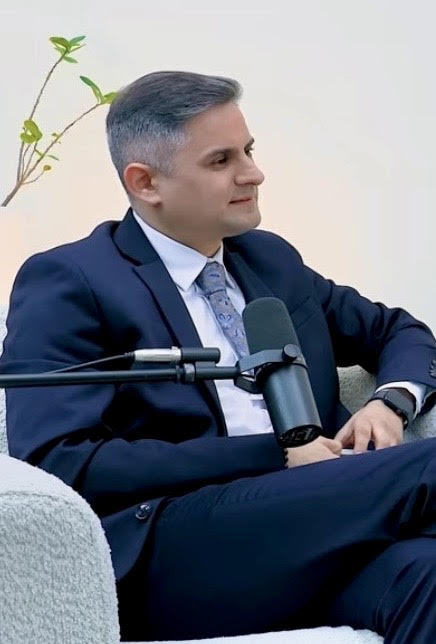
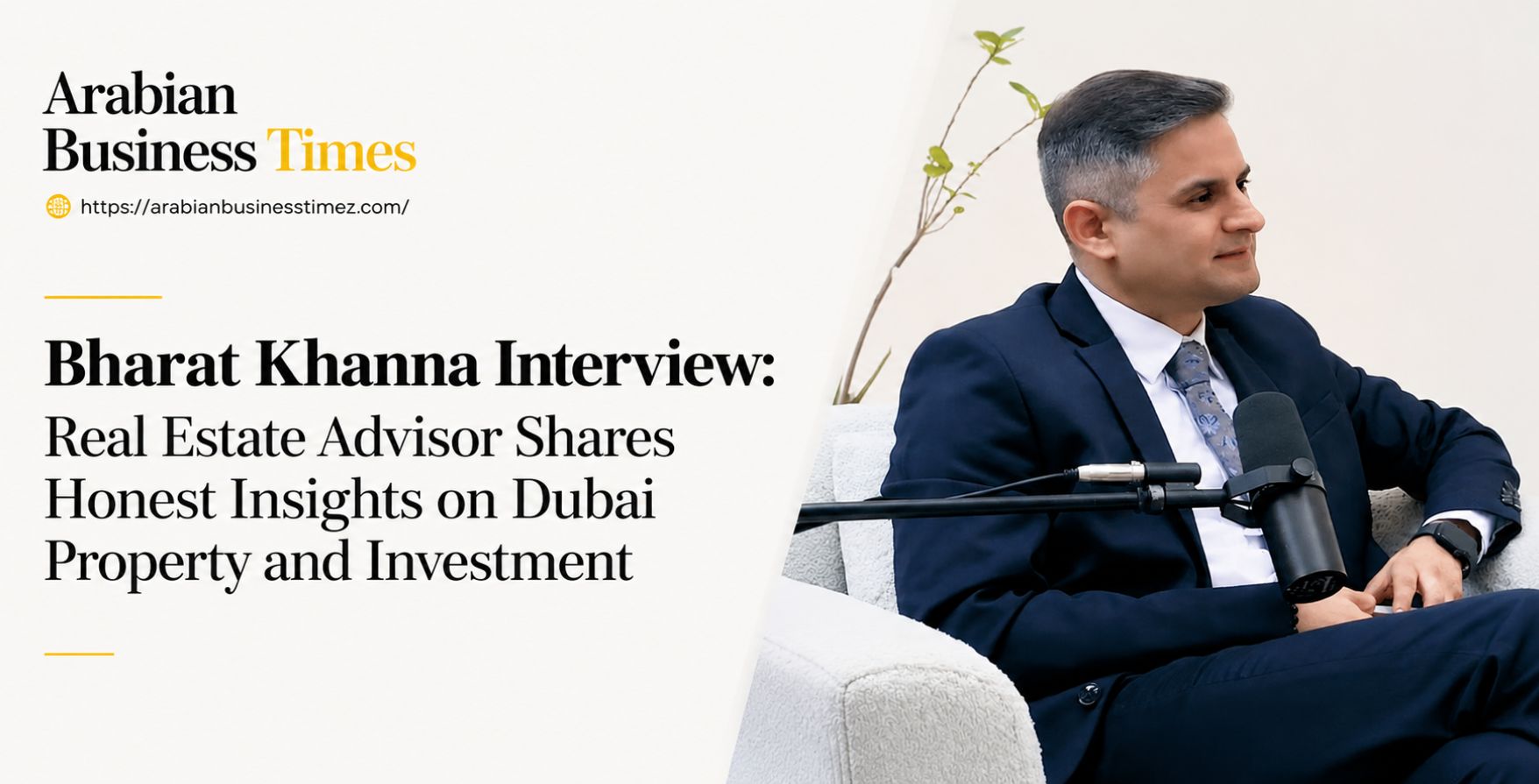
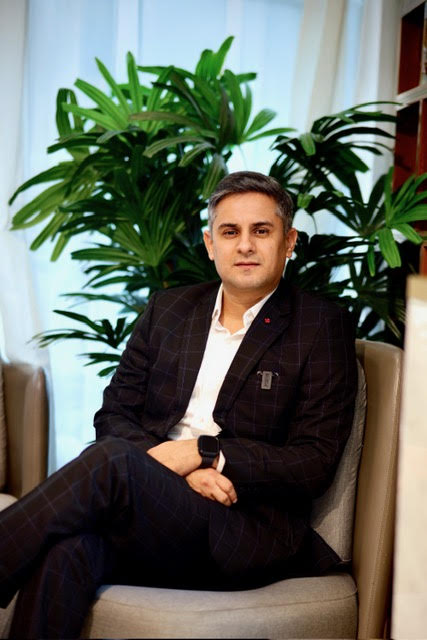
Bharat Khanna: I came to Dubai in 2013 in what I would describe as a fortunate position relative to most people who make this leap. I was recruited directly from India by a well-known retail brand and arrived with a job already in hand — a handsome salary, a defined role, and a degree of financial stability that many expats spend their first year here trying to establish. That head start made my early journey considerably more comfortable than the average person arriving with ambition alone and needing to build from scratch.
But even with that foundation, the learning curve was real. Dubai has a way of teaching you things that no briefing, no online research, and no well-meaning advice from friends can fully prepare you for. I arrived full of optimism — as most Indians do — and while the optimism was warranted, the preparation was not always sufficient.
The three biggest lessons from those early years: First, relationships are everything here. Dubai is a relatively small professional community dressed up as a global city. Reputation travels fast in both directions. Second, the market — whether in retail, real estate or any other sector — rewards those who are genuinely informed. Most information that reaches you through commercial channels has been filtered through someone else’s interest. Learn to find the primary source. Third, and this one took me the longest to internalise — patience is a genuine competitive advantage in Dubai — the same principle behind why patience beats speed when building trust in Dubai’s business culture. The people who have built real, lasting success here are not those who chased every opportunity that presented itself. They are the ones who moved deliberately, stayed disciplined, and thought in years rather than months.
Q2. Your content focuses on “real talk, not hype” when it comes to Dubai living and investing. What motivated you to create this platform, and why do you believe authentic information is so important today?
Bharat Khanna: Honestly? Frustration. I spent years watching the same cycle repeat itself — someone arrives in Dubai excited about an opportunity, they get in front of a salesperson who is brilliant at selling the dream, they make a decision based on incomplete information, and then reality sets in. I have seen this happen to intelligent, educated, successful people. And the common thread every single time was not that they were naive. It was that the information they received was filtered through someone else’s financial incentive.
The Dubai real estate market in particular has a structural trust problem. Most content online — on Instagram, on YouTube, on property portals — is created by people who benefit from you making a purchase. That does not make them bad people. But it does mean the information is shaped by that incentive, whether consciously or not.
I started creating content because I felt there was a genuine gap. Nobody was standing in the middle and saying — here are the facts, here are both sides, here is what gets left out of the conversation. Radical neutrality is something I feel very strongly about. I am not here to tell people whether Dubai is great or whether it falls short of expectations. I am here to give people the clearest possible picture so they can make their own informed decisions. The response I have received tells me that gap was even larger than I thought.
Q3. Dubai has become one of the world’s most attractive destinations for professionals, entrepreneurs, and investors. What are the biggest opportunities you see for newcomers looking to build a future in the UAE?
Bharat Khanna: Dubai’s single greatest underrated quality in 2025 and beyond is infrastructure momentum. This is a city that consistently builds infrastructure ahead of demand, and demand reliably follows. For anyone who understands this pattern, the opportunity lies in identifying where the next wave of investment is landing and positioning yourself — personally, professionally, or financially — in that direction before the mainstream catches on.
Specifically, I see three categories of significant opportunity right now. The first is in property and investment — not simply buying, but understanding the infrastructure thesis, much like what smart buyers need to know before investing in UAE real estate. Areas like Dubai South, Creek Harbour and Al Jaddaf are being transformed by transport and anchor investments at a scale that most people have not fully processed yet. The second is in business services. Dubai has positioned itself as the MENA headquarters for an extraordinary number of global companies, and the support ecosystem around those businesses — legal, financial, marketing, technology — is growing in ways that create genuine opportunity for skilled professionals. The third, and perhaps the most underestimated, is in content and knowledge creation. Dubai has a globally diverse, highly mobile, information-hungry population. People who can cut through noise and deliver genuine insight — in any field — have an unusually receptive audience here.
The overarching opportunity is this: Dubai is a city that rewards competence, rewards showing up, and has very few of the systemic barriers that hold talented people back in other markets. If you are genuinely good at what you do and you bring intellectual honesty to your work, this city tends to notice.
Q4. Many people view Dubai through social media and headlines, which can sometimes create unrealistic expectations. What are the biggest misconceptions people have about living and investing in Dubai?
Bharat Khanna: The biggest misconception is that Dubai is easy. Social media has created an image of Dubai as a place where success is inevitable — where the lifestyle is extraordinary, the opportunities are everywhere, and everything flows effortlessly. What it does not show you is the discipline, the cost of living pressure, the fierce competition, and the structural knowledge that separates those who thrive here from those who struggle.
On the investment side, the most consequential misconception is that all Dubai property is a good investment. It is not. The market is extremely varied. There are assets in undersupplied, infrastructure-rich locations with genuinely strong long-term fundamentals. And there are projects in oversupplied communities, built by developers with mixed track records, that carry real risk regardless of how attractive the payment plan looks. The marketing does not always distinguish between the two — that is the buyer’s job, and most buyers benefit from independent guidance before committing.
Another significant area where expectations often differ from reality is the cost of living. People see the lifestyle on social media and sometimes assume Dubai is inexpensive because of the absence of income tax. The reality is that rent, education, healthcare and the general cost of maintaining a quality lifestyle have risen considerably over the years. Financial planning is essential, not optional.
And finally — this one surprises people — Dubai has a pace, a culture and a set of expectations that suit certain types of ambitions and personalities extraordinarily well, and may not suit others as naturally. Understanding that before you arrive, with realistic expectations, makes for a far more successful and satisfying experience.
Q5. For individuals considering relocating to the UAE, what practical advice would you offer regarding career growth, business opportunities, financial planning, and lifestyle adaptation?
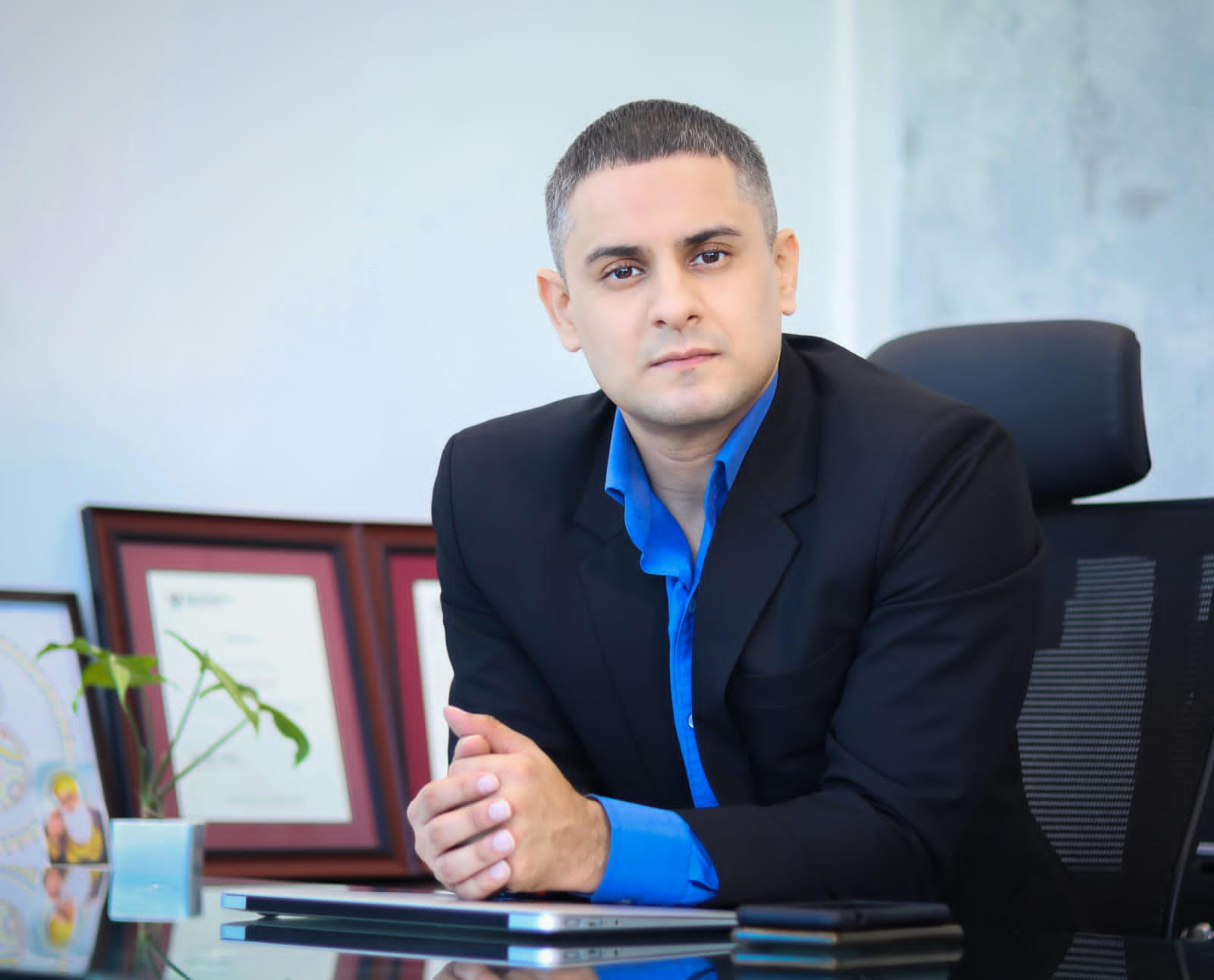
Bharat Khanna: Career: Come with a skill that is genuinely marketable and in demand — not just in your home market, but globally. Dubai attracts exceptional talent from every corner of the world. The competition is real. Arrive knowing your value proposition clearly, and build relationships before you need them, not after.
Business: If you are starting a business, understand your visa and regulatory structure thoroughly before you launch. The free zone versus mainland decision alone has significant implications that many founders discover too late. Build with genuine clients and genuine revenue from the beginning rather than spending on infrastructure and image first.
Financial planning: This is where I see the most avoidable difficulties. Keep a minimum of six months of fully liquid reserves at all times — echoing the ERGRT framework’s emergency-fund-first approach to building long-term wealth. In a city where personal financial planning carries full responsibility — with no employer safety net to fall back on — having no financial cushion is a genuinely precarious position. Do not invest your emergency fund in illiquid assets. Live below your means for the first two years regardless of what your salary feels like. And plan specifically for healthcare, education if you have children, and the management of funds across borders — these are costs that people consistently underestimate.
Lifestyle: Give yourself at least twelve months before making any definitive judgement about Dubai — positive or negative. The city has seasons — professionally, socially and literally. The first year of any relocation involves an adjustment period that can temporarily distort your perception in either direction. Be patient with yourself and with the process.
Q6. The Dubai property market continues to attract global attention. Based on your observations, what trends are shaping the real estate and investment landscape today?
Bharat Khanna: The single most important trend is infrastructure-led appreciation. Dubai is in the middle of the most significant transport infrastructure investment in its history — the Metro Blue Line, the Metro Gold Line, the Etihad Rail national passenger network, the Airport Express connection between DXB and Al Maktoum International, and the Al Maktoum Airport expansion itself. These projects are not theoretical — they are under active construction. And historically, in every major city in the world, property values in the corridors these projects serve begin appreciating years before the infrastructure opens. The informed investors are already positioning themselves.
The second major trend is the structural shift toward villas and townhouses. Post-pandemic demand for private space, land ownership and community living has proven more durable than most analysts predicted. Villa prices in well-located communities have appreciated at 12 to 18 percent year-on-year — outperforming the apartment segment significantly. And the supply of villa land in established communities is genuinely finite, which gives this trend structural durability rather than just cyclical momentum.
The third trend worth paying attention to is the internationalisation of the buyer pool. Chinese investment in Dubai real estate has increased dramatically. European capital is flowing in at levels not seen before. This broadening of the buyer base provides liquidity and creates competition for quality assets. The era of finding a premium property without competitive interest is largely over in certain segments.
One counterintuitive observation I would add: the opportunity that looks most attractive in marketing materials is not always the opportunity with the strongest underlying fundamentals. The most compelling entry points right now are often in areas that are not yet generating headlines — because once the headline comes, the early advantage has already been captured.
Q7. You have built a strong community by sharing personal experiences and insights. How important is trust and credibility in content creation, especially when discussing topics related to finance, investment, and relocation?
Bharat Khanna: Trust is not just important — it is the entire foundation. Everything else is secondary. You can have the best production quality, the most creative hooks, the largest reach. Without trust, you have an audience that is watching but not believing. And in the space I operate in — finance, investment, relocation decisions — an audience that does not believe you is not being served.
I have built whatever credibility I have through one consistent principle: I only say things I believe to be true, I openly acknowledge when I do not know something, and I share my own mistakes with the same willingness that I share my insights. The moment a content creator in this space starts shaping their message around sponsorships, commissions or popularity rather than accuracy, that credibility begins to erode. And once it erodes, it is very difficult to rebuild.
There is also a responsibility dimension here that I take seriously. When someone makes a decision about where to invest their savings or where to move their family based on something they encountered through my content, the stakes are real. That responsibility should feel weighty. It should drive you to check your facts, present caveats honestly, and be straightforward even when the straightforward answer is less exciting than the alternative. I frame everything I share as education and perspective, not as financial advice — that distinction matters and I hold it consistently.
Q8. Technology, AI, and digital platforms are changing how people access information and make investment decisions. How do you see these developments influencing the future of content creation and investor education?
Bharat Khanna: The information layer is becoming simultaneously more abundant and harder to navigate. AI can now produce an extraordinary volume of content about any topic — fast, fluent, and indistinguishable from human writing at a surface level. This creates a paradox: more information is available than at any point in history, but the signal-to-noise ratio is deteriorating. People are surrounded by content while being genuinely starved of insight.
For content creators who are authentic, this is actually a significant opportunity. When everything looks and sounds the same, genuine human experience becomes a premium. The person who has actually lived in Dubai for twelve years, made real decisions with real money, and developed a genuine perspective — that voice becomes more valuable as AI-generated generic content multiplies, not less.
On the investor education side, AI tools are genuinely useful for research, data analysis and pattern recognition. I use them in my own work regularly. But they are most powerful in the hands of people who already know the right questions to ask. The fundamental human need — someone I trust to help me make sense of this — is not going away. It may actually intensify as the information environment becomes noisier.
The platforms themselves continue to shift. Short-form video has democratised reach in a way that no previous media format has. A creator with genuine insight and the ability to communicate clearly now has access to a global audience that would have required a television network a decade ago. That shift is still in relatively early stages, and the people who build authentic communities on these platforms now will have a significant and compounding advantage.
Q9. Looking ahead, what developments or opportunities in Dubai and the wider UAE are you most excited about over the next five to ten years?
Bharat Khanna: The development I find most compelling, and which I believe is still under-appreciated in the broader conversation, is the Al Makhtoum International Airport expansion. When fully operational, this will represent one of the largest airport developments on the planet in terms of passenger capacity, cargo volume and global connectivity. This is not a marginal upgrade to existing infrastructure — it is a structural shift in Dubai’s position as a global hub. Every sector that depends on connectivity — tourism, logistics, finance, technology, professional services — will feel the effects of this over time. And the surrounding property corridors will reflect that in ways I believe will be very significant.
The second development I watch closely is the UAE’s positioning in the global AI and technology landscape. The UAE has made substantial and well-documented investments in becoming a leading force in artificial intelligence globally. The talent, the capital and the infrastructure being built around this will attract a new category of global professional and entrepreneur to the UAE over the next decade, changing the demographic and economic profile of the city in ways we are only beginning to see.
And personally — the development I find most meaningful is the maturing of the UAE’s multi-generational expatriate community. When I arrived in 2013, Dubai was still largely a city of people who intended to eventually leave. That has changed significantly. There are now deep communities of people who have built their lives here, raised children here, and have genuine long-term commitment to this place. That shift in how people relate to the city changes everything — the quality of institutions, the depth of professional networks, the cultural richness of daily life. Dubai in 2030 and beyond will be a fundamentally richer and more complex place than the one that existed when I arrived.
Q10. Finally, what advice would you give to aspiring entrepreneurs, creators, and professionals who want to build a successful life abroad while creating value for others?
Bharat Khanna: Start with the truth. About yourself, about your skills, about your actual situation. The most avoidable difficulties I have seen people experience in Dubai — professionally and personally — begin with a story they are telling themselves that is more optimistic than the evidence warrants. Clarity about where you genuinely stand is the most useful thing you can bring with you.
Build for the long term from day one. The city is full of people making short-term decisions and wondering why they do not have long-term results. Compound interest is a financial concept but it applies equally to reputation, relationships and skills. Every decision you make — how you treat people, how you do your work, whether you deliver on your commitments — is adding to or subtracting from a compounding asset. Treat it accordingly.
For creators specifically: do not create content you do not believe in. The temptation to post what performs rather than what is true is real and constant. Resist it. The audience that finds you because of honest content is the audience worth having. Build something that lasts.
And finally — give more than you take, consistently and without keeping score. The people who have built the most meaningful careers and communities I have observed in this city are the ones who operate from genuine generosity. Share knowledge, make introductions, help people without an agenda. That generosity tends to find its way back to you — often in ways and from directions you never expected.
Closing. If you could share one lesson from your Dubai journey that has had the greatest impact on your life and career, what would it be?
Bharat Khanna: The most valuable thing I have learned in twelve years here is the difference between information and wisdom. Information is everywhere. Dubai is saturated with it — market data, expert opinions, trend reports, investment pitches, content of every kind. Wisdom is knowing which information to trust, which patterns actually matter, and which voices have genuine skin in the game.
I spent years consuming information. What changed my professional and personal trajectory was learning to slow down, question the source, understand the incentive behind every piece of advice I received, and develop my own framework for evaluating decisions rather than borrowing someone else’s conclusions.
That is the lesson I try to share with everyone who follows my content. Not a specific property to buy or a particular neighbourhood to live in — those specifics change constantly. But the habit of thinking clearly, questioning narratives, and trusting your own informed analysis — that habit pays dividends for a lifetime.
Dubai gave me the opportunity to build that habit the hard way. I am grateful for every lesson that came with it.