WOMEN IN BUSINESS · INSTITUTIONAL LEADERSHIP · GLOBAL GOVERNANCE
She Doesn’t Just Develop Leaders.
She Builds the Institutions They Lead.
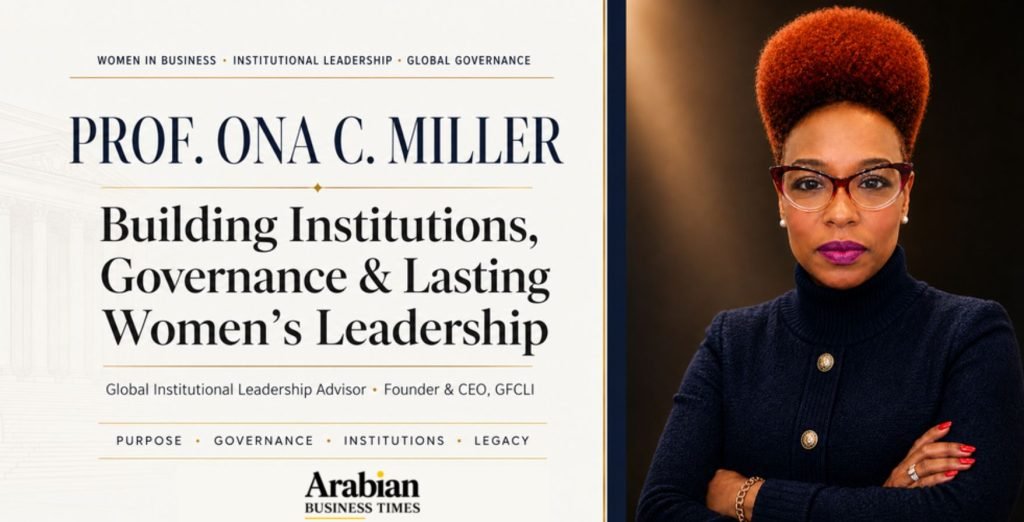
Prof. Ona C. Miller, EdD, PhD has spent over two decades doing something most people confuse with leadership development. It is not. It is institution building — and the difference, she will tell you, changes everything.
— — —
By Arabian Business Times Editorial · Executive Features Desk
There is a question that Professor Ona C. Miller has been asked many times throughout her career, in boardrooms and lecture halls, at international conferences and in quiet conversations with women who are trying to figure out what their next chapter looks like. The question is always some variation of the same thing: how do you lead effectively in a world that was not designed with you in mind?
Her answer has never been simple. And over the years, it has grown more precise — not because the world has become simpler, but because she has spent decades studying how systems work, why institutions endure, and what it actually takes to build something that outlasts the person who created it.
Professor Miller is a global institutional leadership advisor, governance strategist, and the Founder and CEO of the Global Female Civility Leadership Institute (GFCLI). She holds a Doctor of Education in Organizational Leadership from Grand Canyon University and has dedicated her career to a mission that goes well beyond the language of leadership training or personal development. Her work is structural. It is architectural. It is, in the truest sense of the word, about building.
“The question should never be whether a woman belongs in a leadership room. The question should be: what kind of institution are you trying to build, and do you have the systems in place to make it last?”
That distinction matters deeply to her — and once she explains it, it becomes difficult to think about leadership any other way.
FROM EDUCATOR TO ARCHITECT: A JOURNEY MEASURED IN INSTITUTIONS, NOT TITLES
To understand where Professor Miller stands today, it helps to trace the path that brought her here. It does not follow a straight line — but in retrospect, every step was moving toward the same destination.
She began her professional life in education and finance, earning degrees from the University of Phoenix and Dallas College before continuing into graduate studies at Grand Canyon University, where she would eventually complete both a Master’s degree and her EdD in Organizational Leadership. Along the way she also pursued a Master’s in Christian Studies and a Life Coaching certification — a combination that reflects, even then, someone who was thinking about human development from multiple angles simultaneously.
But credentials, she will be the first to say, were never the point. They were tools in service of a larger question she was trying to answer: why do some institutions thrive for generations while others collapse the moment their founders step back?
That question became the organizing principle of her career. And the answer she arrived at, slowly and through years of research, advising, and observation, is what now distinguishes her work from almost everything else being done in the field of women’s leadership.
In 2018, she founded the Global Library of Female Authors; not a database, not a directory, but a permanent, living institution designed to preserve and elevate women’s intellectual contributions across generations and cultures. A year later came the Female Civility Initiative and National Female Civility Day, both designed to create formal recognition for the collaborative, ethical leadership contributions women make in every sector of society. In 2019, the Global Female Civility Leadership Institute took shape; and it is here that the full scope of her institutional vision became clear.
“Leadership development gives a woman a better toolkit. Institutional development gives her an organization that will still be standing, still doing meaningful work, long after she is gone. Those are two very different gifts.”
THE ARCHITECTURE OF LASTING INSTITUTIONS
Most leadership programmes, Professor Miller observes, are built around individuals. They focus on skills, mindset, presence, and personal brand. These things matter. But they are not sufficient; because when the individual leaves, the programme leaves with them. The knowledge walks out the door. The culture dissipates. The organization has to start over.
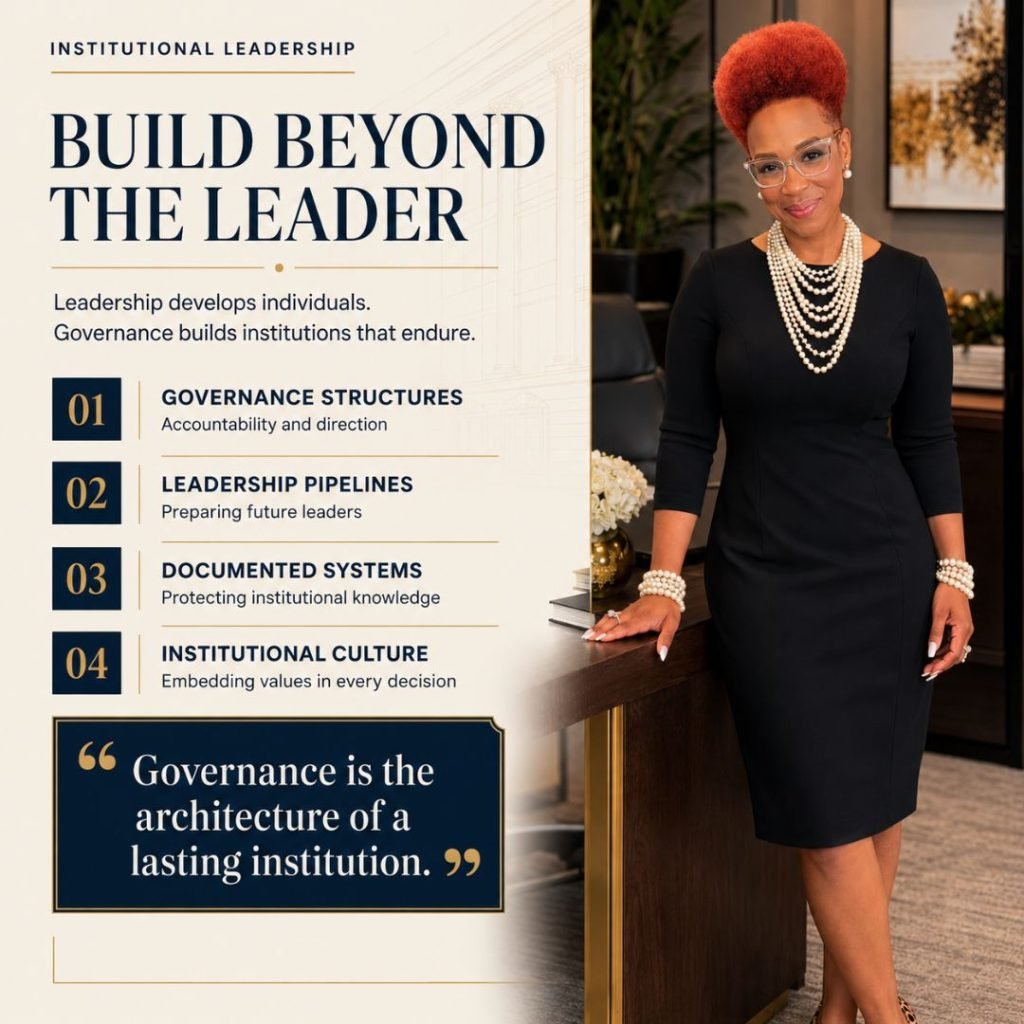
What she has built her career around is something fundamentally different. Her focus is on designing the systems, governance structures, and organizational cultures that allow institutions to keep producing excellent leadership long after any one person has moved on. She calls it legacy leadership; and it requires a very different kind of thinking.
Through the Global Female Civility Leadership Institute, she partners with universities, nonprofits, government bodies, and women-led organizations to do exactly this work. Not to run training sessions, but to audit governance structures. Not to coach individual executives, but to design the leadership pipelines that will develop future executives for years to come. Not to give organizations a moment of inspiration, but to leave them with systems that sustain.
Her recent appointment as National Chairman of the Women and Entrepreneurship Committee (USA) with the Asian-African Chamber of Commerce and Industry is a precise reflection of this philosophy in action. She is not simply representing women at a table. She is working to build the institutional infrastructure; the partnerships, the frameworks, the formal pathways; that will create lasting economic opportunity for women entrepreneurs across the United States, Asia, and Africa.
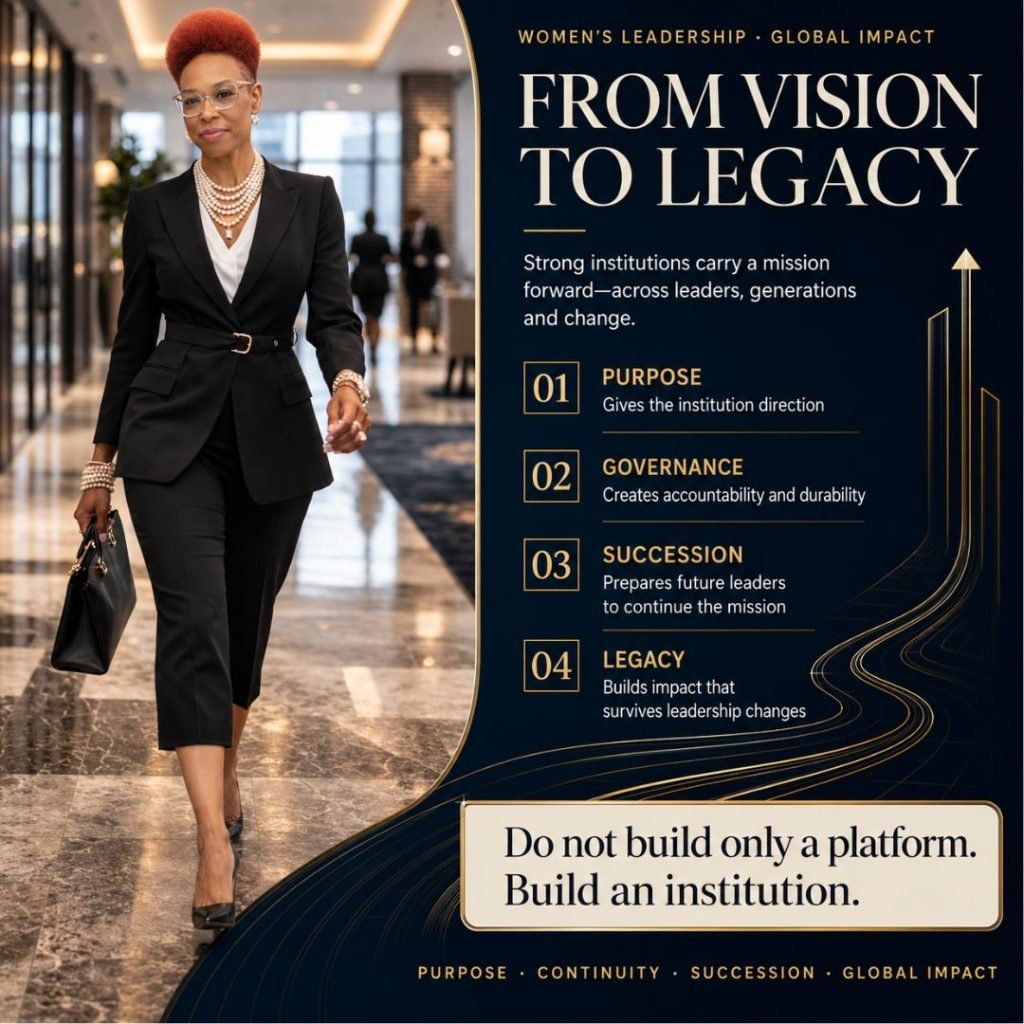
“Governance is not administration. It is the architecture of a lasting institution. When you get governance right, you build something that can carry a mission forward across decades, across leaders, across crises, across change.”
This is a distinction she draws sharply and deliberately. Administration manages what exists. Governance designs what endures. And for women-led organizations in particular, getting that distinction right is not optional — it is existential.
WHY WOMEN-LED INSTITUTIONS FACE A DISTINCT SET OF CHALLENGES
Professor Miller is careful to ground her work in observation rather than assumption. After years of advising organizations across multiple countries, she has identified patterns that appear consistently; patterns that are neither coincidental nor personal, but structural.
Women-led organizations frequently face a credibility infrastructure gap. They may be led by highly capable, visionary executives, but their institutions often lack the formal governance architecture; the boards, the documented systems, the strategic frameworks; that signal institutional maturity to funders, partners, and governments. This gap is not a reflection of the leader’s ability. It is a reflection of the fact that women-led organizations have historically had less access to the mentorship, networks, and institutional knowledge required to build that infrastructure.
The result is organizations that are doing extraordinary work, led by extraordinary women, but operating in structures that cannot fully support or sustain that work at scale. Professor Miller’s practice is built around changing that reality; not by changing the women, but by building the systems around them.
She also points to a subtler challenge: the tendency, particularly in philanthropic and development sectors, to invest in programmes rather than institutions. A programme has a beginning and an end. An institution has a mission and a structure designed to outlive any single initiative. Redirecting investment toward institutional capacity; governance, leadership development pipelines, organizational systems — is one of the most urgent conversations she believes the global development sector needs to have.
“We have spent decades investing in women. Now we need to invest in the institutions women lead. That is a different investment; and it produces a different kind of return.”
PURPOSEPHD: THE PHILOSOPHY BEHIND THE PRACTICE
In November 2025, Professor Miller launched PurposePhD; her newest institutional venture, focused on educational consulting and what she describes as purpose-aligned leadership development. The name is deliberately chosen. It reflects a belief she has held throughout her career and articulated most directly in the phrase that has become central to her public philosophy: the highest degree is your purpose.
For Professor Miller, purpose is not a motivational concept. It is an organizational one. Leaders who are clear about their purpose make better governance decisions. They build more coherent cultures. They attract aligned partners and repel misaligned ones. They know when to grow and when to consolidate. And critically, they are able to pass that clarity on to the next generation of leaders; which is ultimately what makes an institution durable.
PurposePhD extends her advising work into the educational space, helping institutions design the learning environments that develop this kind of purposeful, governance-literate leadership from an early stage. It is, in many ways, the upstream version of the work she has been doing for years — catching leaders earlier in their development, before the institutional habits and patterns are already set.
Her recognition by the World Peace and Diplomacy Organisation as an Honorary Member places this work in its broadest possible context. Leadership, governance, institutional development; at their best, these are not merely organizational concerns. They are the tools through which societies become more stable, more equitable, and more capable of resolving the challenges that threaten peace and collective progress.
“Purpose gives an institution its direction. Governance gives it its durability. Together, they are what allow a mission to outlive the person who started it.”
A MESSAGE TO WOMEN BUILDING IN A COMPLEX WORLD
If there is one thing Professor Miller wants women leaders; particularly those operating in emerging markets, in underresourced sectors, or in regions where the infrastructure for women’s institutional leadership is still being built; to take from her work, it is this:
Your organization is not just a vehicle for your vision. It is an institution in the making. And institutions require architecture; governance structures, leadership systems, documented processes, and cultures of accountability; that will carry your mission forward even when you are not in the room. The work of building that architecture is not separate from the work of leadership. It is the most important leadership work you will ever do.
She is also direct about what this means practically. It means investing in board development, not just executive coaching. It means documenting the systems that currently exist only in your head. It means designing leadership pipelines now, before the urgency of succession forces you to. And it means building the kind of governance culture where accountability, transparency, and ethical decision-making are embedded in the structure of the organization — not dependent on the character of any single individual.
None of this is glamorous work. But it is the work that determines whether what you build lasts.
“Do not build a platform. Build an institution. The platform depends on your presence. The institution carries your legacy.”
WHAT THE NEXT DECADE DEMANDS
Professor Miller’s vision for the next ten years is ambitious; and it is institutional. She wants to see the Global Female Civility Leadership Institute recognized as a global center not merely for leadership development, but for the governance research, policy engagement, and institutional capacity building that will determine whether women-led organizations can operate at the highest levels of global influence.
She wants to see cross-sector investment in women’s institutional leadership, not one-off programmes, but sustained, structural investment in the organizations that are developing women leaders across generations. She wants to see governance equity — meaning that women-led institutions have access to the same quality of board development, organizational strategy, and institutional knowledge that has historically been available only to legacy institutions.
And she wants to see the conversation shift. Away from the question of whether women belong in leadership, and toward the question of how to build the institutions that will make women’s leadership not just possible, but enduring.
That shift, she believes, is already happening. It is happening in the organizations she advises, in the leaders she develops, and in the growing global recognition that institutional transformation is the only kind of change that truly lasts.
Professor Ona C. Miller has spent her career building the proof of that idea — one institution at a time.
ABOUT PROF. ONA C. MILLER, EdD, PhD
Professor Ona C. Miller is a Global Institutional Leadership Advisor, Governance Strategist, and Founder & CEO of the Global Female Civility Leadership Institute. She is also the Founder of PurposePhD, the Global Library of Female Authors, the Female Civility Initiative, and National Female Civility Day. A six-time published author and internationally recognized speaker, she serves as National Chairman – Women & Entrepreneurship Committee (USA) with the Asian-African Chamber of Commerce & Industry, and is an Honorary Member of the World Peace and Diplomacy Organisation.
LinkedIn: linkedin.com/in/professorona Instagram: @dronaconori Web: conoriconsults.org