
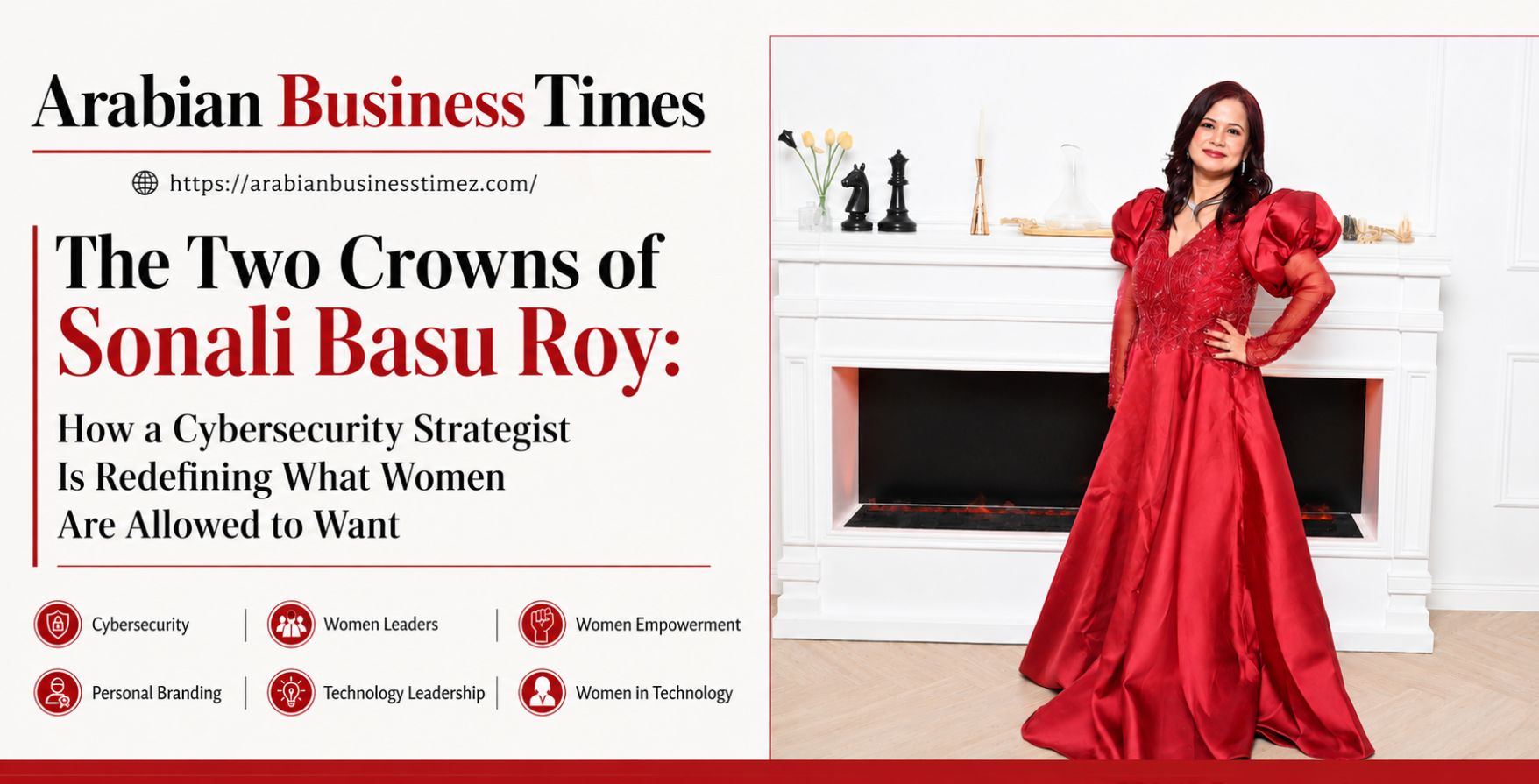
One title built her career. The other is rewriting the rules of who gets to wear a crown and why ambition and reinvention were never meant to have an age limit.
There is a particular kind of woman the Middle East’s business community has learned to recognize, the one who built a career in a field where she was rarely the loudest voice in the room, succeeded anyway, and then, instead of settling into the comfort of that success. She went looking for an entirely different stage. Sonali Basu Roy is that woman. By day, she is an award-winning cybersecurity marketing professional whose work has shaped brand strategy across one of technology’s most demanding sectors.
On weekends and stages across the region, she is a pageant finalist, competing not for glamour but for a platform, one she uses to argue that confidence, visibility and reinvention belong to women at every stage of life, not just the ones society expects.
The pairing sounds unlikely until Sonali explains it herself: cybersecurity and pageantry, she says, are not opposites. Both demand the same currency: confidence, communication, authenticity, and the willingness to keep proving yourself in rooms that don’t always expect you.
Her story isn’t about choosing between a corporate identity and a creative one. It’s about refusing the choice altogether and building a case. She built it through her career, her heritage, and her public voice, that modern womanhood was never meant to be singular.

Two Careers, One Throughline
Sonali’s entry into cybersecurity wasn’t accidental, and she doesn’t describe it as a fallback. Technology, she says, fascinated her precisely because of its impact on businesses, on society, on the pace of change itself.
The industry challenged her intellectually while letting her contribute to digital transformation work that mattered. Crucially, she credits the leaders and global organizations she worked alongside for encouraging her to grow and reinvent herself repeatedly. These experiences, she says, directly shaped her confidence, resilience and leadership style.
Years into that career, with much of her professional identity already established, Sonali made a decision that surprised people who knew her only through her corporate résumé. She stepped into pageantry. She’s clear about why. It wasn’t a pivot away from her career. It was actually a deliberate stretch beyond it.
After years spent building professional credibility, she wanted a platform built around something different, and that id confidence, self-expression, personal branding, and purpose. At its core, she says, it was about proving, to herself as much as anyone, that women can pick up new dreams at any stage of life, not just the ones culturally assigned to youth.
What’s notable is that Sonali doesn’t treat these as two disconnected chapters. She sees direct lines between them. Technology, in her telling, taught her strategic thinking and resilience under pressure; pageantry sharpened her public presence and self-expression.
Combined, they reinforce a belief she returns to often, that leadership isn’t only a function of expertise. It’s also a function of influence, visibility, and the ability to inspire other people to move.
Heritage as Foundation, Not Constraint
Sonali has navigated success as an Indian woman building a career in the Middle East, and she doesn’t separate the two identities; she layers them. Her cultural background, she says, instilled discipline, respect for education, and perseverance long before her career began.
Living and working in the region has let her hold onto that foundation while absorbing a far more global, diverse perspective, and she credits that combination for keeping her grounded, adaptable and grateful through every stage of her journey.
That sense of representation matters to her beyond the personal. As an Indian woman contributing to the Middle East’s business and technology landscape, she takes visible pride in being part of a wider community of Indian professionals across industries, not just her own.
She is the one who is shaping the region’s growth while staying connected to where they come from. For Sonali, heritage isn’t something success requires her to set aside — a philosophy that mirrors how one Dubai-based creative turned cultural heritage into a competitive advantage. It’s part of the infrastructure that made the success possible.
Why Visibility Is the Real Currency
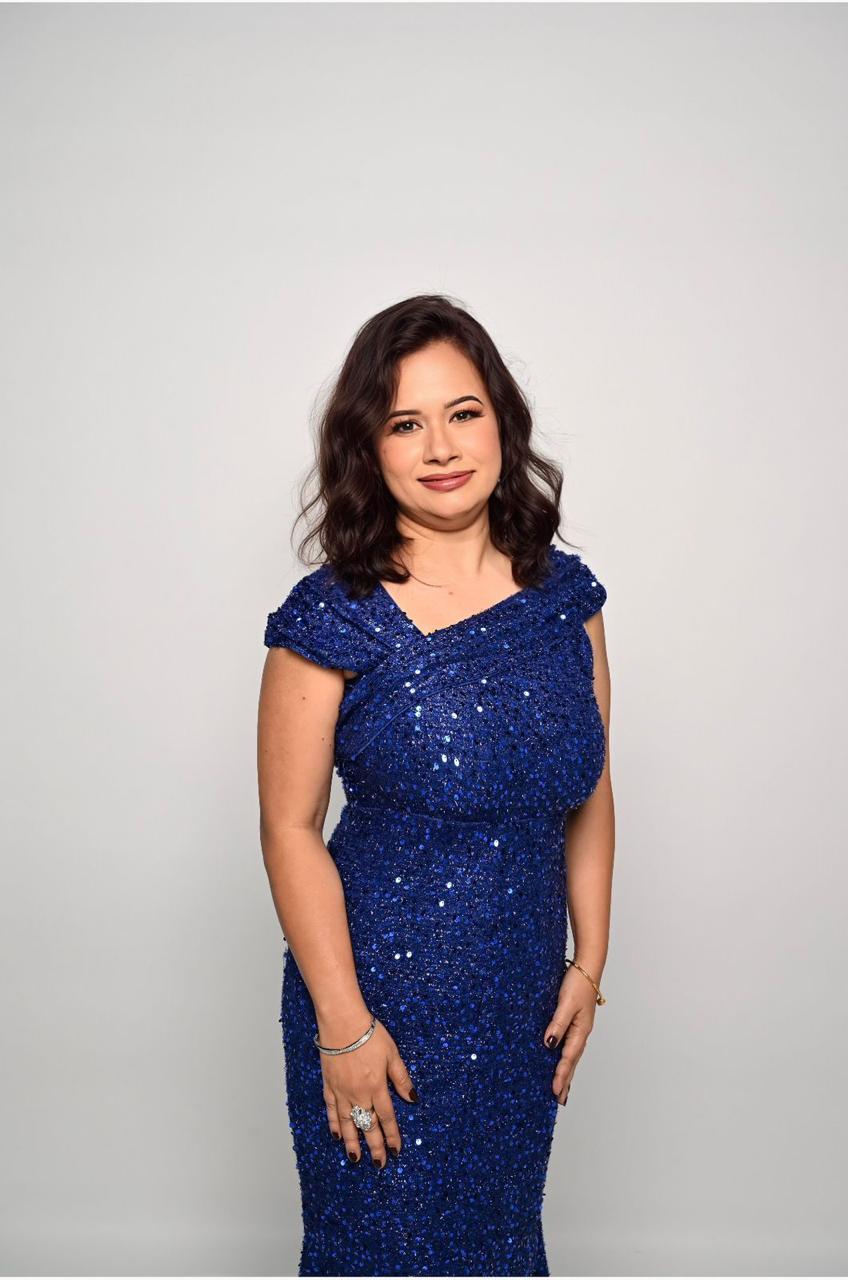
If there’s one idea Sonali pushes hardest, it’s this: talent that stays hidden doesn’t help anyone. She argues that many capable women underestimate themselves not because they lack ability, but because they hesitate to step forward and be seen.
Confidence, in her framing, is what allows a woman to advocate for herself. Visibility is what converts that confidence into something larger: opportunity, representation, influence. And the effect compounds: when women claim their voice publicly, she believes it gives other women permission to do the same.
That conviction is the engine behind the cause she says she’s most committed to, women’s empowerment built specifically around confidence, personal growth, and self-belief. Her goal isn’t abstract encouragement.
She wants women to recognize their own worth concretely enough to act on it, and to internalize that reinvention isn’t gated by age, job title or where someone happens to be in their life.
Building a Brand Without Losing Yourself
Sonali’s perspective on personal branding cuts directly against the trend-chasing version of the concept that dominates social platforms. According to her, authenticity is the only real foundation, not aesthetics, not algorithms. Her advice is blunt: don’t try to be someone you’re not. Build outward from your actual values, your actual expertise, your actual story.
Consistency and credibility, in her view, will always outperform whatever’s trending this month, because audiences can tell the difference between genuine engagement and performance, and they consistently choose to connect with the former.
That same instinct shapes how she defines balance across a life that includes a demanding career, family, and public visibility all at once. For Sonali, balance isn’t a perfect equilibrium; it’s a product of prioritization and intention.
She talks about setting clear boundaries, protecting her family relationships, investing deliberately in her own well-being, and staying anchored to her core values even as her schedule pulls in multiple directions. Success, in her own definition, was never only about professional milestones. It’s equally about the relationships she’s nurtured and the personal growth she can point to alongside the achievements.
According to her, why authenticity outperforms trend-chasing in personal branding is the only real foundation, not aesthetics, not algorithms.
A Wider Definition of Modern Womanhood

Pressed on what modern womanhood actually means to her, Sonali rejects the binary framing entirely. It isn’t ambition versus authenticity, or progress versus tradition, she argues; it’s the freedom to define success on entirely personal terms, without being forced to choose a side. Women, in her view, can honor where they come from while still building toward something new; the two aren’t in competition.
It’s a philosophy that maps directly onto the legacy she says she wants to leave. She hopes to be remembered as someone who helped other women believe in themselves enough to embrace change and chase their own ambitions without apology, regardless of whether that belief was sparked through her work in technology, her leadership style, or her presence on a pageant stage.
The common thread, as she puts it, is proof that growth doesn’t carry an age limit, and that every woman holds more power to create lasting impact than she’s often told she does.
Key Insights
- Two identities, one operating principle. Sonali treats her cybersecurity career and pageantry platform as reinforcing the same skills; confidence, communication and authenticity- rather than competing for her time or attention.
- Reinvention has no age requirement. Her move into pageantry came after, not instead of, building a serious corporate career, a deliberate statement that new dreams remain available at any career stage.
- Visibility compounds. She frames a woman’s visibility as something that doesn’t just create personal opportunity, but actively gives other women permission to step forward themselves.
- Heritage and ambition aren’t in tension. Her Indian cultural foundation — discipline, education, perseverance- is positioned as the base her global career was built on, not something she had to leave behind.
- Authentic branding beats trend-chasing. Her advice on personal branding centers on values and consistency over algorithmic relevance; audiences notice the difference.
- Balance is intentional, not automatic. She describes boundaries and prioritization, not perfect time management, as what lets her hold career, family, and public life together.
- Modern womanhood is additive, not either/or. Her core philosophy rejects forcing women to choose between ambition and tradition, arguing both can coexist by design.
Closing Thought
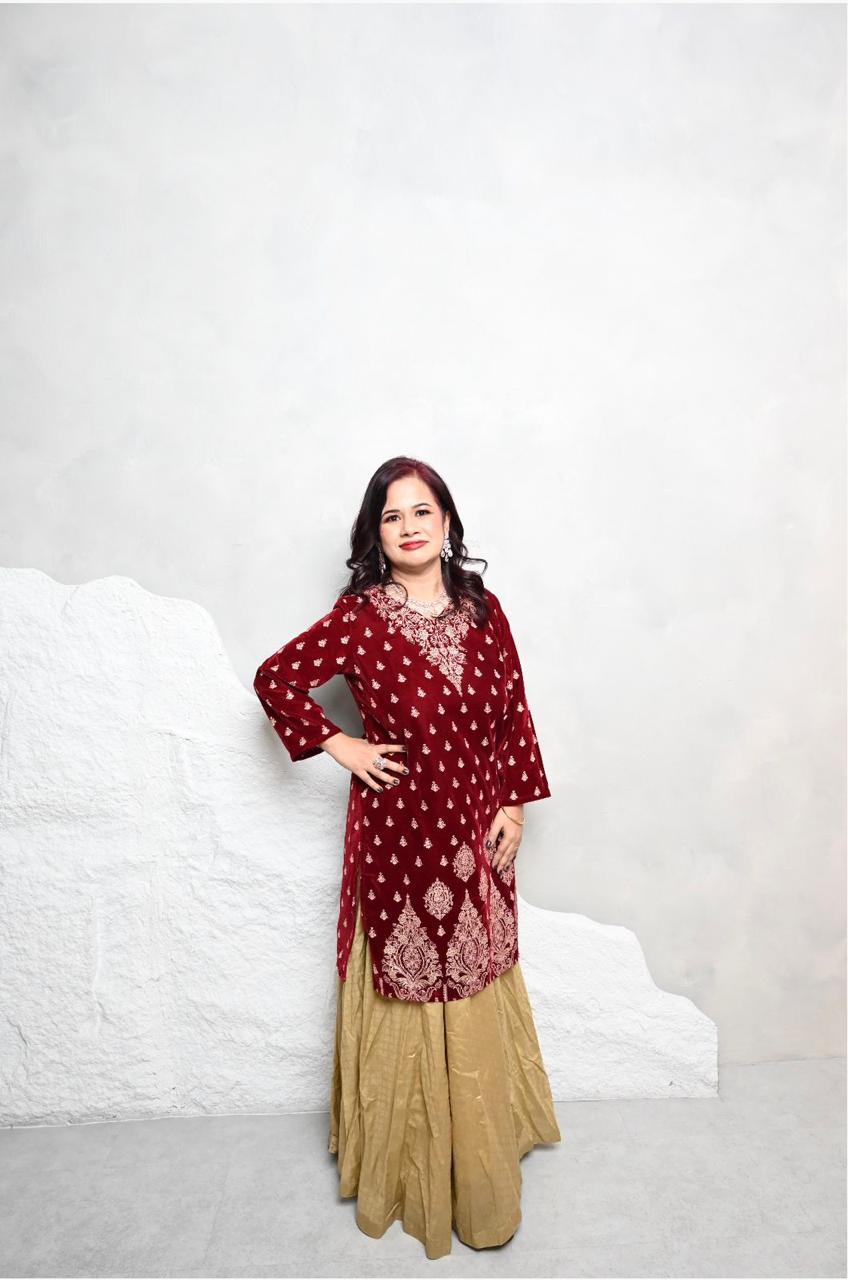
Sonali Basu Roy’s closing message to women considering their own reinvention is unambiguous: never let fear, age, circumstance or other people’s expectations define what you’re capable of. Every new direction, in her words, begins with the courage to take a first step, and reinventing yourself, she insists, is never too late. It’s a fitting note for a career built on proving exactly that, twice over.
Frequently Asked Questions
Who is Sonali Basu Roy?
Sonali Basu Roy is an award-winning cybersecurity marketing professional in the Middle East who has also become a finalist in prestigious regional pageants, using both platforms to champion women’s confidence, visibility and reinvention.
Why did Sonali Basu Roy move from cybersecurity into pageantry?
She describes it as an intentional stretch beyond her professional identity rather than a departure from it, a chance to explore confidence, self-expression and personal branding after years focused on career growth, and to prove that women can pursue new ambitions at any stage of life.
How does Sonali Basu Roy connect her cybersecurity career to pageantry?
She sees both as requiring the same core skills: confidence, communication, leadership, and authenticity. Technology built her strategic thinking and resilience; pageantry strengthened her public presence and self-expression.
What does Sonali Basu Roy say about personal branding?
She emphasizes authenticity over trend-chasing, building a brand around real values, expertise and story, with consistency and credibility mattering more than chasing what’s currently popular.
What is Sonali Basu Roy’s view on modern womanhood?
She defines it as the freedom to determine success on one’s own terms, rejecting the idea that women must choose between ambition and authenticity, or between tradition and progress.
What cause is Sonali Basu Roy most passionate about?
Women’s empowerment through confidence, personal growth, and self-belief, encouraging women to recognize their own worth and understand that reinvention is possible at any age or career stage.