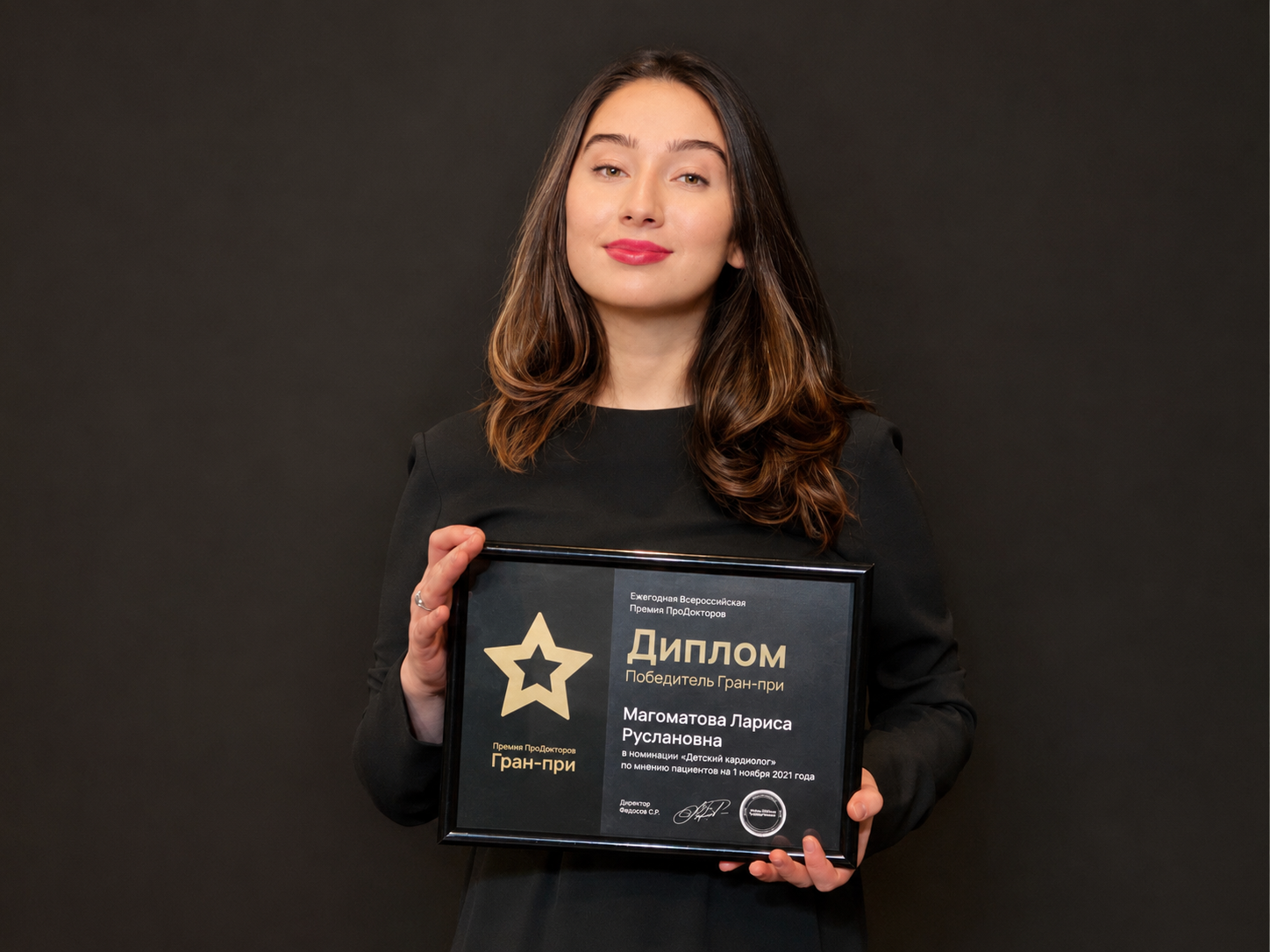
With over fifteen years of experience, more than 15,000 consultations, and seventeen children saved in three years, Larisa Magomatova, MD, is redefining what pediatric cardiology means for families around the world.
1. What inspired you to pursue a career in pediatric cardiology, and what experiences shaped your passion for treating children with congenital heart disease (CHD)?
Larisa Magomatova: The heart has always held a special place not only in medicine, but in culture, philosophy, and spiritual tradition. In one of the well-known hadiths of the Prophet Muhammad ﷺ, it is said: “Truly, in the body there is a morsel of flesh; if it is sound, the whole body is sound, and if it is corrupt, the whole body is corrupt. Truly, it is the heart.”
When I was just beginning my path in medicine, I was struck by how much meaning the heart carries — not only as an organ, but as a symbol of human life. For a long time, science viewed the heart mainly as a pump that sustains circulation. But today we understand more and more that it is far more complex, closely connected with the nervous system, with our emotional state, and with many processes still being studied. It was precisely this interest that, over time, led me to study the interaction between the heart and the brain — the field known today as the heart–brain axis.
But what ultimately decided my path was pediatric cardiology itself. These patients are especially vulnerable. A child cannot make decisions about their own health — their life depends on the adults around them. Every parent loves their child, yet sometimes it is fear, confusion, or a lack of information that prevents them from seeking help in time or making the right decision. And then it is no longer a matter of a diagnosis or of statistics, but of a human life.
Over the years, I have become convinced that modern technology can work true wonders. But no less important are the knowledge of parents, timely diagnosis, and an understanding of what is happening to the child. Perhaps it was precisely this sense of responsibility for the most vulnerable patients that shaped my path. Behind every child, I have always tried to see not the illness, but the person — the family, the future, and the chance that must not be missed.
For many years, I worked at a major cardiac surgery center, where I gained extensive experience in the management of children with complex congenital heart defects. My professional development was shaped under the guidance of Academician Leo Bokeria, whose dedication to innovation, clinical excellence, and the care of critically ill children profoundly influenced my approach to medicine and patient care.
2. Congenital heart disease affects millions of children around the world. What are the biggest misconceptions about CHD, and what should every parent know about early diagnosis and treatment?
Larisa Magomatova: One of the most common misconceptions is that a child with a congenital heart defect is inevitably destined for a hard life, disability, or serious limitations. In reality, modern pediatric cardiology and cardiac surgery have made tremendous progress. Today, most children with CHD — with timely diagnosis and well-organized treatment; can live full lives: study, play sports, start families, and pursue their dreams. That is why I always tell parents: do not fear the diagnosis; seek to understand it.
Far more dangerous than the diagnosis itself are late detection, a lack of information, and lost time. Sometimes parents spend months, or even years, not understanding why their child tires quickly, gains weight poorly, struggles with physical activity, or falls ill often. And sometimes the condition shows no signs for a long time and is discovered by chance during a routine examination. This is exactly why early diagnosis is so crucial: the sooner a problem is identified, the more options there are for choosing the best approach, and the better the long-term prognosis.
I also consider the parents’ own involvement in observing their child to be very important. Parents spend far more time with their child than any doctor, and they are usually the first to notice changes in behavior, well-being, physical activity, or development. I often recommend that families keep a kind of observation diary, especially with a complex diagnosis: a few simple notes about how the child feels, how they tolerate activity, their appetite, or shifts in behavior often prove very useful to the doctor in making decisions.
Another important misconception is that once surgery or successful treatment is complete, the problem disappears entirely and no longer requires attention. For many patients, a congenital heart defect is not a single event but a long journey of follow-up that calls for cooperation between the family and the medical team.
The most important thing I would like to convey to parents is this: today, a diagnosis of congenital heart disease is not a sentence. Modern medicine has enormous capabilities. But how far they go depends greatly on seeking help in time, on trust between the family and the doctor, and on the parents’ readiness to take an active part in caring for their child’s health.
3. Your work highlights the heart brain axis – one of the emerging areas of medical research. Could you explain this concept and why it is becoming increasingly important for modern medicine?
Larisa Magomatova: Interest in the interaction between the heart and the brain has accompanied humankind for many centuries. What is especially interesting is that reflections on the connection between the heart, the mind, intention, and human behavior can be found not only in philosophy, but also in the Islamic intellectual tradition.
For example, Islamic scholars discussed how the heart, the mind, the will, and thought are connected to one another. In one of the well-known works of Ibn Taymiyyah, it is said that the beginning of thought is linked to the brain, while the source of intention and will is linked to the heart; and that the two are closely interrelated and cannot be considered entirely apart from each other.
Of course, modern scientific research uses entirely different methods and rests on an evidence base. And yet I have always been struck by how attentively people sought to make sense of this connection long before the rise of modern neuroscience.
Today we know that the heart is a far more complex organ than was once believed. It possesses its own neural network, constantly exchanges information with the central nervous system, and takes part in the body’s intricate regulatory mechanisms. This is precisely why modern medicine is increasingly interested in the heart–brain axis — the two-way system of interaction between the cardiovascular and nervous systems.
As a pediatric cardiologist, I am especially interested in how the state of the cardiovascular system affects a child’s development, emotional well-being, cognitive function, and quality of life. We understand ever more clearly that successful treatment is not always determined by test results or surgery alone. An enormous role is played by psychological adaptation, the emotional state of the family, and the child’s ability to cope with stress.
In my view, the future of medicine lies not only in advancing technology, but in a deeper understanding of the human being as a single, integrated system in which the heart, the brain, emotions, and physical health are closely connected.
4. Medical technology and artificial intelligence are transforming healthcare. How do you think AI will improve pediatric cardiology, diagnostics, and personalized treatment in the coming years?
Larisa Magomatova: I am convinced that artificial intelligence will become one of the most significant tools of modern medicine. However, I do not believe it will be able to replace the physician; at least not in the foreseeable future.
Medicine is not only the analysis of data. It is the ability to see the whole patient, to understand context, to weigh many factors at once, and to make decisions under uncertainty. This is what we call clinical judgment, and for now it remains an exclusively human capacity.
At the same time, artificial intelligence already helps doctors analyze large volumes of information far faster than was once possible. In pediatric cardiology, this might mean analyzing echocardiograms, electrocardiograms, monitoring data, imaging results, and the scientific literature; all of which makes it possible to identify patterns more quickly and reach better-grounded decisions.
But AI is no less important for patients and their families. For many years, one of the serious problems was the inequality of access to medical information: a family near a major medical center and a family in a remote region had entirely different opportunities. Today this is gradually changing. Even someone far from the world’s leading clinics can gain access to educational resources, scientific information, and modern tools that help them better understand their child’s diagnosis and navigate the available options.
Of course, artificial intelligence should not be used for self-diagnosis or to replace the physician. But it can become a powerful aid; one that helps parents ask the right questions, understand medical information better, and take part in decisions more consciously.
I find the development of personalized medicine especially promising. In the years ahead, we will be able to account ever more precisely for the individual characteristics of each child, to anticipate the course of a disease, and to choose the most effective treatment strategies for that particular patient.
I see artificial intelligence not as a competitor to the physician, but as a tool capable of strengthening the abilities of both specialists and families. Like any tool, it brings benefit when it is used wisely, responsibly, and together with human experience, knowledge, and compassion.
Beyond clinical treatment, you are an advocate for raising awareness of CHD. Why are patient education and public awareness so important, and what more can healthcare systems do to support families?
Larisa Magomatova: Over the years, I have come to believe that awareness saves lives no less often than medical technology does. Very often a child’s fate is determined not only by the quality of treatment, but by how quickly the family was able to grasp the seriousness of the situation, find reliable information, and reach the right specialist.
Unfortunately, we still encounter situations where a family is told that the options for help have been exhausted; even though, at another center, in another region, or even in another country, there are specialists and technologies able to help. Sometimes parents simply do not know that their child could be helped somewhere else in the world. This is precisely why educating parents matters so much: a well-informed family makes decisions faster and takes a more active part in treatment.
A significant part of my work today is connected with exactly such families. This work would not be possible without a team of dedicated professionals. I have been especially fortunate to collaborate for many years with Professor David Berishvili, an outstanding cardiac surgeon whose expertise, commitment, and willingness to take on the most challenging cases have helped save many children’s lives. It is thanks to the combined efforts of physicians, specialists, and generous benefactors who continuously support these children that many families receive hope when all hope seems lost. May their kindness and compassion be rewarded many times over. Right now, for example, we are helping several children: some are preparing for staged or supportive surgery, or for surgery in another country, while others are being considered for a heart transplant abroad. Often these are children born in a place where their case was deemed hopeless; while in another country a real chance exists for them. My role here is to help the family understand the options, find information, connect with specialists, coordinate everything, map out the way forward, and accompany the family along that path.
All of this becomes possible thanks to people with caring hearts; doctors of various specialties and benefactors who help these children. Each person does their part, and together it leads to the result that matters most to me: over the past three years, through our shared efforts, we have managed to save seventeen children; without losing a single one. And seventeen children means seventeen families, in each of which hope has been reborn.
I believe that modern healthcare systems should devote more attention not only to treatment, but to supporting the family: to clear educational materials, psychological support, access to reliable information, and a clear sense of what steps to take at each stage. When a family is left alone with a difficult diagnosis, it often feels fear and helplessness, and the task of the medical community is to help people through that journey. I am deeply convinced that every child deserves the best possible care, regardless of where they were born or what resources their family has. The greater a society’s awareness, the more such chances children will have.
6. Every medical professional encounters cases that leave a deep mark. Was there a patient or a professional experience that influenced you especially strongly?
Larisa Magomatova: In fifteen years of work, I find it hard to single out one case or one patient; perhaps because pediatric cardiology is a specialty in which it is almost impossible to remain indifferent.
Every child I have had the chance to work with has left a mark on my memory. Behind every diagnosis stood a family that worried, hoped, feared, and waited for help. And each of those cases taught me something. Some children taught me professional patience. Others taught me the need to make decisions quickly and to take responsibility. Still others reminded me how strong parents can be when their child’s life is at stake.
In time, I came to understand that a doctor’s experience is shaped not only by successes. We learn a great deal from difficult cases, from moments of uncertainty, and from situations in which a solution must be found where, at first glance, none can be seen. That is why I find it hard to name a single patient who influenced me more than the rest. I was shaped by hundreds of children and hundreds of families I met along my professional path.
Every child we managed to help strengthened my faith in this profession. Every difficult case made me study harder and understand my specialty more deeply. Every conversation with parents reminded me that medicine is not only science and technology, but also an immense human responsibility. And so the most important professional experience for me has not been a single story, but the entire path I have traveled together with my patients. It is they who made me the doctor I am today.
7. Preventive medicine is becoming a global priority. What practical steps can parents take from an early age to support a child’s heart health and overall physical and emotional well-being?
Larisa Magomatova: First of all, heart health begins long before any illness appears. It is built from the many daily habits that shape a child’s, and a family’s way of life. There are well-known recommendations: a nourishing diet, enough physical activity, good sleep, a steady daily routine, regular check-ups, and seeking medical advice promptly when worrying symptoms arise. All of this truly matters.
But in recent years I have become increasingly drawn to another aspect; a child’s psychological and emotional well-being. Caring for health should include not only monitoring physical measures, but also attending to the child’s emotional state. It is very important for a child to grow up in an atmosphere of love, safety, support, and trust. Sometimes parents devote enormous attention to tests, examinations, and nutrition, yet underestimate the impact of chronic stress, anxiety, and conflict within the family. And yet it is precisely the emotional environment that, in large part, determines how a child develops, copes with difficulties, and recovers from illness.
If I were to give the single most important piece of advice to parents, it would be a simple one: pay attention to your child as a person, not only as a patient. Notice not only temperature or test results, but also mood, interest in life, levels of anxiety, and patterns of behavior. Spend time together. Modern medicine can help a great many children; but it is attentive, loving parents who, most often, are the first to notice a problem and help their child through treatment and recovery.
This is why, for me, heart health is the result of a harmonious interplay of physical health, emotional well-being, family support, and timely medical care.
8. Research and innovation continue to reshape cardiovascular medicine. Which modern advances inspire you the most, and how do you think they will improve outcomes for children?
Larisa Magomatova: We live in an extraordinary time for medicine. Over the years, I have watched many conditions that were until recently considered extremely severe, or even hopeless; become ones we can now successfully diagnose and treat.
I am especially inspired by the fact that medicine is becoming ever more personalized. We are gradually moving away from an approach in which the same decisions are applied to all patients, and increasingly taking into account the individual characteristics of the child, the course of the disease, genetic factors, and prognosis. Modern data-analysis tools and artificial intelligence help doctors process vast amounts of information faster and reach more precise decisions; provided that technology strengthens the physician rather than replacing them.
I have particular admiration for the progress in pediatric cardiac surgery. When I was starting out, certain operations were considered extraordinarily difficult. Today, many children with severe congenital heart defects are given a chance at a full life thanks to technologies that, just a few decades ago, seemed impossible. I also place great hope in neurocardiology: I am convinced that many of the important discoveries of the coming years will happen precisely at the intersection of disciplines; cardiology, neurology, psychology, bioengineering, and artificial intelligence.
But what inspires me most is not the technology itself, but the purpose for which it is created. Behind every discovery stands a particular child and their family. For me, the true measure of progress is not the number of new devices or programs, but the fact that more and more children are given the chance to grow up, go to school, pursue what they love, start a family, and live a long, full life. That is what makes the advance of medicine truly valuable.
9. As a physician, researcher, and public figure, how do you balance scientific rigor with empathy and patient-centered care? What lessons in leadership has your professional journey taught you?
Larisa Magomatova: To be honest, I have always found it hard to separate these things. For me, science, clinical practice, empathy, and responsibility toward the patient have never existed apart from one another.
I have never thought of medicine as a job in the usual sense. It is work that I sincerely love, and, looking back, I cannot recall a single day on which I felt I was merely carrying out duties. It is precisely love for the profession that compels one to keep learning: medicine advances very quickly, and anyone who stops taking an interest in what is new inevitably begins to fall behind.
At the same time, I am convinced that knowledge alone does not make someone a good doctor. Behind every patient there is a human story – a family, parents, hopes, and fears. If a doctor sees only the diagnosis, they inevitably miss something very important. One of the main lessons the profession has taught me is that the soundest decisions are born where deep professionalism meets respect for the person. Science helps us understand the illness; empathy helps us understand the patient; and only together do they make it possible to truly help people.
This period of my life, moving and adapting to a new country, has reminded me once again of something important: a true professional identity is defined not by a position, not by the country one lives in, and not even by diplomas, but by how faithful one remains to one’s mission.
As for leadership, I have never understood it as a desire to command people. For me, leadership is the readiness to take responsibility, to make decisions in difficult situations, and to stay true to one’s principles even when that is hard. And perhaps the most important lesson is this: people’s trust cannot be earned with grand words; only through daily work, honesty, responsibility, and a sincere desire to help. This remains my chief compass, wherever I am.
10. What advice would you give to young medical professionals and researchers who want to build a meaningful career while advancing healthcare and improving patients’ lives?
Larisa Magomatova: First of all, I would advise them never to forget for whose sake medicine exists. It is very easy to be carried away by technology, publications, career achievements, titles, and performance metrics. All of this matters; but at the center of any medical specialty there must always remain the human being. And so my main piece of advice is to learn to see the person behind the diagnosis.
Scientific knowledge is enormously important, and the modern physician is obliged to keep learning for virtually their entire professional life. But knowledge alone is not enough. Patients rarely remember the exact terms a doctor used; but they always remember whether they felt respect, attention, and a sincere desire to help.
I also consider it very important to preserve curiosity and the ability to ask questions. Many serious discoveries begin not with ready answers, but with the ability to notice what others take for granted. A research mindset makes the physician stronger, and clinical practice makes the researcher wiser.
And one more lesson the profession has taught me: one cannot practice medicine without love for people. It demands tremendous strength, time, and emotional resources, there are difficult patients, hard decisions, fatigue, and disappointments. But if a person truly loves their work, if they care about their patients and are ready to work honestly, to keep learning, and to take responsibility, the profession will, in time, lead them to where they are meant to be. In the end, a meaningful career is built not by awards or positions, but by the people you have helped, the knowledge you have shared, and the mark you have left on the lives of your patients.
A Closing Message
If you could share one message with parents, healthcare professionals, and the next generation of physicians about protecting children’s heart health, what would it be and why?
My message to parents and doctors alike is one: every child deserves a chance, and no child’s life should be lost to fear, to a lack of knowledge, or to help that was simply too far away. To save one child is to save a whole world. To parents: do not fear the diagnosis — seek to understand it. To doctors and future colleagues: let compassion always stand behind your knowledge. A child’s heart is fragile — but together, we are able to protect it.
Key Insights
- Awareness saves lives: A well-informed family makes decisions faster and takes a more active part in treatment. Education can be just as life-saving as technology.
- The diagnosis is not a sentence: Most children with CHD, with timely diagnosis and well-organized treatment, can live full lives, studying, playing sports, starting families, and pursuing their dreams.
- The heart-brain axis is a frontier of modern medicine: The interaction between the cardiovascular and nervous systems has profound implications for a child’s development, emotional well-being, cognitive function, and recovery.
- AI strengthens medicine, it does not replace it: Artificial intelligence is a powerful tool for faster diagnosis and personalized treatment, but clinical judgment, empathy, and human connection remain irreplaceable.
- Emotional well-being is part of heart health: A child’s psychological environment, the love, safety, and support at home, plays a significant role in how they develop, cope with difficulties, and recover from illness.
- Parents are the first line of observation: Parents notice changes in behavior, energy, and appetite before any doctor does. Keeping a simple observation diary can give a physician critical information.
- True leadership in medicine means taking responsibility: People’s trust is earned not through titles or grand words, but through daily work, honesty, and a sincere desire to help.
Editorial Materials and Verification Links
Instagram: @doctor_lara95
Books on Amazon:
https://amazon.com/author/larisamagomatova — Books for parents about congenital heart disease and children’s health.
ProDoctorov Profile:
https://prodoctorov.ru/moskva/vrach/486446-magomadova/ — Patient reviews and verified credentials.
Frequently Asked Questions
Q: What is congenital heart disease (CHD) and how common is it?
Congenital heart disease refers to structural problems with the heart that are present from birth. It is one of the most common birth defects in the world. Each year, more than a million children are born with some form of CHD. With timely diagnosis and well-organized treatment, most children with CHD today can live full lives.
Q: Why is early diagnosis so important for children with congenital heart disease?
The sooner a problem is identified, the more options there are for choosing the best approach, and the better the long-term prognosis. Far more dangerous than the diagnosis itself are late detection, a lack of information, and lost time. Sometimes a condition shows no signs for a long time and is only discovered during a routine examination, which is exactly why regular check-ups matter.
Q: What is the heart-brain axis and why does it matter for children?
The heart-brain axis refers to the two-way system of interaction between the cardiovascular and nervous systems. The heart possesses its own neural network and constantly exchanges information with the central nervous system. For children with heart conditions, this means the state of the cardiovascular system can affect a child’s development, emotional well-being, cognitive function, and ability to recover from illness.
Q: What practical steps can parents take to support their child’s heart health?
Heart health begins before any illness appears. A nourishing diet, enough physical activity, good sleep, a steady daily routine, and regular check-ups all matter. Equally important is a child’s emotional environment. Growing up in an atmosphere of love, safety, and trust plays a significant role in how a child develops and recovers. Parents are encouraged to pay attention to their child as a person, noticing mood, energy, appetite, and behavior, not only physical test results.
Q: Will artificial intelligence replace pediatric cardiologists?
No. AI is a powerful tool that helps doctors analyze large volumes of data faster and supports families in accessing information. But medicine is not only the analysis of data. It requires the ability to see the whole patient, understand context, weigh many factors, and make decisions under uncertainty. Clinical judgment, empathy, and human connection remain irreplaceable capacities that AI cannot replicate.
Q: How does Larisa Magomatova help families whose children need treatment abroad?
A significant part of her work involves supporting families in cases where local options have been exhausted. She helps families understand available options, connect with the right specialists, coordinate the logistics of treatment abroad, and accompanies them throughout the entire journey, from the first consultation to the child’s return home. Over three years, this collaborative work has helped save seventeen children without losing a single one.
Q: Where can I find Larisa Magomatova’s books and follow her work?
Her books for parents about congenital heart disease and children’s health are available on Amazon at amazon.com/author/larisamagomatova. She is active on Instagram at @doctor_lara95, where she shares educational content, patient stories, and ongoing updates about the children she is helping.
Preferred designation (for publication): Larisa Magomatova, MD — Pediatric Cardiologist, Researcher and Author
Related Interviews & Insights
- ???? Also check May Ahmed Interview
- ???? Explore Dr.Amb.Diplomat Shaymaa Abdel Nabi Interview
- ???? Also check – Ammara Aftab Interview
- ???? Explore our exclusive interview with Anis Sfar on AI and Dubai’s real estate sector
- ???? Discover insights from Dr. George Syrmalis on innovation and leadership:
- ???? Read our conversation with Valia Abou Alfadel on business and transformation
- ???? Don’t miss the Monday Man Interview featuring Wasif Mazhar
- ???? Learn more about Dr. Sofica Bistriceanu
- ???? Explore the profile of Dr. Desziree Richardson