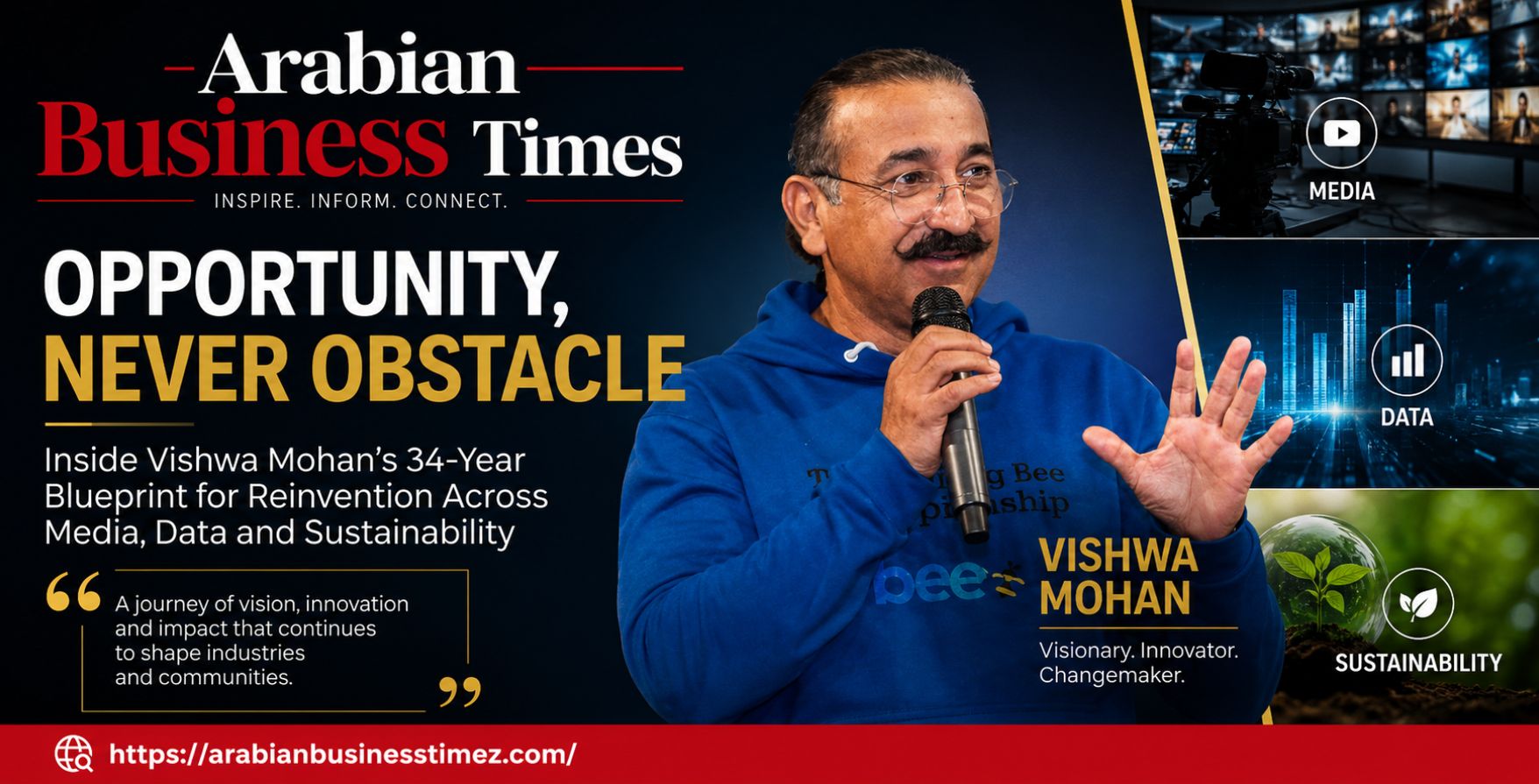
From insurance sales to AI-driven data analytics and the Middle East’s first Scripps Spelling Bee platform, Vishwa Mohan’s career offers a masterclass in adapting without losing identity, with a clear-eyed view of where business, technology and education are headed next.
About Him
Name: Vishwa Mohan
Designation: Captain, The Resource Lab Marketing Agency LLC · Captain, Spelling Bee Championship UAE & Arabia · Strategic Resource Specialist
Company: The Resource Lab Marketing Management LLC
Core Verticals: Sustainability (OnlyGood) · Data Analytics (Icogz) · Programmatic Marketing · Education (Spelling Bee Championship UAE & Arabia)
Experience: 34+ years across the Middle East and Africa in insurance, radio, television, events, digital media and entrepreneurship
Recognition: Excellence in Student Engagement Award, 2025
Website: www.trlme.com · www.spellingbee.ae
LinkedIn: linkedin.com/in/mohanvishwa
Instagram: @vishwa.mohan
Podcast: YouTube Interview
In a region defined by rapid change, few careers map that change as completely as Vishwa Mohan’s. Over 34 years across the Middle East and Africa, he has moved from insurance sales to radio, from television networks to digital agencies, and now into entrepreneurship across sustainability, data analytics, programmatic marketing and education. Today, as a Strategic Resource Specialist and the founder behind The Resource Lab, OnlyGood and the Spelling Bee Championship UAE & Arabia, Vishwa occupies a rare position: someone who has lived through every major shift in media and marketing, not just observed them.
What makes his perspective distinctive is not the breadth of industries he has touched, but the consistency of the principle running through all of them: understand the need before offering the solution. That discipline, learned in his earliest days selling insurance, now shapes how he advises businesses on data, guides organizations through sustainability measurement, and builds platforms designed to give the region’s children a global stage. In an age increasingly driven by AI and automation, Vishwa’s central argument is unusual: technology will not replace human judgment; it will simply expose those who never developed it.
A Career Built on Reinvention, Not a Straight Line
Vishwa describes his professional path as one of movement, curiosity and continuous learning rather than a single trajectory. His career has never been a straight line, but a journey of movement, reinvention, curiosity and continuous learning. He began in insurance sales, a phase he refers to as his real business school, one that taught him rejection, patience, discipline, listening and needs analysis.
That early lesson became the thread connecting everything that followed. Vishwa believes people do not buy a product simply because someone is selling it; they buy once they understand their own need. He carried that principle through every subsequent role, whether selling radio airtime, television solutions, events, digital transformation, data analytics or sustainability tools. Each industry, he explains, simply added a new layer of understanding: radio taught him the power of voice and frequency, television taught him scale and emotion, events taught him execution under pressure, and digital taught him measurement and accountability.
As the digital boom approached, Vishwa made a deliberate choice to learn again rather than rely on past expertise. He spent nearly six years inside a digital agency environment, building fluency in performance marketing, data and programmatic advertising before eventually stepping away from corporate employment to begin his entrepreneurial journey. He believes every stage of a career quietly prepares a person for the next one, even when the purpose isn’t clear at the time.
This belief is captured in the philosophy he returns to throughout his career: O stands for Opportunity, never Obstacle. Vishwa also speaks of a deeper conviction, that the universe has guided and challenged him throughout his life, but that the responsibility to act on that guidance remains entirely his own. As he puts it, he does not want to walk into his grave carrying unused potential.
Leadership Lessons Forged in Insurance Sales
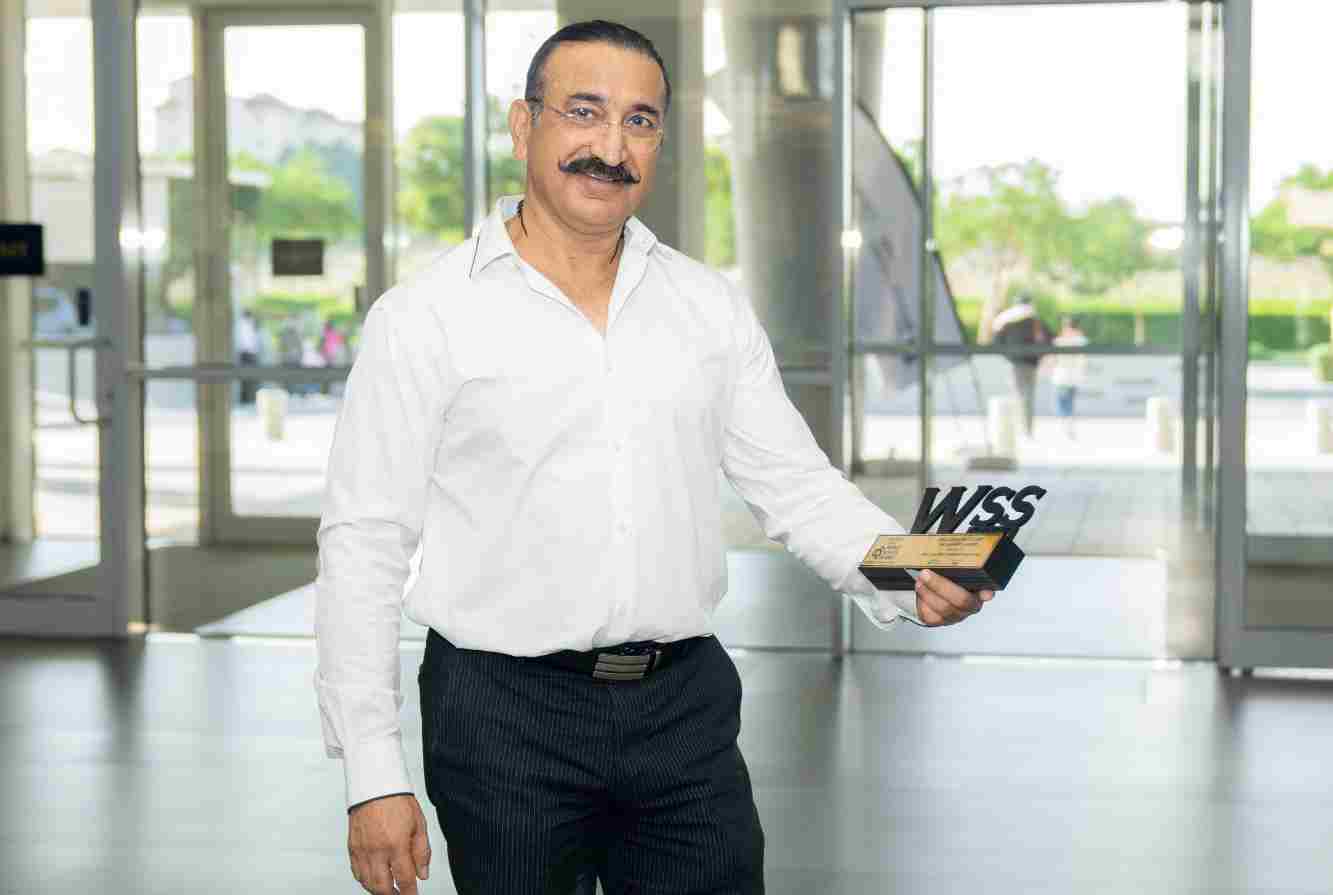
Long before he led radio stations and television networks, Vishwa’s leadership instincts were shaped by the discipline of insurance sales. Facing daily rejection and still returning the next day built what he describes as an inner strength, and a foundational insight that selling is not about talking, but about listening.
A good salesperson, Vishwa explains, doesn’t push a product; they understand the person across the table, the real problem, the hidden fear, the unspoken need. That diagnostic approach became the foundation of his leadership style. He believes in asking questions before giving answers and diagnosing before prescribing, whether he is working with a client, a team member, a sponsor or a partner.
The Lift Button Principle
One of Vishwa’s favourite analogies relates to patience. He compares life to waiting for a lift.
“When you press the lift button, the signal has already been received. Pressing it five more times does not make the lift arrive faster.”
He believes many people create unnecessary anxiety by worrying about outcomes after taking action. Whether it is an examination, a business proposal, an interview or an important decision, once the effort has been made, the result will arrive in its own time. Rather than worrying about what cannot be changed, Vishwa advocates preparing for the next action and focusing on what remains within our control.
This mindset informs how Vishwa leads today. He does not believe in panic, but in preparation; not in blaming circumstances, but in taking responsibility; not in amplifying problems, but in searching for solutions. For Vishwa, leadership is not about having every answer; it is about creating an environment where people can think clearly, act responsibly and grow.
From Instinct-Led Media to Evidence-Based Marketing
Having witnessed the full arc from traditional media to digital-first communication, Vishwa sees a fundamental shift in how marketing decisions get made. Media planning, once guided largely by experience, instinct and broad audience understanding, is now driven increasingly by data, technology and real-time intelligence.
In the traditional era, Vishwa notes, campaigns were planned around reach, frequency, perception and brand recall. Those metrics still matter, but digital channels introduced a new layer of accountability. Brands now ask who saw a campaign, who engaged, who clicked, who converted, and which creative or platform delivered the strongest return. AI, data analytics and programmatic marketing, in his view, are accelerating this shift from assumption-based marketing toward evidence-based marketing.
Crucially, Vishwa does not believe AI will replace human intelligence; he believes it will replace lazy thinking. The future, he argues, belongs to professionals who can combine human empathy with machine intelligence, since data reveals what is happening while experience explains why. Programmatic marketing can place a brand in front of the right audience with greater precision, and AI can identify patterns, predict behavior and optimize spend, but none of this compensates for a brand that doesn’t understand its own customer.
He frames the strongest advertising of the future as a combination of three elements: data, which gives direction; creativity, which gives emotion; and empathy, which gives relevance. For SMEs in particular, Vishwa sees this shift as an opportunity rather than a threat. Businesses no longer need to spend blindly, and with the right strategy and tools, even smaller players can understand their customers better, spend smarter and grow faster.
Why Most Companies Have Data but Lack Insight
As a Strategic Resource Specialist helping organizations apply AI-powered data analytics and business intelligence, Vishwa identifies a recurring gap: most companies have data, but not all companies have insight. Numbers sit scattered across sales, operations, marketing, finance and customer service systems, leaving leadership teams to make decisions on partial visibility. Business intelligence, he explains, solves this by consolidating data into a single, clear view, revealing what’s working, what isn’t, where money is being lost, and where corrective action is needed.
Golf as a Business and Life Lesson
Vishwa often draws a comparison between business and golf. Unlike most sports such as cricket, tennis, football, badminton, squash, padel or volleyball, golf is not a reactive game. No opponent can directly influence your score. The ball is stationary and responsibility sits entirely with the player.
He believes business operates in much the same way. While leaders often blame competitors, markets or external circumstances, sustainable growth begins by examining what is within one’s own control. Preparation, discipline, execution and accountability ultimately determine the outcome. As Vishwa puts it, “Your scorecard in golf is your responsibility. So is your scorecard in life.”
Data, in his framing, is what answers that question, exposing where a business is leaking revenue, where conversions are weak, where marketing spend is inefficient, where retention is dropping, and where operational delays are quietly limiting growth. Sustainable growth, he concludes, doesn’t come from working harder blindly; it comes from knowing precisely what to fix.
Sustainability as Measurement, Not a Slogan
Through his work with OnlyGood, Vishwa is pushing organizations to treat sustainability as an operational discipline rather than a compliance exercise. He believes the concept is widely misunderstood. Many companies still treat it as a CSR activity, a report or a certificate, when in his view it is fundamentally about measurement, efficiency, responsibility and future-readiness.
OnlyGood helps organizations track their carbon footprint on an ongoing basis, mapping how energy consumption, fuel usage, logistics, waste, water, travel and procurement contribute to environmental impact. The principle underpinning the platform is direct: a company cannot reduce what it cannot measure. Without visibility into where emissions originate, Vishwa explains, there is no basis for a meaningful reduction plan, which is precisely the gap OnlyGood is built to close.
He frames sustainability’s shift from corporate responsibility to business necessity as a response to a changing stakeholder landscape. Investors, customers, regulators and younger consumers are all becoming more conscious of how companies operate, not just what they sell. Importantly, Vishwa also connects sustainability directly to cost efficiency: reducing energy waste, improving logistics and optimizing resource use benefits operational performance as much as it benefits the environment. For Vishwa, sustainability is not about guilt; it is about responsibility, and about helping companies move from intention to measurement, and from measurement to action.
Building Confidence, One Word at a Time
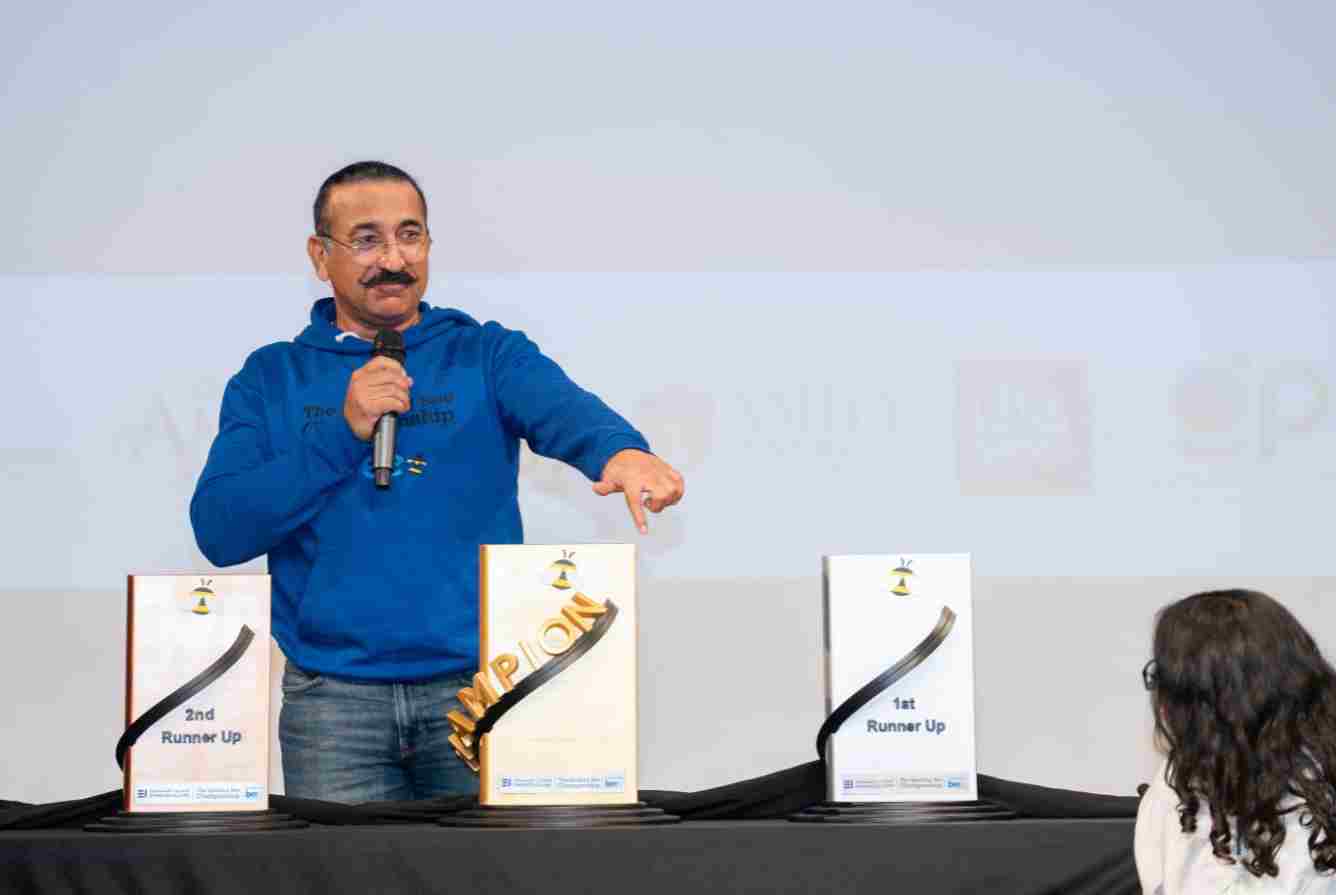
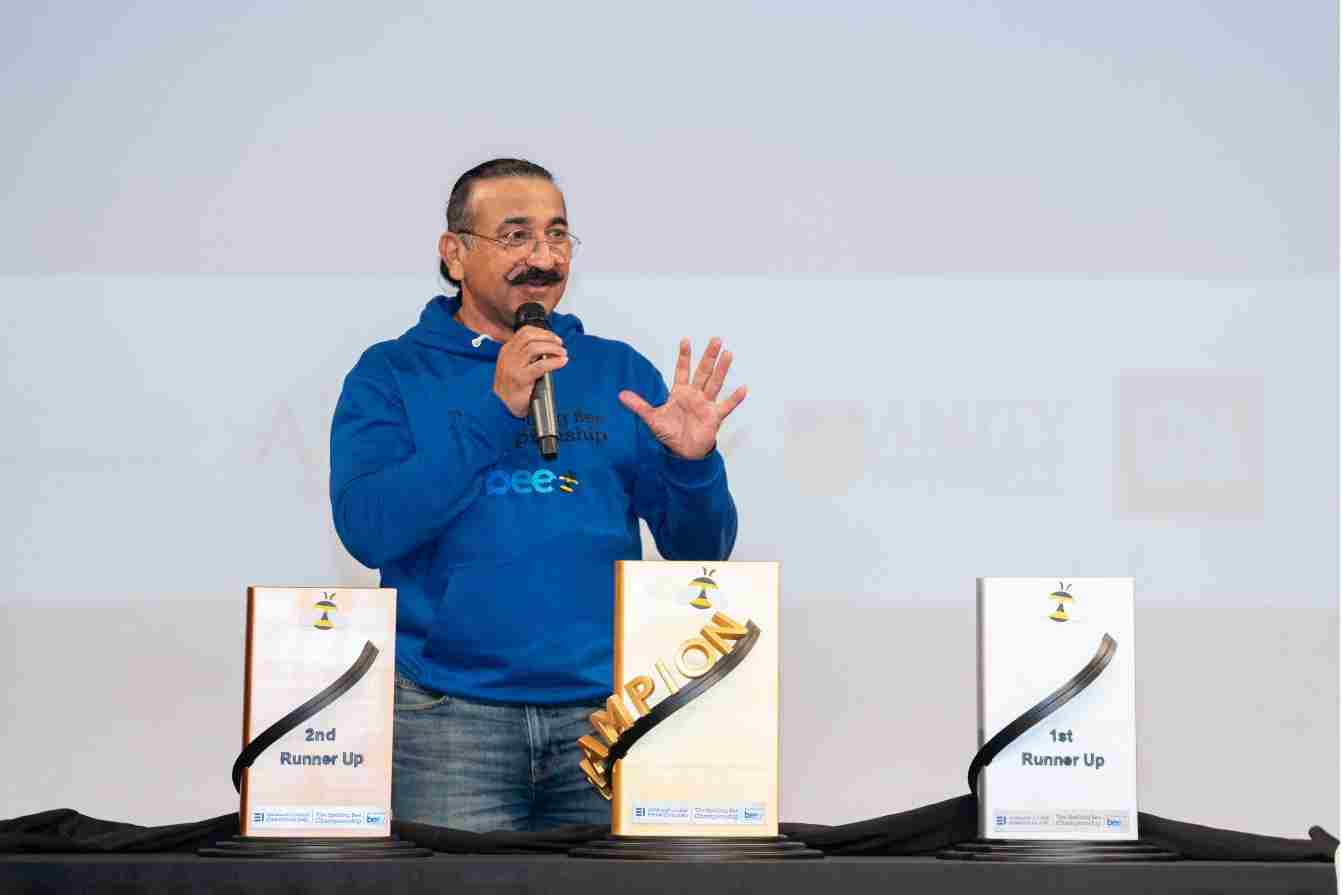
Vishwa’s introduction of the Scripps National Spelling Bee Championship to the Middle East grew from a direct question: why shouldn’t children in this region have access to the same global academic platforms available elsewhere? With a legacy of nearly a century in the United States, Vishwa saw the Spelling Bee as an opportunity to give children across the UAE and the wider Middle East exposure, confidence and aspiration that match their potential.
His efforts in educational engagement were formally recognised with the Excellence in Student Engagement Award in 2025, an acknowledgement of his contributions to student development and the creation of platforms that connect young people to global academic opportunities.
Vishwa is careful to point out that the competition is about far more than spelling words correctly. It tests preparation, courage, composure, listening, memory and grace under pressure. He describes the moment a child stands before a microphone, the room silent, parents watching, judges listening, as a turning point regardless of outcome, proof that the child can stand before the world without freezing, a lesson that extends well beyond the competition into exams, interviews, presentations and leadership.
He points to Seth Wareen, the UAE Champion who earned the opportunity to represent the UAE at the Scripps National Spelling Bee in Washington, D.C., as an emotional milestone, not simply a personal win, but evidence that children from the region belong on the world stage. As Vishwa puts it, the initiative isn’t building a competition; it’s building confidence, communicators, thinkers and future leaders, one word at a time.
Reading the Middle East and Africa, and What Comes Next
Drawing on decades of work across the Middle East and Africa, Vishwa emphasizes that no two markets in these regions are alike, and that strategies cannot simply be copy-pasted from one to another. Dubai, he says, rewards belief and punishes hesitation, a city built by people who asked “why not?” when the rest of the world asked “why?” That spirit, in his view, shapes everyone who lives and works there.
The opportunity across the region, Vishwa explains, lies in the pace of ambition: visionary governments, improving infrastructure, strong youth populations, high technology adoption and rapidly evolving consumer behavior create space for innovation, education, sustainability and entrepreneurship. The challenge is that businesses must move at the same pace. What worked five years ago may no longer apply, as customers grow more informed, competition sharpens and technology disrupts every sector. In Africa, he sees equally significant opportunity, provided it is approached with local understanding, relationships, trust, adaptability and patience. Across both regions, Vishwa believes businesses need three things to succeed: clarity of purpose, agility of execution and respect for local culture.
Looking further ahead, Vishwa expects the next decade to be defined by the intersection of technology and human capability. AI will improve productivity and decision-making, but he maintains that the real advantage will belong to those who know how to ask better questions, not simply those who adopt the tools. Sustainability, he predicts, will shift from a boardroom topic to an operational necessity affecting supply chains, manufacturing, logistics, finance, real estate and hospitality. Education, too, will change, rewarding curiosity, communication, adaptability and emotional intelligence over memorization.
One area Vishwa returns to repeatedly is the unorganized sector, the thousands of small businesses, traders and entrepreneurs with genuine growth potential but limited access to structured guidance, digital tools, sales training or mentorship. He sees this as one of his personal CSR priorities: combining the energy of youth, the resources of corporates and decades of sales, marketing and business-building experience to bring smaller businesses to a higher level. For Vishwa, the future is not only about advanced technology; it’s about inclusion, and ensuring innovation doesn’t leave smaller businesses behind.
From Corporate Leadership to Entrepreneurship: The Honest Advice
Vishwa is candid in his advice to professionals considering a similar leap: don’t romanticize entrepreneurship. Corporate life offers structure, support systems and predictability; entrepreneurship makes a person responsible for nearly everything. His second piece of advice follows naturally: don’t wait to feel completely ready, because that feeling never fully arrives. At some point, he says, you have to trust your experience, your intent and your ability to learn.
His own transition came only after decades across sectors. Following years in radio, television and events, Vishwa recognized that digital expertise was becoming essential and deliberately entered the digital agency space to learn a new language of business, performance marketing, data and digital transformation. That phase, he explains, was critical to staying relevant. His broader philosophy: to stay young professionally, you must keep your company young, your thinking young and your learning young. Age, in his view, is not the problem; stagnation is.
Reverse Mentoring
Despite his decades of experience, Vishwa remains a strong advocate of what he calls ‘reverse mentoring’.
He credits his son, a strategy consultant, as one of his greatest critics and mentors. “The moment you stop learning from younger people, you start ageing professionally,” he says.
Vishwa believes that experience and wisdom remain invaluable, but younger generations often bring fresh perspectives, technological fluency and new ways of thinking. The combination of both creates better decisions and keeps leaders relevant in rapidly changing times.
Family as the Foundation
Behind every entrepreneurial journey is a support system. Vishwa describes his wife as his greatest supporter, his son as his greatest critic and mentor, and his brothers, their wives, sister and brother-in-law as the cushion that has allowed him to take calculated risks throughout his life.
He believes entrepreneurship becomes significantly less daunting when you know there are people around you who genuinely want to see you succeed. Vishwa’s advice to professionals entering this path is to take the step with humility, carrying forward their learning, network and discipline rather than only their previous title.
Key Insights
- Understand the need before offering the solution, a principle Vishwa learned in insurance sales that has guided every subsequent industry he has worked in, from media to data analytics.
- AI will not replace human intelligence; it will replace lazy thinking. The future favours professionals who pair machine intelligence with human empathy and judgment.
- Most companies have data, but not insight. Business intelligence only creates value when scattered numbers are consolidated into a single, actionable view.
- Sustainability must be measured to be managed. Through OnlyGood, Vishwa positions carbon tracking as an operational necessity, not a CSR formality, and one tied directly to cost efficiency.
- Confidence-building platforms like the Scripps Spelling Bee give children in the Middle East access to global academic stages, building composure and communication skills that extend far beyond the competition itself.
- No single strategy works across the Middle East and Africa. Success requires clarity of purpose, agility of execution and genuine respect for local culture in each market.
- Inclusion is the missing piece of the AI-driven future. Vishwa emphasizes bringing the unorganized sector, small businesses and entrepreneurs, into the same wave of technological and sustainability progress benefiting larger corporates.
A Legacy Measured in Growth, Not Titles
Vishwa’s long-term vision centers on building platforms that help people and businesses grow with clarity, through The Resource Lab’s practical business solutions, the Spelling Bee Championship’s regional academic platform, and OnlyGood’s push to turn sustainability into measurable practice rather than slogan. Running through all three is the same conviction that has defined his career: legacy is not about being remembered for one company or title, but about whether someone grew because you were part of their journey.
As Vishwa puts it, if a child gains confidence through the Spelling Bee, if a business owner finds clarity through a single conversation, or if a company becomes more responsible through sustainability measurement, that constitutes real impact. His ambition, in his own words, is to be remembered as someone who used his experience, not merely accumulated it. It’s a fitting closing thought from a career built entirely on the idea that opportunity, not obstacle, is the lens worth choosing, and that today, as he says, is Day 1 of the rest of his life.
Frequently Asked Questions
Who is Vishwa Mohan?
Vishwa Mohan is a Strategic Resource Specialist and entrepreneur with over 34 years of experience across the Middle East and Africa, spanning insurance, radio, television, events, digital media, sustainability and education. He leads The Resource Lab Marketing Management LLC and the Spelling Bee Championship UAE & Arabia.
What does Vishwa Mohan do through OnlyGood?
OnlyGood is a sustainability platform that helps organizations measure their carbon footprint on an ongoing basis, tracking emissions from energy consumption, fuel usage, logistics, waste, water, travel and procurement so businesses can identify and reduce inefficiencies.
What is the Spelling Bee Championship UAE & Arabia?
It is the Middle East’s introduction of the Scripps National Spelling Bee, a near-century-old US academic competition. Vishwa brought the platform to the region to give children exposure, confidence and a global stage, with UAE Champion Seth Wareen earning the opportunity to represent the UAE at the Scripps National Spelling Bee in Washington, D.C.
Does Vishwa Mohan believe AI will replace human jobs in marketing?
No. Vishwa believes AI will not replace human intelligence; it will replace lazy thinking. His view is that the strongest results come from combining machine intelligence with human empathy and judgment, since data shows what is happening while experience explains why.
Why does Vishwa Mohan compare business strategy to golf?
Unlike reactive sports such as cricket or tennis, golf is non-reactive. A player’s score depends entirely on their own preparation and execution, not an opponent’s actions. Vishwa uses this analogy to argue that sustainable business growth comes from controlling what’s within one’s own reach, rather than blaming external circumstances.
What advice does Vishwa Mohan give professionals moving into entrepreneurship?
He advises against romanticizing entrepreneurship, noting that corporate structure and predictability disappear once you’re on your own. He also says professionals should not wait to feel “fully ready,” and should carry forward their learning, network and discipline rather than relying on their previous job title.
Related Interviews & Insights
- ???? Also check May Ahmed Interview
- ???? Check one more exlusive interview: Professor Ona C. Miller on Women
- ???? Check Larisa Magomatova Interview
- ???? Explore Dr.Amb.Diplomat Shaymaa Abdel Nabi Interview
- ???? Also check – Ammara Aftab Interview
- ???? Explore our exclusive interview with Anis Sfar on AI and Dubai’s real estate sector
- ???? Discover insights from Dr. George Syrmalis on innovation and leadership:
- ???? Read our conversation with Valia Abou Alfadel on business and transformation
- ???? Don’t miss the Monday Man Interview featuring Wasif Mazhar
- ???? Learn more about Dr. Sofica Bistriceanu
- ???? Explore the profile of Dr. Desziree Richardson